For B2B buyers, durable medical uniforms reduce replacement costs when the fabric can handle frequent washing, the fit stays stable, and later reorders can still match the first approved batch. The lowest quote is not always the lowest cost. Hospitals, clinics, uniform brands, and wholesalers often pay more later when scrubs fade, shrink, lose shape, or cannot be restocked in the same color.
For buyers comparing medical scrub uniforms, the better question is simple: will this uniform program remain usable after repeated washing, staff movement, size changes, and future replenishment?
Why Do Replacement Costs Become a Hidden Problem in Medical Uniform Procurement?
Medical uniforms are worn for long shifts, washed often, and expected to keep a clean professional appearance. A weak order may look acceptable at delivery, but the real problems usually appear after several weeks of use.
Low unit price can hide repeated replacement costs
A cheap scrub set may help a buyer meet a short-term budget. But if the waistband loosens, the fabric pills, or the color fades after routine washing, the buyer has to replace stock earlier than planned. Replacement also brings extra work: new purchase orders, freight, internal distribution, size checking, and staff feedback.
Bulk buyers should compare cost-per-wear, not only unit price. A slightly better fabric or more stable supplier process may reduce repeat buying pressure over the full uniform cycle.
Poor washing performance turns stock into waste
Medical scrubs face more washing than ordinary workwear. Some hospitals also need uniforms that tolerate disinfectant contact or stricter cleaning routines. If the garment shrinks, loses color, or becomes rough after washing, stocked items may become unusable before they are fully worn out.
Before bulk production, buyers should confirm colorfastness, shrinkage, pilling resistance, and washing instructions. These details give a clearer picture than broad terms such as “easy care” or “durable.”
Inconsistent reorders create visible mismatch
Replacement cost also appears when future orders cannot match the first batch. A clinic may need extra pants after hiring new staff. A wholesaler may need to refill best-selling sizes. If the new shipment has a different shade, hand feel, or fit, it cannot mix smoothly with existing stock.
Stable reorders depend on color records, approved samples, fabric control, and clear production files.
What Fabric Performance Should Buyers Check Before Bulk Ordering?
Fabric is the base of durability, but one fabric does not fit every healthcare project. Buyers should match material, GSM, stretch, washing method, and department use before confirming the order.

Composition and GSM should match the use case
A poly rayon 4-way stretch medical scrubs fabric, such as a 72% polyester, 21% rayon, and 7% spandex blend at about 200 GSM, can balance softness, drape, wrinkle resistance, and movement. Polyester helps with easy care and durability. Rayon improves hand feel. Spandex supports stretch during long shifts.
For price-sensitive programs, poly stretch fabrics may also work when buyers need quick-drying, practical, and easy-maintenance uniforms. The key is matching the fabric grade to the department, climate, washing routine, and target price.
Wash and disinfection resistance should be checked early
Hospitals and clinics should confirm whether the fabric can handle the expected cleaning method. Normal home-wash information may not be enough for medical settings. Strength retention, color change, and shrinkage after repeated washing are important signs of long-term value.
Testing early is cheaper than fixing a bulk problem later. It also gives both buyer and supplier a clearer standard before cutting begins.
Functional finishes should match real departments
Not every department needs the same features. General wards may focus on breathable, easy-care scrubs. ICUs may need splash-resistant or water-repellent options. Postpartum care centers may care more about soft touch, gentle colors, and low-irritation materials.
A controlled order separates these needs instead of forcing one uniform standard across every role.
How Can Construction Details Extend the Service Life of Medical Scrubs?
A strong fabric can still fail if garment construction is weak. Buyers should review the finished uniform, not only fabric swatches or product photos. Pockets, seams, waistbands, cuffs, and movement details all affect replacement frequency.
Stress points decide whether scrubs survive daily movement
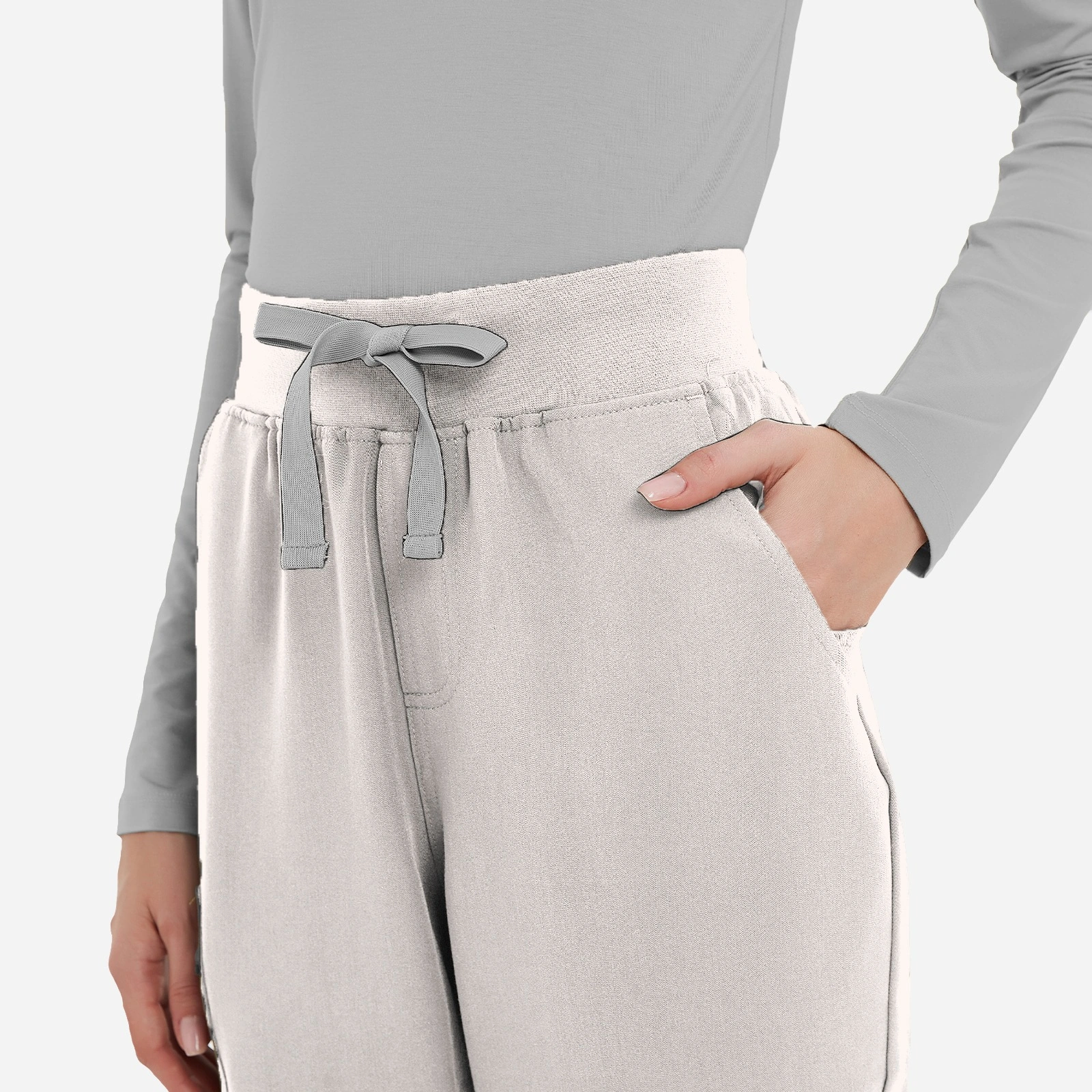
Shoulder seams, armholes, side seams, crotch seams, pocket edges, and waistbands carry pressure during work. If these areas are not built well, the garment may look fine at first but fail after real use.
During sample approval, wearers should sit, bend, reach, walk, and carry normal work items. A uniform that restricts movement will create complaints even when the fabric itself is acceptable.
Pocket layout affects staff acceptance
Healthcare workers often carry pens, gloves, phones, note cards, or access items. If pockets are shallow, poorly placed, or not reinforced, daily use becomes frustrating.
For buyers checking scrub sets with functional pockets, pocket depth, opening angle, placement, and reinforcement should be reviewed before bulk approval. More pockets are useful only when they match real working habits.
Fit details reduce unusable stock
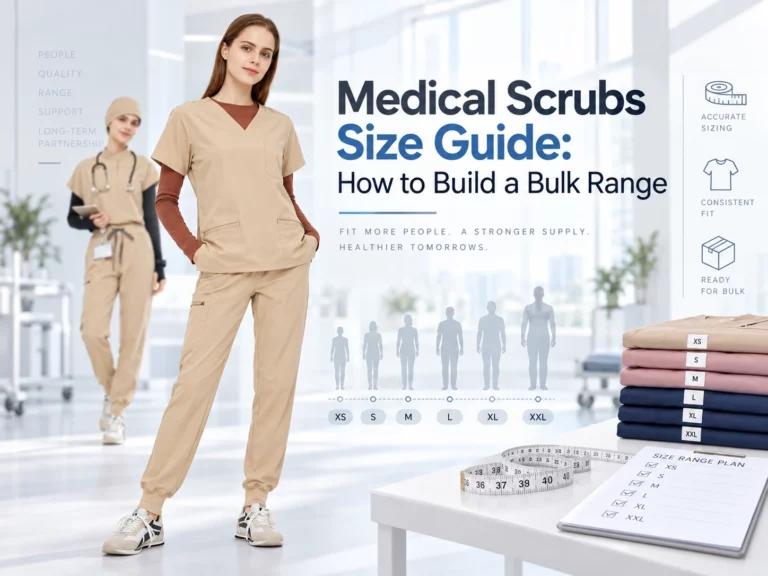
Drawstring waists, ribbed cuffs, hem slits, back pleats, jogger pants, and straight-leg options all affect comfort and fit. In bulk orders, one good medium-size sample is not enough. The pattern should stay consistent across sizes, especially when the buyer needs XS to 2XL or larger ranges.
Fit consistency reduces returns, staff complaints, and dead stock.
How Should Buyers Control Color, Size, and Reorder Consistency?
Many replacement problems begin before the uniform is worn. If colors, sizes, samples, and reorder rules are not fixed before production, the first batch may pass inspection but future replenishment becomes difficult.
Color standards should be confirmed before production
Medical uniforms often use color to separate departments, job roles, or brand identity. A small shade difference can look obvious when staff stand together in the same clinic or hospital corridor.
Buyers should confirm color codes, lab dips, approved samples, and fabric batches before production. For long-term programs, these records should be kept for later reorders.
Sample testing reduces bulk risk
Sampling should check fabric feel, washing response, fit, pocket structure, logo position, packaging, and color. If antibacterial, water-repellent, elasticity, or colorfastness requirements matter, they should be confirmed before mass production.
This step may take more time at the start, but it helps avoid much higher losses after the bulk order is finished.
Supplier planning supports urgent replenishment
A hospital may suddenly need extra sizes. A wholesaler may need to refill a popular color. A brand may need repeat stock before a sales season. When the supplier has fabric records, production files, and delivery planning, replenishment is easier to control.
This is where a stable supplier setup matters more than another low-price quote.
What Supplier Capabilities Reduce Long-Term Replacement Cost?
Durable medical uniforms depend on both product quality and supplier control. A buyer needs the approved standard to be repeated across batches, sizes, colors, and future orders.
Full-chain fabric control helps stabilize quality
A manufacturer with fabric development, garment design, production planning, and customer service in one system can control more variables. Fuyi’s uniform manufacturing background supports this type of program-based supply, especially when buyers need consistent fabric, color, and garment production.
For B2B buyers, this turns a one-time scrub order into a more stable uniform program.
Quality control should cover fabric and garments
Quality control should start before sewing. Incoming material checks, pre-production meetings, in-line inspection, finished garment inspection, and retained samples all reduce variation. A durable fabric with weak sewing is still a risk. A well-sewn garment made from unstable fabric is also a risk.
Medical uniform buyers should ask how quality is checked from fabric to finished product.
OEM support helps repeat the approved standard
When buyers need fixed fabric, color, logo, packaging, size rules, and reorder records, OEM medical uniform manufacturing becomes more practical than one-time spot purchasing. OEM support should help buyers keep the same standard across repeated orders, not only add a logo.
Durable Medical Uniform Buying Checklist
This checklist helps buyers turn a general sourcing discussion into clear purchasing requirements.
| Checklist Item | What Buyers Should Check | Why It Matters |
| Fabric composition | Fiber ratio, GSM, stretch | Matches comfort, durability, and washing needs |
| Wash performance | Shrinkage, pilling, colorfastness | Reduces early replacement |
| Functional options | Antibacterial, water-repellent, breathability | Fits different departments |
| Fit and sizing | Size range, sample fitting, movement | Reduces unusable stock |
| Construction | Seams, pockets, waistbands, cuffs | Extends garment service life |
| Color control | Lab dips, approved samples, fabric records | Prevents reorder mismatch |
| Supplier process | QC, sampling, OEM, delivery planning | Makes repeat orders stable |
Conclusion
Durable medical uniforms reduce replacement costs when fabric performance, washing stability, fit, construction, color control, and supplier follow-up work together. A low unit price may look attractive at first, but hospitals, clinics, brands, and wholesalers usually pay more when uniforms fail early or cannot match later reorders.
For B2B buyers planning bulk medical scrub orders, OEM programs, or repeat healthcare uniform supply, Fuyi can support tested fabric selection, scrub set options, customization, quality inspection, and reorder planning. Buyers can contact Fuyi Group to discuss fabric, sizing, color, and delivery requirements.
FAQs
Q1: What makes medical uniforms durable for bulk healthcare use?
A1: Durable medical uniforms usually combine suitable fabric composition, stable GSM, wash resistance, colorfastness, practical construction, and controlled supplier quality checks before mass production.
Q2: How can hospitals reduce replacement costs when buying medical scrubs?
A2: Hospitals can reduce replacement costs by checking wash durability, department functions, color consistency, sample fit, and reorder planning before placing a bulk order.
Q3: Why should brands and wholesalers ask for fabric test reports?
A3: Fabric reports help them explain product quality to downstream clinics or hospitals, support qualification needs, and reduce disputes about washing, colorfastness, or functional claims.