A scrub set can look sharp during a five-minute fitting and become irritating before lunch. The neckline may pull when the wearer reaches for a supply shelf. The waistband may slip after sitting. A trouser hem that looked neat in a showroom can drag along a busy corridor.
How should scrubs fit through a real shift? The wearer needs to reach, bend, sit, walk, and carry routine items without fighting the clothes. The neckline, waist, and hem also need to stay where they started. Good scrubs fade into the background. A poor fit keeps interrupting the day.
How Should Scrubs Fit?
Scrubs should sit close to the body without squeezing it. The wearer should be able to reach overhead without feeling a pull at the shoulders. There needs to be enough room through the chest and upper back for a full arm stretch. After sitting down and standing up, the waistband should still feel secure. At the ankle, the hem needs to clear the floor and the back of the shoe.
Use work movements as the judge. Stand naturally, reach for a high shelf, bend to a low drawer, sit in a chair, take a normal stride, and use the pockets. A well-fitting set stays comfortable through all of that. Repeatedly tugging down the top, lifting the waistband, or fixing the neckline is a clear sign to try another size or cut.
Should Scrubs Be Tight or Loose?
Scrubs need more movement room than a fitted everyday shirt and trousers. The fabric has to give at the shoulders, hips, seat, and knees. Too much fabric causes trouble too. A loose top can fall forward during a bend. Wide trousers can catch on equipment or brush the floor.
Aim for a clean, easy fit. It should look neat when the wearer is standing and feel easy when the work gets busy. Try samples over the layers normally worn on shift, including an underscrub or base layer where relevant. A sample worn over a thin T-shirt can give a misleading result.
How Should a Scrub Top Fit?
Start at the shoulder seam. It should sit close to the natural shoulder point. Have the wearer reach forward and cross both arms. The seam should stay close to that point, and the upper back should feel easy. A scrub top that pulls there soon becomes tiring.
Check the chest and armholes next. The wearer needs space to breathe and move without a tight line running across the fabric. The armhole should feel comfortable during repeated reaching. Then raise both hands and sit down. The hem should still cover the intended area instead of riding up or folding under the waistband.
V neck scrubs need a movement test of their own. The opening should stay settled when the wearer bends, reaches, or wears an ID badge and lanyard. A V that opens too far can feel exposed. A tight neckline can press at the base of the neck. Wear the same underscrub, badge, or stethoscope used at work, then move normally for a few minutes. That quick test often settles the question.
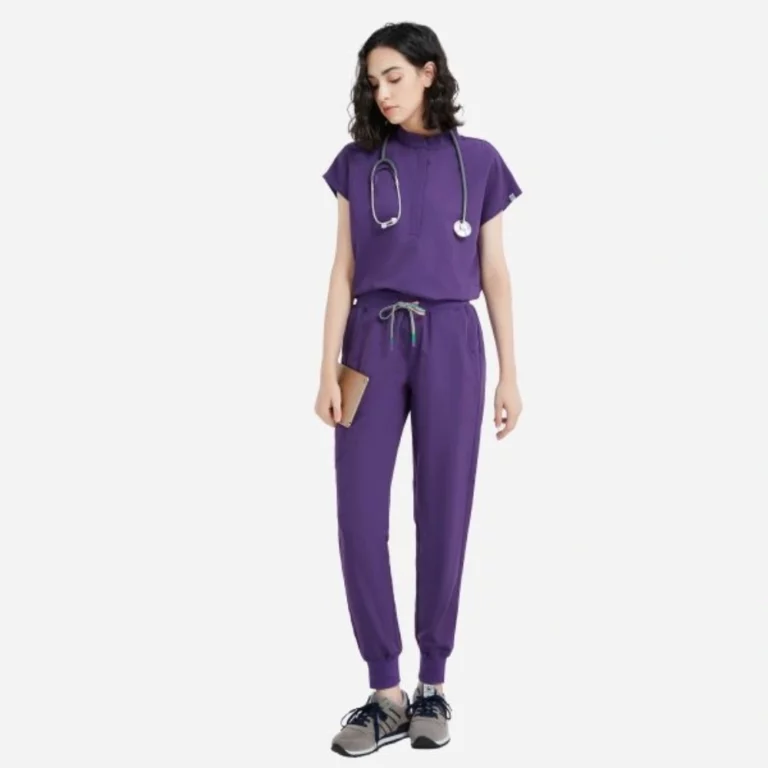
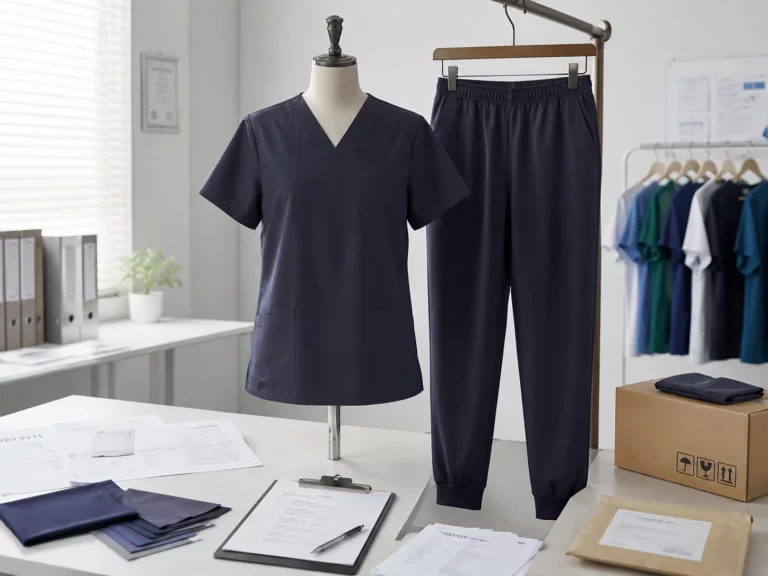
For a V-neck top with jogger-style trousers, these checks have to work together. The Elegance Affordable Scrubs Set combines a V-neck top, an adjustable drawstring waist, and jogger cuffs. It gives a team one sample style where the neckline, waist adjustment, and lower-leg finish can be assessed in the same fitting.
How Should Scrub Pants Fit?
Scrub pants should stay secure at the waist and feel easy through the seat and thighs. Ask the wearer to sit down, stand up, take a deep bend, climb a step, and walk at a normal pace. The waistband should remain in place through that sequence. A drawstring helps with small waist adjustments. The seat and rise still need to suit the wearer.
Check the rise while seated. Too little room there pulls at the back during a bend. Too much room bunches at the waist and can push the top upward. Through the hip and thigh, the wearer should be able to take a full stride and bend low without pinching or heavy folds.
Length changes how scrub pants feel as much as waist size. A jogger cuff keeps the trouser close to the ankle and can help keep the hem clear of the floor. Straight legs need a careful length check with the work shoes. In either style, the wearer should walk without stepping on the hem or feeling the leg twist around the calf.
Pockets need a real test too. Put the usual phone, penlight, marker, or small notebook into the planned pocket. Then sit and walk. A pocket that gapes, pulls, or lets an item hit the leg may turn a comfortable pair into an annoying one.
Six Signs Your Scrubs Are Too Tight
Tight scrubs often reveal themselves during motion. Watch for these signs during a fitting:
- The shoulder seam pulls forward when the wearer reaches or crosses both arms.
- The back of the scrub top shows clear strain when the wearer stretches forward.
- The armhole presses into the underarm during normal movement.
- The waistband digs in, rolls, or slips out of place after sitting.
- The seat or thighs pull during a squat, stair climb, or long stride.
- Pocket openings pull open once routine items are added.
One sign may call for a small adjustment. Several signs usually mean the wearer needs a different size, rise, or cut. A larger garment may relieve a tight chest and leave the neckline too loose. Try the full set again after every size change.
Five Signs Your Scrubs Are Too Loose
Loose scrubs can create a different set of problems. The fabric may catch, shift, or make the wearer adjust the set all day. Check for these signs:
- The shoulders hang well past the natural shoulder point.
- The neckline opens or falls forward during a bend.
- The top gathers heavily under a jacket or around the waist.
- The trouser hem brushes the floor or the back of the shoe.
- The seat and thighs carry so much extra fabric that the trousers twist while walking.
V neck scrubs can look clean and professional when the shoulder, neckline, and hem are balanced. A very large size often changes that balance. Review the garment in movement, then compare the next size down or a different cut before deciding.
Test Scrub Fit Before a Full Shift
Use a scrub size chart to choose the first samples, then let the fitting decide. Measurements show where to begin. They cannot tell a buyer whether the waistband stays put through a busy morning or whether the neckline shifts when someone reaches across a bed.
Ask each wearer to test more than one size where possible. Record the size that felt best, along with any issue at the shoulder, neckline, waist, rise, thigh, pocket, or hem. A second check against the scrub size chart helps a team spot a pattern, such as a cut that works for the middle of the size range and becomes tight at one end.
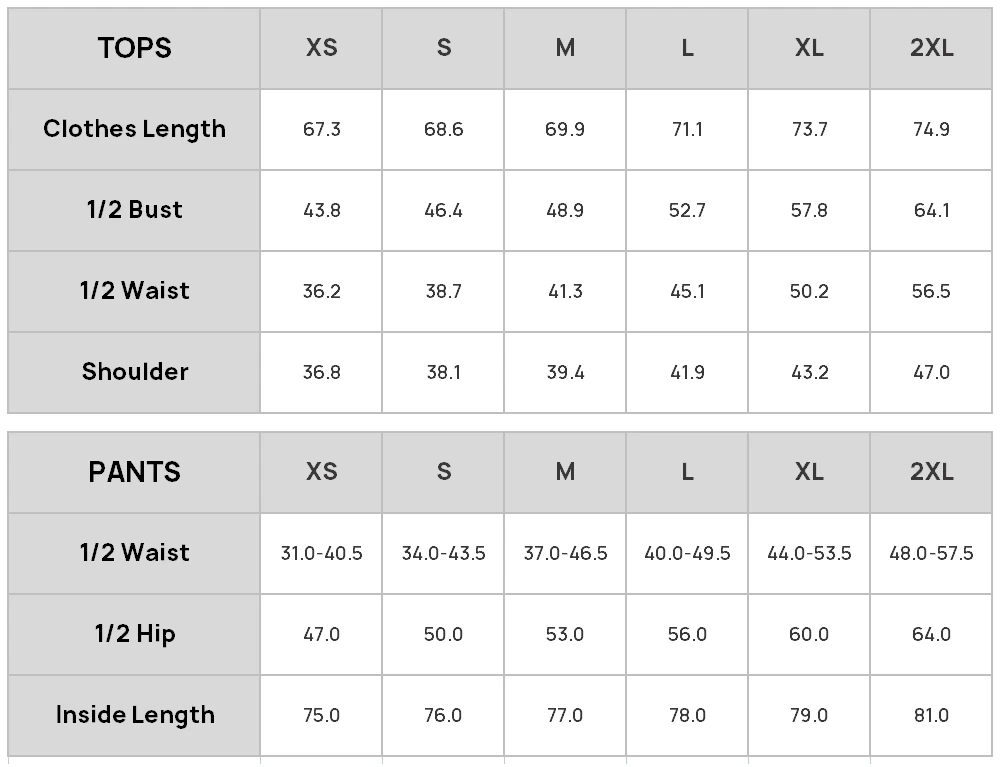
The test takes only a few minutes: raise both arms, reach forward, bend to a low shelf, sit in a work chair, walk, turn, and put routine items in the pockets. Repeat it in the sample that feels best. A scrub size chart still helps with ordering. The movement check shows whether that size works in practice.
Buying Scrubs for a Healthcare Team?
For a team order, fit needs to work across a size range. Start with a small fitting group that includes wearers near the lower and upper end of the planned sizes. Give everyone the same movement test and compare the notes. This can uncover a recurring shoulder, rise, or length issue before it reaches the bulk order.
Keep the final approval record short and useful: approved style, color, logo position where needed, measurement table, size range, and any agreed fit changes. Include a photo of the approved sample when the project has a special cuff, pocket placement, or neckline depth. This gives the supplier a clear reference for the next stage.
The Fuyi OEM and ODM service is useful when the fitting points to a practical change. Fuyi supports personalized uniform design, material selection, production, quality control, delivery, and after-sales service. A clinic that likes the Elegance silhouette can discuss a color, logo, packing detail, or fit adjustment and keep the approved sample as the reference point.
How Fuyi Supports a Consistent Team Fit
Fuyi’s Elegance product page includes the visible V-neck, drawstring waist, jogger cuffs, and a size-chart image, which gives buyers specific points to review during sampling. The set is described as lightweight and breathable with airflow and a professional appearance. Those are useful product qualities to check on the worn sample alongside the actual fit. The gallery and size chart sit on the same page. It also shows the set on a wearer. That is handy when people compare the V-neck, waist, cuffs, and size range during a fitting.
Once a team has approved the sample and size range, Fuyi can develop a personalized uniform design through its OEM and ODM service. The company works with material suppliers and applies quality control through manufacturing. Fuyi inspection process uses AQL2.5 or AQL4.0 references and accepts customer-selected third-party inspection, including SGS and ITS. That gives a buyer a way to keep the approved sample, measurements, and visible details connected to the production check.
Conclusion
Good scrubs should feel almost uneventful during a shift. The wearer should be able to reach, bend, sit, walk, and use pockets without constantly adjusting the neckline, pulling down the top, or lifting the waistband. Start with movement, then look closely at the shoulders, chest, armholes, waist, rise, thighs, and length.
For a team order, test the fit across more than one size and keep the approved sample notes with the order. Buyers can contact the Fuyi team when they are ready to discuss an Elegance-based program or another scrub style for their team.
FAQs
Q1: How should scrubs fit during a long shift?
A1: They should allow the wearer to reach, bend, sit, walk, and use the planned pockets without pulling, gaping, riding up, or dragging. A few minutes of movement in the sample can reveal more than a standing mirror check.
Q2: Should scrubs be tight or loose?
A2: Aim for a neat, comfortable fit with enough room for a full reach, bend, and stride. The shoulders, chest, waist, seat, and thighs should move easily, while the neckline and hem stay controlled.
Q3: Why should a team use a scrub size chart and samples?
A3: The chart helps select the first sizes. Samples show how the cut behaves on real people during actual movements. Reviewing both gives a team a stronger basis for approving the final size range.