 Only after a wash-and-wear test with the recommended care has been carried out on the sample, approved stretch scrubs will have been found after fitting. The important dimensions, recovery, color, seams and pockets must all be compared after the garment has been washed and worn. Although on first try the fabric feels very soft against the skin of the wearer, after some time the scrubber will still need some adjusting in order to be suitable for daily use in the clinic. How differences in uniform products impact a uniform buyer for replacement orders as well as initial purchase, for example a shirt that tightens after washing may make it more difficult to reach in back, pants that lose their shape may affect how a loaded pocket sits. Does the approved uniform hold up through the laundry care that your customers actually use? Fuyi Group is a developer, manufacturer and designer of garments, specializing in fabrics for medical scrubs. They offer a range of off-the-shelf medical scrub sets and use their integrated supply chain to explore options for buyers in terms of developing custom fabrics and garments.
Which Fabric Details Should Start the Test Plan?
Write down the exact material being evaluated before discussing wash performance. “Stretch fabric” is too broad to identify a repeat order or explain why two samples behave differently.
Identify the Blend and Construction
Our poly-rayon four-way stretch scrub is made with 72% polyester, 21% rayon and 7% spandex at 200 GSM. The poly-stretch option is made with 94% polyester and 6% spandex at 170 GSM. Both of these options are soft, breathable, easy to care for and offer a non-wrinkle characteristic. The fabric options listed above are all for separate purchases and indicate the percentage of fiber and the weight of the fabric. However, the percentage of fiber and the weight of the fabric do not indicate a fixed amount of shrinkage or number of washes. You must ask for the specifications of the exact style, color and order you are purchasing. Also note that the 200 GSM poly-rayon option has been sanded to give a softer hand. Try washing and drying the fabric and feeling it against the body in the same situation as you would wear the garment. The 170 GSM poly-stretch option is a much lighter weight fabric than the above option and should be evaluated in the garment that it will be used to make. While fabric weight is useful as context, a trial of the finished uniform is still necessary.
Confirm the Real Care Route
Is the user washing at home or sending out uniforms via a managed laundry? Record the proposed detergent, washing temperature, drying method and local infection control policies. Check with supplier for material compatibility before choosing. High temperature washing claims are best avoided and should not be plagiarized from other fabrics within a supplier’s product portfolio. Water repellent finishes are optional treatments in Fuyi’s scrub portfolio. Ensure any order containing such finishes are clearly identified and that methods for assessing their performance are agreed.
How Can Buyers Measure Shrinkage and Recovery Properly?
Tests should compare similar articles. Mark the measurement points on test articles and retain a reference garment for later reference to distinguish the effects of laundering from effects of measurement by different people.
Compare Dimensions Under Consistent Conditions
Measure garments before washing them and after they have been washed and dried as part of the agreed test for laundering. Measure samples that have been allowed to dry and to rest under test conditions. Do not compare a hot, newly dried garment with an unwashed sample that has been stretched. When testing medical uniforms for wash performance, test dimensions that affect use of the garment such as chest width, body length, sleeve opening, waist, hip and inseam where relevant. Dimension change is calculated as post-wash measurement minus original measurement, divided by original measurement, multiplied by 100. The sign must be preserved so that shrinkage and growth are reported as such. Before conducting a trial, both parties should agree upon the changes that can be accepted. There is no one-size-fits-all acceptance percentage for all Fuyi fabrics and garments. The acceptable deviation is dependent upon the item’s intended use, the method of care that it will receive and the terms of the contract.
Check Recovery Separately From Stretch
Stretch describes extension; recovery describes the return toward the original shape. During a controlled wear trial, inspect the knees, seat, elbows, and pocket openings after normal movements. Where a formal stretch or recovery requirement applies, agree on the test method and reporting conditions with the supplier. The amounts of spandex in Fuyi’s 200 GSM blend fabric and in its 170 GSM fabric are 7% and 6% respectively and these figures must be tied to the correct specifications for each of the finished styles made with each of these fabrics. It does not automatically follow that the higher percentage of spandex in the more heavily constructed fabric will yield better recovery.
Which Garment Details Need a Wash-and-Wear Trial?
When choosing uniforms, fabric measurements are only half the story. The garment must also enable individuals to reach, bend, carry light objects and move about during their shift without constant readjustment. 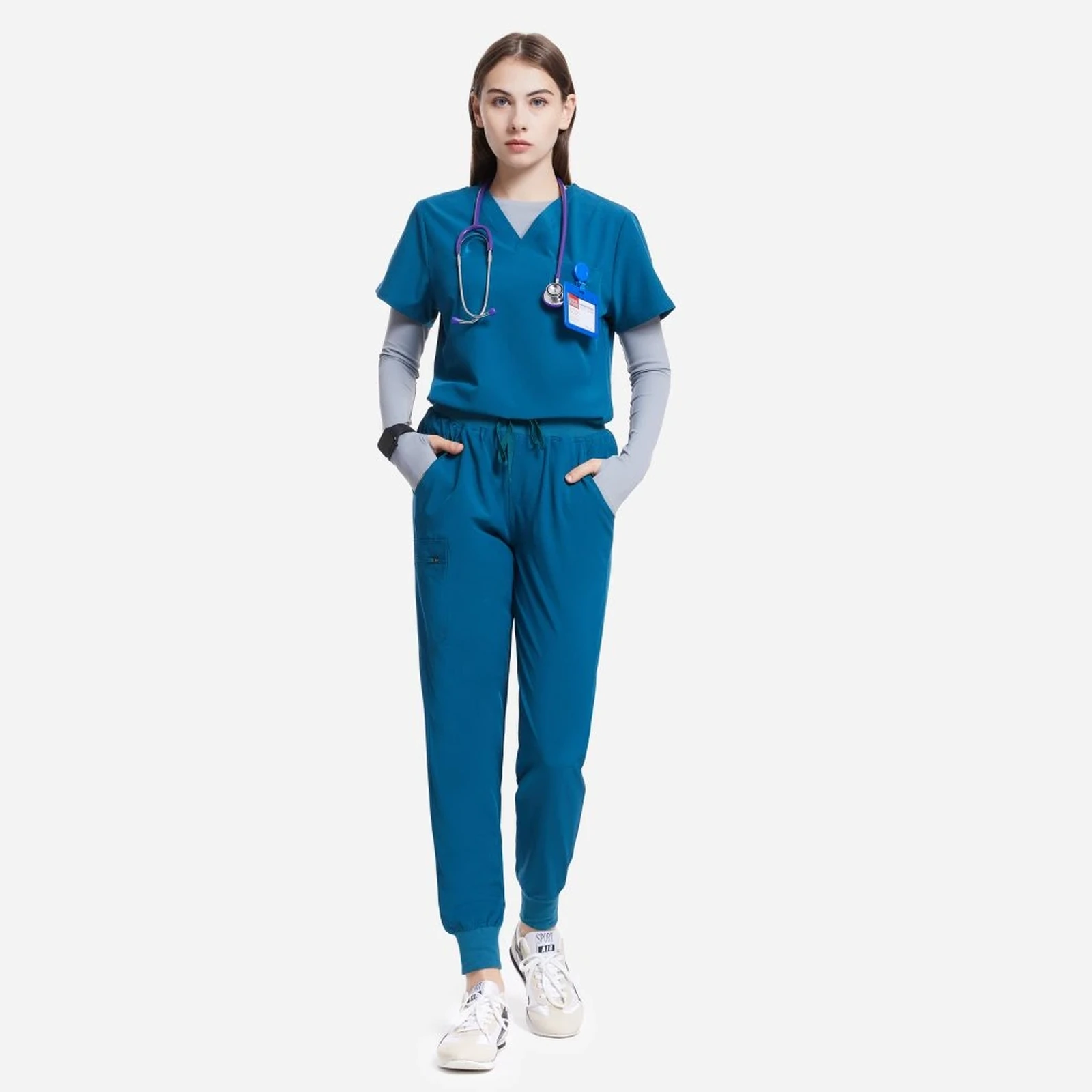
Test the Features People Use
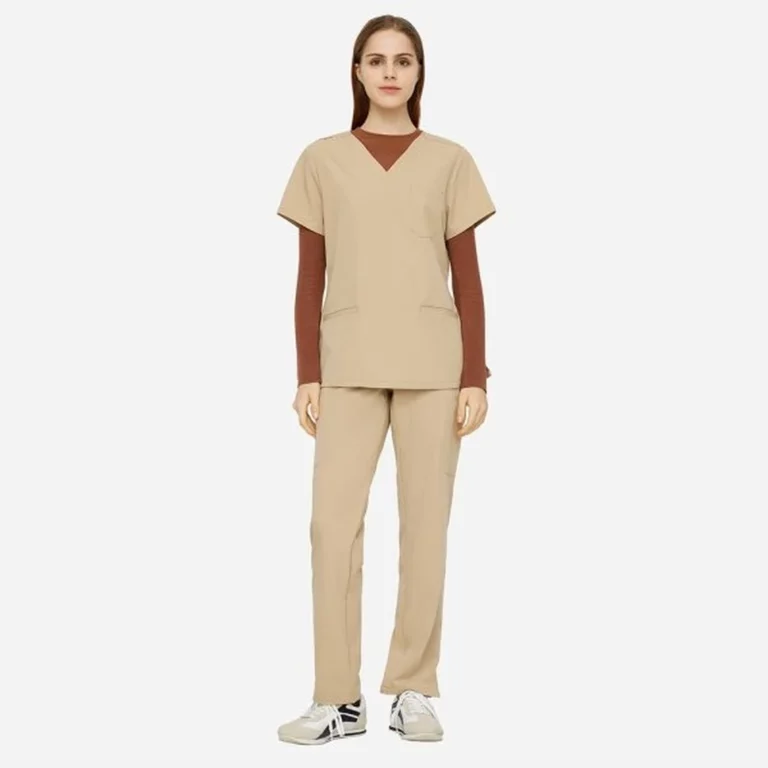
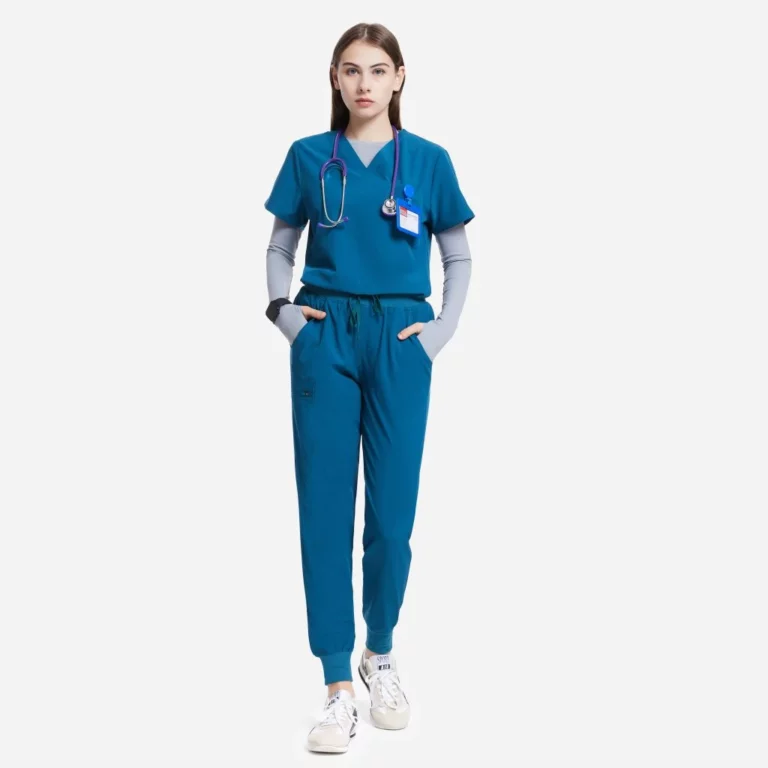
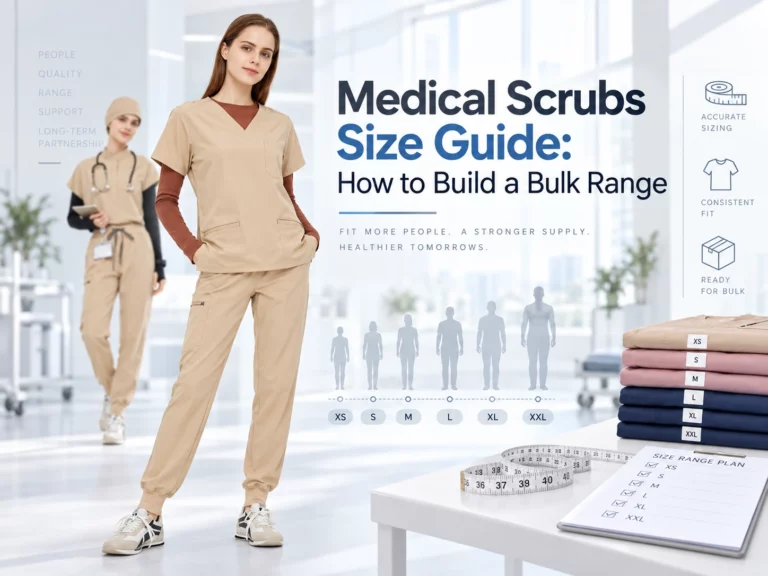
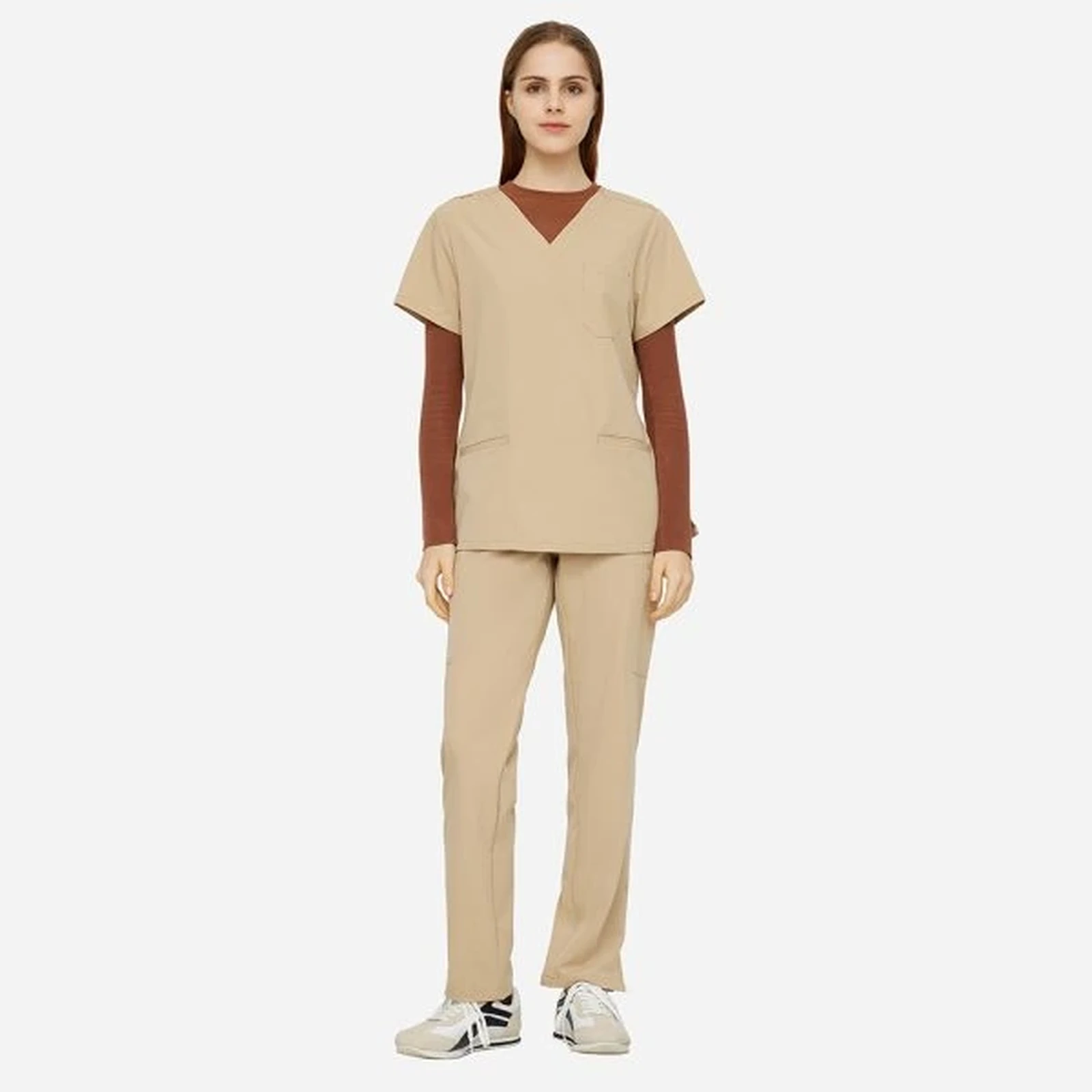
The Ellisa top from Fuyi has a V-neck, 1 chest pocket, 2 side pockets and hem slits. The arrangement of the pockets provides sufficient storage. The hem slits allow for better movement. Check after washing the top if it can still be reached with and if the openings of the pockets are still accessible. The Ellisa scrub has a curved hem at back. The design features a soft brushed surface with four-way stretch allowing excellent movement. Available in scrub styles throughout the Fuyi range in sizes XS to 2XL. Request the end of range sizes for the trial as opposed to approving the whole range from the middle size sample. When counting pockets on pants, first determine the style of the pant and then evaluate. The Avant jogger has a drawstring, ribbed cuffs and 5 pockets. The Track is a straight-leg style with a drawstring and 9 pockets. The details listed above relate to separate styles and should not be counted as part of the other styles in the range. Test pockets with the articles that users are allowed to carry and keep this weight consistent between tests. See if seams twist, if waistband needs to be constantly readjusted or if cuffs pull when sitting. Record the action that reveals a problem for the pattern maker to solve.
Review Color and Appearance Together
Test the proposed colors against retained references through the agreed test process. View the colors under consistent lighting and assess changes in shade, print transfer to adjacent materials, overall surface appearance, and any seam puckering. Also check the appearance of any embroidery. Wrinkle resistant fabrics still require an agreed appearance standard. Whether garments are worn straight from the dry or finished in some way needs to be agreed by the person purchasing the fabric and the laundry team otherwise they will judge the sample against their own expectations.
How Should the Approved Trial Control Bulk Supply?
Medical uniform wash testing is only useful if the production order is tied to what has passed the test. The fabric, garment, color and care information must all be kept together when approving a specification for wash testing.
Freeze a Traceable Reference
The approval record should contain:
- Style and size, with the agreed measurement chart.
- Fabric composition, weight, color, and optional finish.
- Care conditions, trial sequence, and acceptance limits.
- Results, photographs, and the approved sample revision.
Retain both an unwashed reference and the evaluated sample where practical. These answer different questions: what was supplied, and how it behaved under the agreed process. Request a review if a proposed production change affects the material or construction behind the approval.
Use the Supplier’s Integrated Capabilities
Fuyi Cotton is a Cotton spinning, weaving, dyeing & garment maker with in-house Fabric Development and Garment Development departments. This allows for discussion of fit problems and their possible causes in fabric or construction with the supplier who makes the garment. However, this does not replace an acceptance test. We can provide OEM and ODM services. The development brief should include all the possible customization for logos, packaging and graphics etc. Also, please make sure all the embroidery and other decorations on the garment that will be used in production are applied and assessed in the trial. The Ellisa scrub set can be used as a starting point to discuss a V-neck top and coordinated pants. Make sure the quotation includes the exact combination of products and fabrics you wish to order. The final purchase specification will then include all approved products.
Conclusion
Approve stretch scrubs against the care process and working movements they will face. Keep composition and weight accurate, measure dimensional change consistently, and evaluate recovery, pocket function, and appearance on the finished garment. Fuyi Group’s fabric and garment capabilities make these connected decisions easier to discuss. Request a scrub sampling proposal with your laundry conditions, preferred styles, colors, size range, and acceptance criteria so the development work starts with a usable test brief.
FAQs
Q1: Will scrub fabric with four-way stretch not shrink? A1: No. Measuring for stretch in a specific direction does not necessarily establish dimensional stability after laundering. Test the specific garment that you have specified to be sourced, and be tested after being subject to the care specified, against the retained reference sample prior to approving bulk supply. Q2: Can all stretch scrub fabrics be washed with the same laundry process? A2: Do not assume. Check the care instructions for the specific blend, finish and garment type you are sourcing. Get the supplier to check your laundry requirements, particularly if you are managed laundry or have infection control policies in place. Q3: What do I need to start a Fuyi sample evaluation? A3: Intended users, preferred style, size range, colors, wash process, acceptance criteria. Optional finishes and branding to ensure prototype sampled is the uniform you will order.