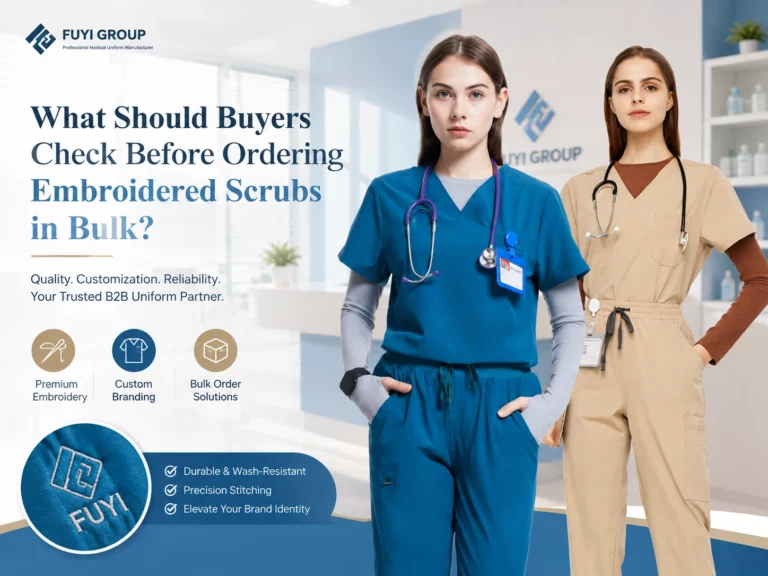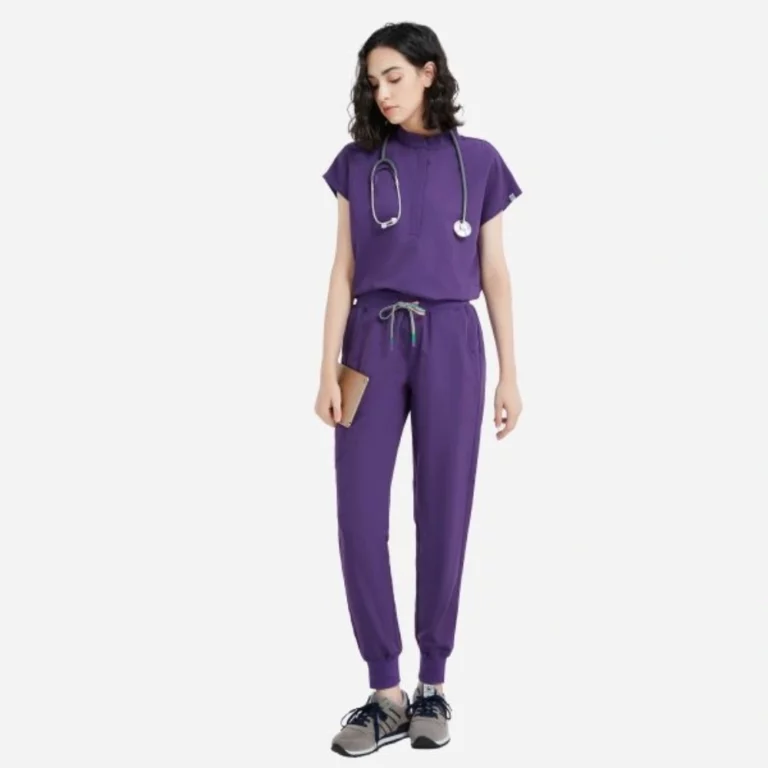
A logo may look perfect on a screen and still cause problems once it is stitched onto a scrub top. The design may sit too close to a pocket. Dense stitching may make a soft stretch fabric feel stiff. A staff name can be entered incorrectly. Six months later, a reorder can arrive with the logo a little higher than the original batch.
For hospitals, clinics, distributors, and private-label buyers, embroidered scrubs should therefore be treated as a complete product specification, not simply as standard scrubs with a logo added at the end. The strongest ordering process connects the garment, fabric, embroidery artwork, staff information, sample approval, bulk inspection, and repeat-order records from the beginning. That is especially important when custom embroidered scrubs will be worn across several departments or reordered throughout the year.
Should Buyers Choose the Scrub Before Finalizing the Embroidery?
Yes. The base garment should come first because the available embroidery area depends on the actual fabric, neckline, pockets, seams, and garment construction.
The same embroidery file can behave differently on two scrub tops even when the finished logo size is identical.
How Does Fabric Affect Embroidery?
Fuyi Group offers several medical scrub fabric constructions that give buyers different options for comfort, stretch, weight, and daily care.
One commonly used poly stretch construction is 94% polyester and 6% spandex at 170 GSM. Another option is a 200 GSM poly rayon four-way stretch fabric made from 72% polyester, 21% rayon, and 7% spandex.
These differences matter.
A 170 GSM stretch scrub has a different hand feel and movement from a softer 200 GSM poly-rayon blend. If embroidery is dense or covers a large area, the embroidered section becomes less flexible than the surrounding fabric. For that reason, custom embroidered scrubs should be sampled on the same fabric that will be used in bulk production.
Buyers comparing base styles can start with the medical scrub collection and narrow the selection before fixing the embroidery size and position.
Why Do Pockets and Necklines Change Logo Placement?
Most embroidered scrub tops place the company name, clinic logo, employee name, or job title around the upper chest. That area is often more complicated than it first appears.
A chest pocket may reduce the usable embroidery space. A zipper or button placket changes the visual center. Princess seams, V-necks, stand collars, and other construction details can also make the same placement measurement look different when the garment is worn.
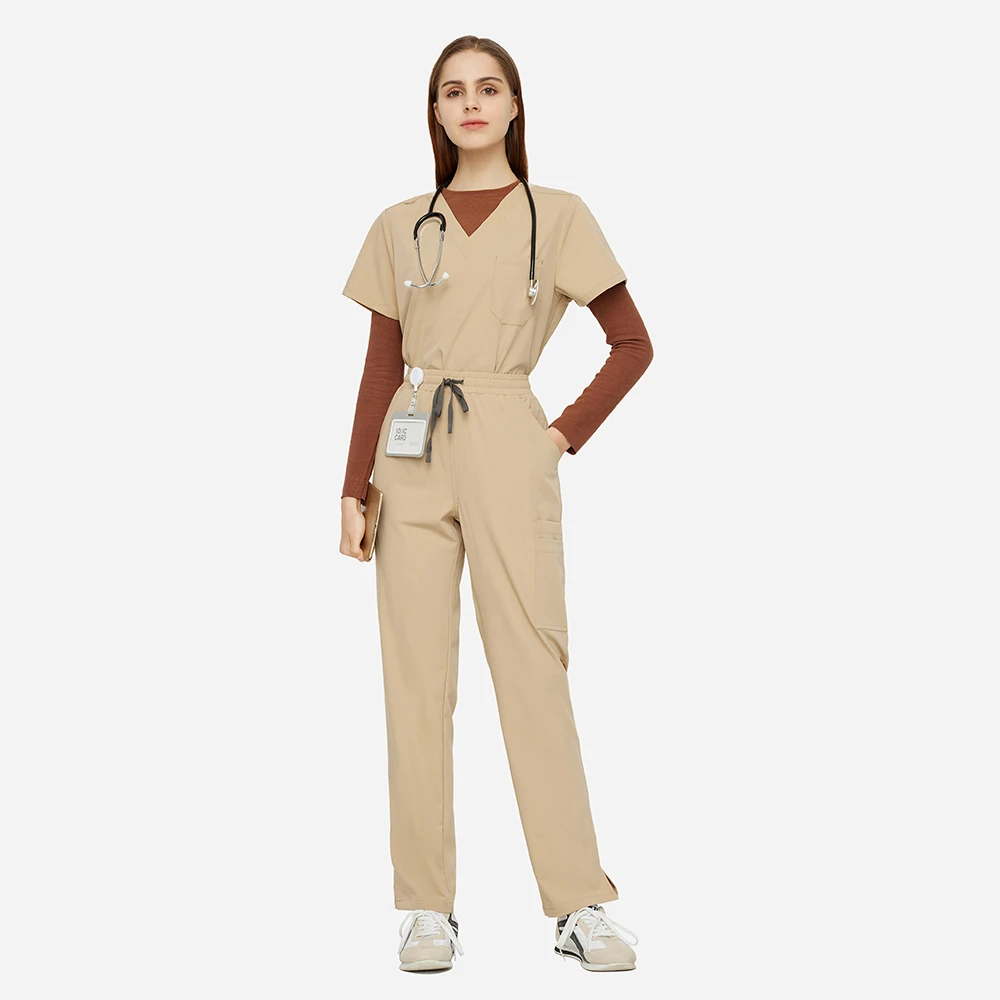
The Valiant scrub top, for example, combines a V-neck with a chest pocket and two front patch pockets. Buyers can use the Valiant scrub set as a practical reference when checking how logo width, pocket clearance, and embroidery height work on a 94% polyester and 6% spandex fabric.

What Should Go Into an Embroidery Approval File?
A good approval file should make the second order easier than the first.
For bulk embroidered scrubs, approving only a logo image leaves too many production details open. Production needs a repeatable set of instructions that connects the artwork to the exact garment.
Which Details Should Buyers Lock Before Production?
A practical embroidery specification can include:
- garment style or SKU
- garment color
- fabric composition and weight
- approved artwork version
- finished embroidery width and height
- thread colors
- placement measurements
- employee-name format
- job-title format
- department wording
- approved sample reference
- packing or staff-allocation information
Placement should be measured from fixed parts of the garment rather than described with loose instructions such as “left chest” or “slightly above the pocket.”
For embroidered scrubs for clinics, this becomes even more useful when one clinic group uses the same logo across several colors, departments, and employee roles.
Why Is a Physical Sample More Useful Than a Screen Proof?
A digital proof can confirm artwork, spelling, basic proportions, and thread-color direction. The physical sample answers the questions that matter once the scrub is actually worn.
The buyer can check whether the area around the embroidery remains flat, whether the logo looks centered on the body, whether a chest pocket is still easy to use, and whether the design feels comfortable when the wearer reaches or bends.
Thread color should also be judged against the actual garment color.
For a softer stretch option, the Twilight hospital scrubs provide a 72% polyester, 21% rayon, and 7% spandex construction that can be reviewed during embroidery sampling.
How Should Employee Names and Job Titles Be Controlled?
Uniform embroidery becomes more complicated when the logo stays the same but the wording changes from person to person.
One hospital order may contain a fixed hospital logo plus dozens or hundreds of employee names, credentials, and department names.
Why Should Variable Information Be Kept Separate?
Consider four garments:
Sarah Miller, RN Daniel Lee, MD Emily Carter, Pediatrics Robert Hall, ICU
The logo is fixed, but the text beneath or beside it changes.
A clean order sheet should therefore use separate fields for employee name, title, department, garment style, color, size, and quantity. This makes checking easier before production begins.
For embroidered scrubs for clinics with regular staff changes, this file can later become the starting point for new-hire orders. A clinic only needs to add the new employee details rather than rebuild the whole order.
Capitalization also needs a rule. RN, R.N., Registered Nurse, ICU, and I.C.U. should not be mixed unless that difference is intentional.
Should Names and Logos Share the Same Layout?
They can, but the final arrangement should be tested first.
A hospital logo may need more visual space than an employee name. Adding the clinic name, logo, person’s name, professional credential, and department to one small chest area can quickly make embroidered scrub tops look crowded.
For larger uniform programs, the cleaner approach is to approve two elements: a fixed branding layout for every garment and a variable text layout for employee-specific information.
Once those rules are fixed, later additions become much easier to process.
What Should Be Checked After Embroidery and Washing?
The embroidery sample should not be approved immediately after stitching and then forgotten.
Medical uniforms are repeatedly washed, so buyers should also review how the garment and embroidered area behave after the cleaning process planned for the uniform program.
What Can Change After Repeated Care?
Check the area around the embroidery for puckering, distortion, loose thread, shape change, or an uneven surface.
Then look at the complete garment.
Even if the stitched design remains stable, dimensional change in the scrub top can alter how the logo appears when worn. That is why fabric testing and embroidery approval should be connected rather than handled as completely separate tasks.
Fuyi Group can match medical uniform projects to specified fabric parameters, color requirements, and testing needs. Small-sample testing before mass production can also be used to compare bulk fabric performance against the approved requirement.
Medical fabric programs can include checks for composition, physical performance, color fastness, shrinkage, antibacterial performance, and water repellency according to the selected material and project specification.
Why Does Color Need a Second Check?
The thread should remain easy to recognize against the garment after washing.
A dark thread on navy scrubs may look elegant but lose clarity from a distance. Very light thread may become visually dominant. Department color systems can make this even more important because the embroidery needs to stay recognizable across several scrub colors.
For bulk embroidered scrubs, keeping both the approved garment color and thread reference in the master specification makes later production easier to repeat.
What Should Be Inspected in a Bulk Embroidered Scrub Order?
Embroidery adds another inspection layer to normal garment QC.
Measurements, sewing, fabric appearance, garment color, pockets, and finishing still need to be checked. The embroidery then needs its own control points.
Which Embroidery Problems Should QC Catch?
A useful inspection can include:
- logo placement consistency
- correct artwork version
- correct spelling
- employee name and garment matching
- thread-color consistency
- embroidery orientation
- loose or untrimmed thread
- puckering around the stitched area
- pocket accessibility
- incorrect credentials or departments
- packing against the staff list
These checks become more important as quantity grows.
One spelling error on a sample can be corrected quickly. The same spelling error repeated across an entire department becomes a costly sorting and replacement problem.
Why Does Supply-Chain Control Matter for Repeat Orders?
Custom embroidery is easier to reproduce when the garment itself is also controlled.
Fuyi Group integrates fabric development and garment manufacturing and supports medical uniform projects across fabric selection, style development, sampling, production, inspection, branding, and packaging. This allows the embroidery specification to be handled together with the scrub specification instead of being treated as an unrelated final process.
Fuyi Group also maintains long-term fabric inventory across multiple fabric types and colors. This gives repeat-order programs a stronger base for color consistency and quicker replenishment when approved stock fabrics are used.
Buyers preparing a new project can contact Fuyi Group with the planned garment styles, quantities, colors, logo artwork, and personalization requirements so that sampling and production details can be confirmed together.
How Can Buyers Make Reorders Much Easier?
The first production run proves that the product works. The reorder tests whether the records are good enough.
A clinic may hire 15 new employees three months later. A nurse may move from one department to another. Another branch may begin using the same uniform. One scrub color may sell faster than expected.
If the original embroidered scrubs order has a complete specification, these changes are manageable.
Keep the approved artwork file, digitized embroidery reference, finished dimensions, thread colors, garment SKU, fabric, garment color, placement measurements, employee-text rules, size information, packing method, and approved sample together.
A different garment style may require another placement check because pocket or neckline positions have changed. A new scrub color may need another thread-color approval. A change in staff credentials simply requires updated variable data.
This is especially valuable for buyers managing bulk embroidered scrubs across several order cycles. Instead of recreating the job every time, the supplier and buyer work from an established specification.
Fuyi Group can support both custom medical uniform development and in-stock medical uniform programs, giving wholesalers, clinics, and medical uniform brands different ways to plan initial orders and later replenishment.
Conclusion
Good embroidery begins before the embroidery machine starts.
The base garment, fabric, pocket position, logo size, thread color, employee information, sample, wash performance, QC method, and reorder records all affect the final result.
For hospitals and distributors, custom embroidered scrubs work best when branding is treated as part of the complete uniform specification. Embroidered scrub tops should be tested on the intended fabric, while staff data and placement rules should be recorded before bulk production.
A clear system also makes embroidered scrubs for clinics easier to expand when new employees arrive. For larger programs, reliable records turn bulk embroidered scrubs from a one-time customization job into a repeatable uniform program.
FAQs
Q1: What information should buyers prepare before ordering embroidered scrubs?
A1: Prepare the garment style, fabric or product reference, quantities, colors, size range, logo artwork, preferred logo dimensions, placement, and any employee names or job titles. For personalized orders, a structured staff list helps keep employee information, size, color, and quantity aligned.
Q2: Can embroidered scrub tops use stretch fabrics?
A2: Yes. Embroidered scrub tops can be made with stretch fabrics, but the embroidery should be sampled on the actual production material. Logo size, backing, placement, and stitching can then be checked together with the garment’s movement and surface appearance.
Q3: How should buyers manage reorders of embroidered scrubs for clinics?
A3: Keep the approved artwork, thread colors, embroidery dimensions, placement measurements, garment SKU, fabric, scrub color, employee-text rules, and previous sample reference. For embroidered scrubs for clinics with frequent new hires, a standard staff-order sheet makes later additions faster and keeps the uniform appearance consistent.