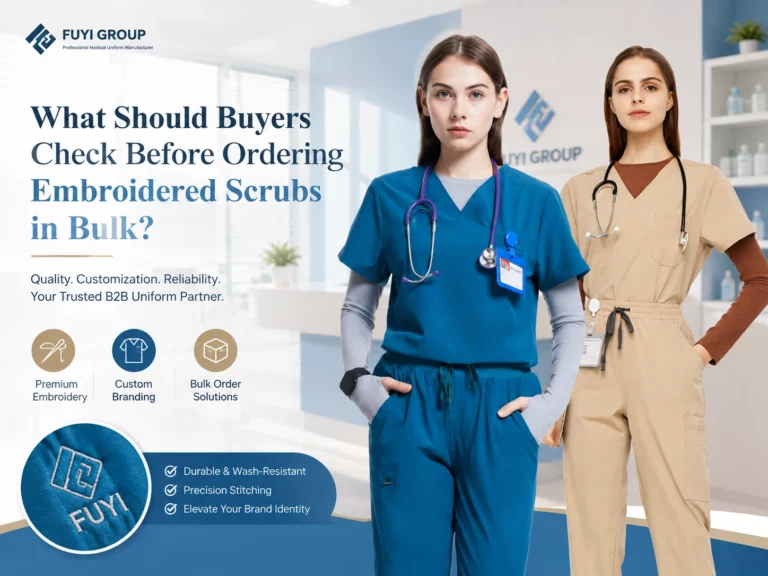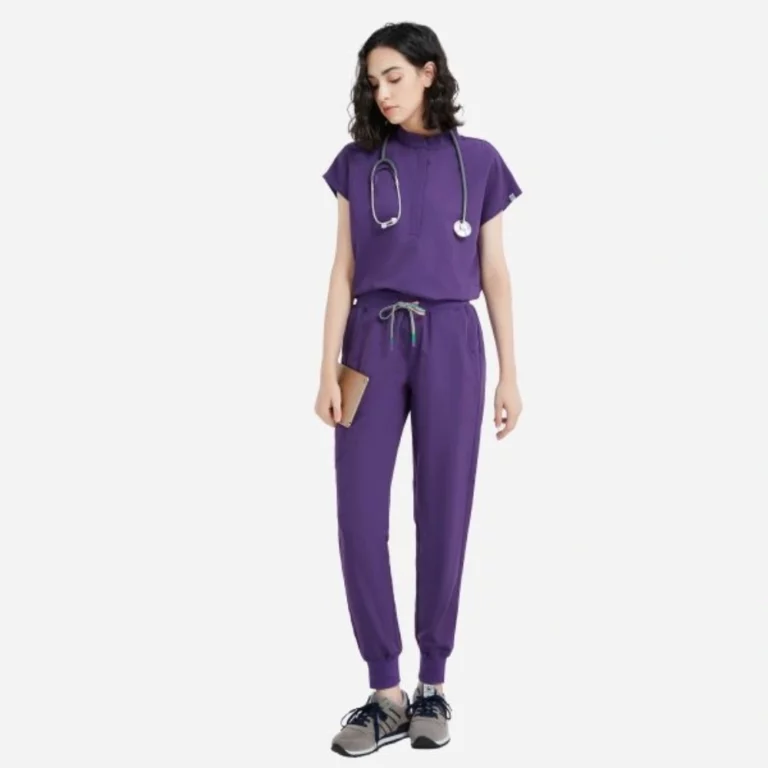
Scrubs sometimes pass the mirror test and fail the shift test. By late afternoon, a waistband may wrinkle, shoulders may feel tight, or the color may already look dull after a few laundry cycles. That is why what material are scrubs made of is not a throwaway question. It decides how the uniform feels on staff, how it handles cleaning, how steady the color stays, and whether the same fabric can be reordered without a surprise batch.
Hospital scrubs rarely come from a single yarn. More often, polyester is blended with rayon, spandex, cotton, or microfiber so the garment can do more than cover the body. A clinic that sees patients all day may care about a softer hand feel and a neat surface. A ward that washes uniforms hard and often may care more about color hold, wrinkle control, and repeatable batches. Fuyi Group’s medical scrubs collection is arranged around those material choices, not just around color names.
Most Hospital Scrubs Begin With Blended Fibers
Polyester shows up in many hospital uniforms for plain reasons: it keeps color better, dries faster, and does not crease as easily during ordinary wear. Those details are not small once a team is wearing the same style every week. Staff move between rooms, sit for charting, bend at bedsides, and send garments through laundry again and again. When the base fiber cannot keep up, the set ages before the replacement schedule catches up.
Rayon, cotton, and spandex each change the hand in a different way. Rayon gives the cloth a smoother fall, closer to the soft drape many people expect from a premium set. Cotton-rich blends feel more familiar against the skin and can breathe well, which helps teams that dislike a shiny synthetic touch. Spandex is there for reach, squatting, bending, and recovery. A practical scrub material usually sits between those needs: durable enough for repeated care, soft enough for long wear, and flexible enough for clinical movement.
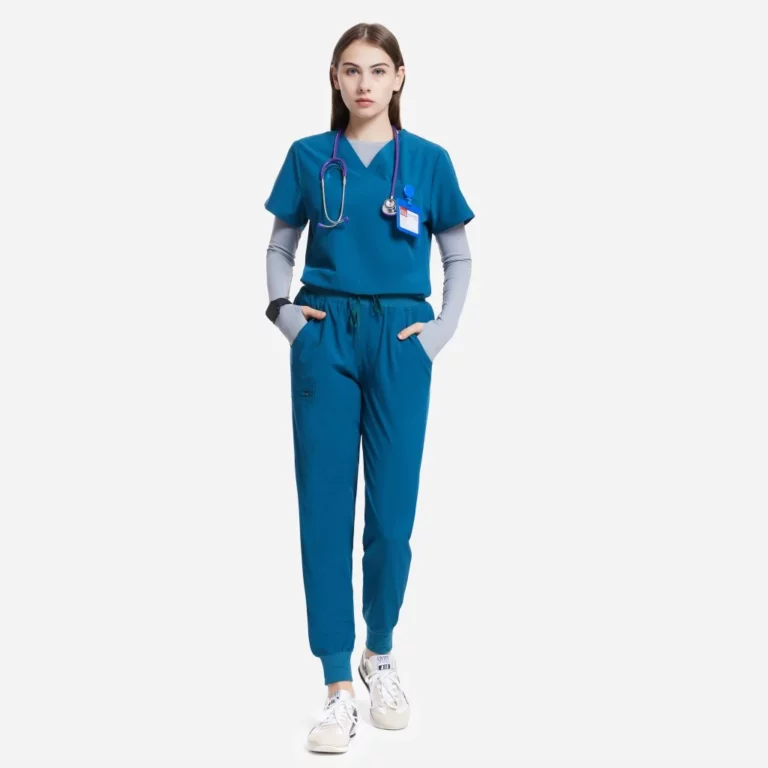
Fuyi Group uses several fabric families for medical uniforms. The poly rayon 4-way stretch option is listed at 72% polyester, 21% rayon, and 7% spandex, with a 200 GSM weight. It is built for scrub sets where softness, drape, stretch, and easy care all have to work together. Teams comparing a higher-comfort line with an existing program can use the Poly Rayon 4 Way Stretch Series as a practical starting point.
Why Fabric Feels Different After a Long Shift
The first fitting only tells part of the story. Fabric behaves differently after a full day of reaching overhead, sitting at a desk, carrying supplies, and going through wash cycles. A lighter cloth may feel cooler at first, yet it can wrinkle or lose shape quickly if the yarn, weave, and finish are weak. A heavier cloth may hang better, though it can feel warm in a crowded clinic if the hand feel and breathability are off.
This is where scrub fabric details stop being technical trivia. Weight, weave, stretch direction, finish, and recovery show up in how the uniform sits on the body. A 170 GSM poly stretch set can be light and practical for value-driven orders. A 200 GSM poly rayon stretch set usually gives more softness and a cleaner drape for clinics that care about patient-facing appearance. One is not the automatic winner; the better choice depends on the uniform brief.
Fuyi also offers poly stretch fabric at 94% polyester and 6% spandex, commonly used in TS-style scrub sets. It is designed for practical daily wear with stretch, quick drying, anti-wrinkle performance, and easy care. Teams looking at a cleaner price point can compare the Poly Stretch Series beside softer TRS options before choosing one fabric family for a full rollout.
What TRS Fabric Means in a Scrub Program
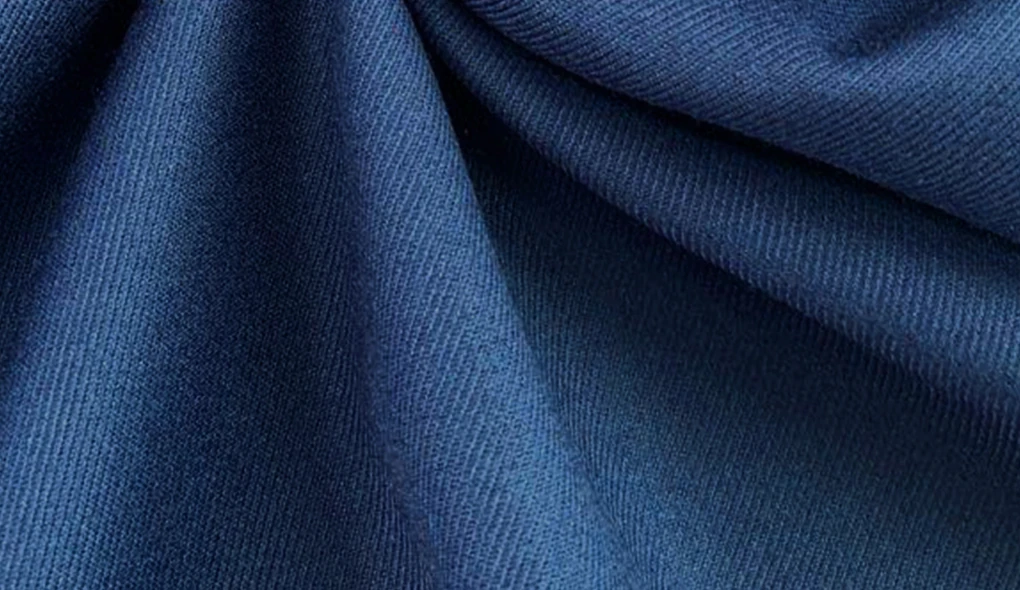
The term trs fabric often comes up when clinics compare medical scrubs by comfort and finish rather than color alone. In Fuyi’s medical uniform materials, TRS is tied to poly rayon stretch options that combine polyester, rayon, and spandex. That mix is useful when a clinic wants a softer surface, better drape, and stretch recovery without giving up practical laundering.
A TRS-style program is a good fit for front-facing clinics, dental teams, beauty clinics, and outpatient departments where staff uniforms need to look tidy throughout the day. The fabric should still be tested like workwear: after washing, after movement, and after logo placement. If the sample feels excellent when new but changes after care, the program is not ready for bulk approval.
TS or poly stretch can be a smarter choice for cost-sensitive programs, larger staff groups, or departments that need reliable color and simple care more than a premium hand feel. The decision is not about choosing the most expensive option. It is about matching fabric behavior to the department’s work, laundry routine, and reorder expectations.
Match the Fabric to the Department and Order Size
The best fabric for scrubs changes with the room it works in. Outpatient clinics often want a neat, soft-looking uniform because staff move from reception to treatment rooms and back to patient conversations. Dental teams usually care about stretch, easy cleaning, and pockets that do not drag the garment out of shape. Hospital wards put more pressure on laundering and batch consistency, so the fabric has to come back from washing looking close to the same.
In beauty clinics, rehabilitation centers, and private practices, the fabric also has to carry part of the brand image. Drape, color depth, neckline shape, and logo placement decide whether the uniform looks calm and professional after a few hours of wear. If the cloth sits flat or creases too quickly, even a good design can lose its polish. Sometimes the fix is not a new style at all, but a better blend under the same silhouette.
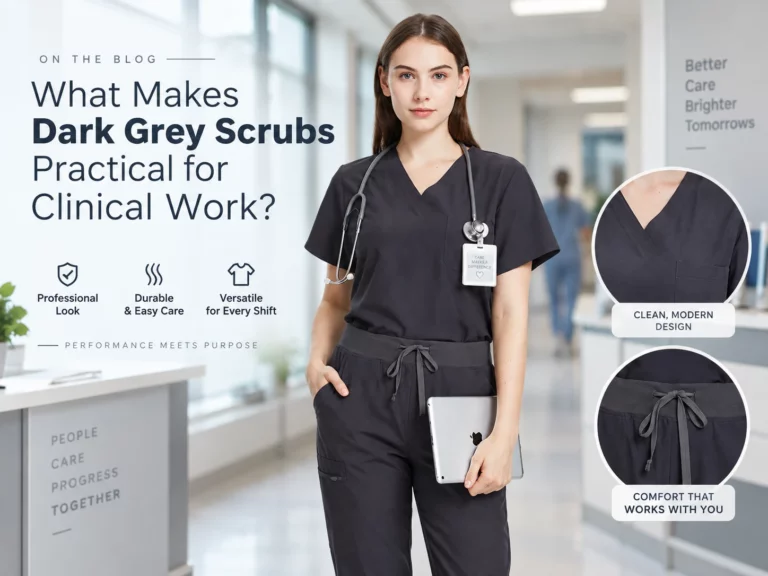
Fuyi’sScrubs Sets include different neckline shapes, jogger pants, straight-leg pants, pocket layouts, and color families. That range helps a uniform manager keep the material decision connected to the finished garment, not just a swatch card. A soft fabric still needs the right pattern. A durable fabric still needs pockets, waist comfort, and movement room.
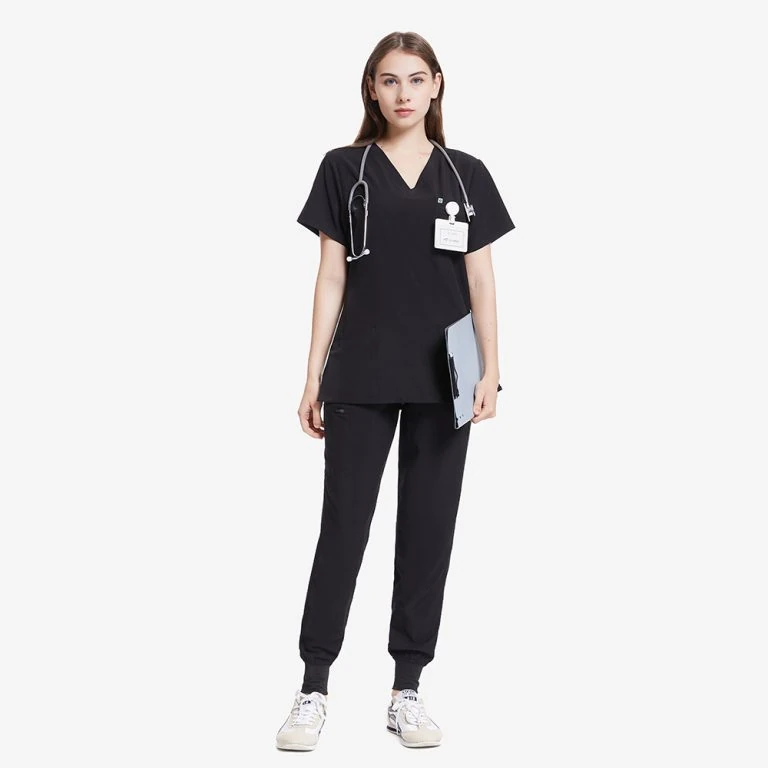
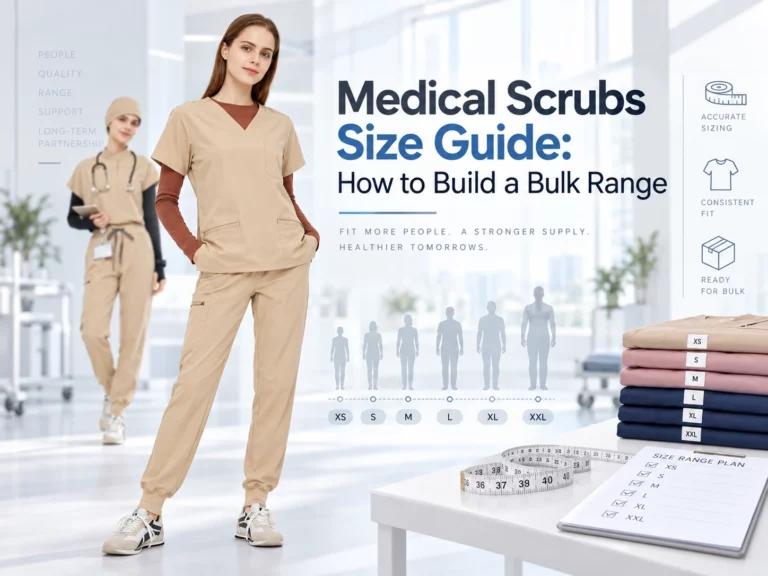
A bulk order should not be approved from a product photo and a color name. Ask for fabric composition, GSM, stretch direction, finish, available colors, and wash care. If the uniform will carry an embroidered or printed logo, test the decoration on the real fabric, not on a different sample cloth. Logo placement can change how the chest, sleeve, or pocket area behaves after washing.
The second check is wear feedback. Staff should sit, reach, bend, and walk in the sample. They should also wash it before final approval. A promising scrub material can fail if the waistband twists, the shoulder feels tight, or the color changes after care. For mixed-size teams, test more than one body type; a fabric with limited recovery may feel fine on one wearer and restrictive on another.
For repeat programs, consistency is just as important as the first sample. Fuyi Group operates with an in-house fabric mill and medical uniform production experience, which helps keep fabric quality, color matching, and specifications more controlled across orders. The company also supports OEM and ODM medical uniforms, logo customization, packing, graphic customization, and fabric testing for items such as composition, color fastness, antibacterial performance, water repellency, and wash stability.
A useful next step is to compare the existing scrub fabric guide with the target garment category, then request samples by department and care routine. That keeps the conversation practical: not just “soft or durable,” but soft enough for the wearer, durable enough for the laundry cycle, and stable enough for the next reorder.
Conclusion
Hospital scrubs are usually made from polyester-based blends, but the blend is only the starting point. Rayon changes softness and drape. Spandex changes stretch and recovery. Cotton changes hand feel and breathability. GSM, weave, finish, and washing performance decide whether a uniform keeps working after the first order.
For a clinic or uniform distributor, the strongest choice is the fabric family that fits the department. TRS-style poly rayon stretch works well when comfort and appearance carry more weight. TS or poly stretch can suit practical, cost-aware programs. Poly cotton and microfiber options may fit teams with different care or hand-feel preferences. The best fabric for scrubs is the one that survives the actual shift, the actual laundry process, and the next reorder.
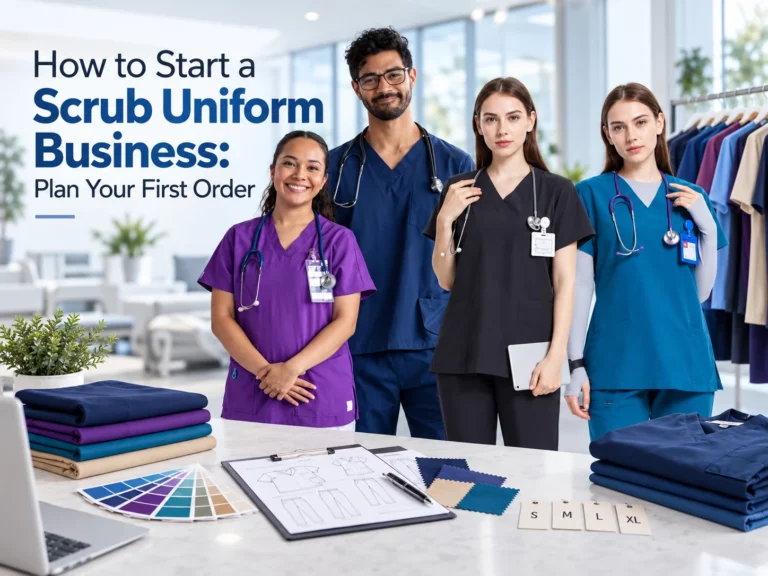
Fuyi Group can help match medical scrub fabrics with garment style, logo method, color range, and order scale. Clinics, wholesalers, and uniform brands can send their fabric expectations, washing requirements, department use, and branding needs through a custom uniform request before moving into sampling.
FAQs
Q1: What material are scrubs made of?
A1: Most hospital scrubs use polyester-based blends. Common additions include rayon for softness, spandex for stretch, cotton for a familiar breathable feel, and microfiber for lightweight easy care. The exact answer to what material are scrubs made of depends on the product line and the workplace that will use it.
Q2: Is polyester or cotton better for hospital scrubs?
A2: Polyester blends usually win for wrinkle resistance, color stability, quick drying, and repeated washing. Cotton-rich blends can feel more natural and breathable, but they need the right finish and care routine. Many hospital uniforms use blends because one fiber alone rarely solves every problem.
Q3: What is the best fabric for scrubs in bulk uniform orders?
A3: There is no single answer for every clinic. A high-comfort outpatient program may choose trs fabric or a similar poly rayon stretch option, while a larger cost-sensitive program may choose poly stretch. Before ordering, compare GSM, stretch, hand feel, color fastness, wash results, and logo performance.