Bulk buyers often spend more time comparing full scrub sets than the top half of the uniform. That is understandable, but scrub tops carry much of the daily comfort, patient-facing appearance, pocket function, and color identity of a healthcare team. When the top pulls at the shoulder, gapes at the neckline, fades faster than the pants, or cannot be reordered in the same shade, complaints move quickly from staff to purchasing.
For hospitals, clinic groups, uniform distributors, and private-label medical apparel brands, scrub tops should be treated as a planned product line, not a loose add-on. Fuyi Group supports buyers with medical uniforms, fabric development, garment production, and wholesale service, so the buying discussion can connect fit, fabric, color, packaging, and repeat orders from the start.
Why Do Scrub Tops Create Problems in Bulk Uniform Orders?
A single scrub top may look fine on a model or hanger. A bulk order is different. The same design must fit different departments, body shapes, washing habits, and brand expectations. Buyers also need the scrub tops to work with pants, jackets, lab coats, and department color rules. Small design choices become expensive when hundreds of staff members wear the same uniform every week.
The top is the most visible part of the uniform
The top appears in patient rooms, reception areas, consultation spaces, and online staff photos. A poor neckline, loose pocket, or wrinkled front can make the whole uniform program look less controlled. Medical uniforms need a clean shape, but they also need enough ease for bending, reaching, lifting, and sitting through long shifts.
Returns often start with fit, not fabric alone
Fabric quality matters, but many complaints begin with shoulder width, sleeve opening, bust room, hem length, and pocket position. If the top fits only one body type, buyers may face exchanges even when the material is strong. That is why scrub tops should be checked on real wearers before a distributor or hospital confirms a bulk order.
What Fit Details Should Buyers Check First?
Fit review should begin before logo placement or packaging design. Buyers should look at how the garment behaves when the wearer reaches forward, puts items in the pocket, sits at a desk, and layers the top under a jacket. The best result is not tight tailoring. It is controlled comfort that keeps the healthcare uniforms neat while still giving staff room to move.
Neckline, shoulder, and sleeve balance
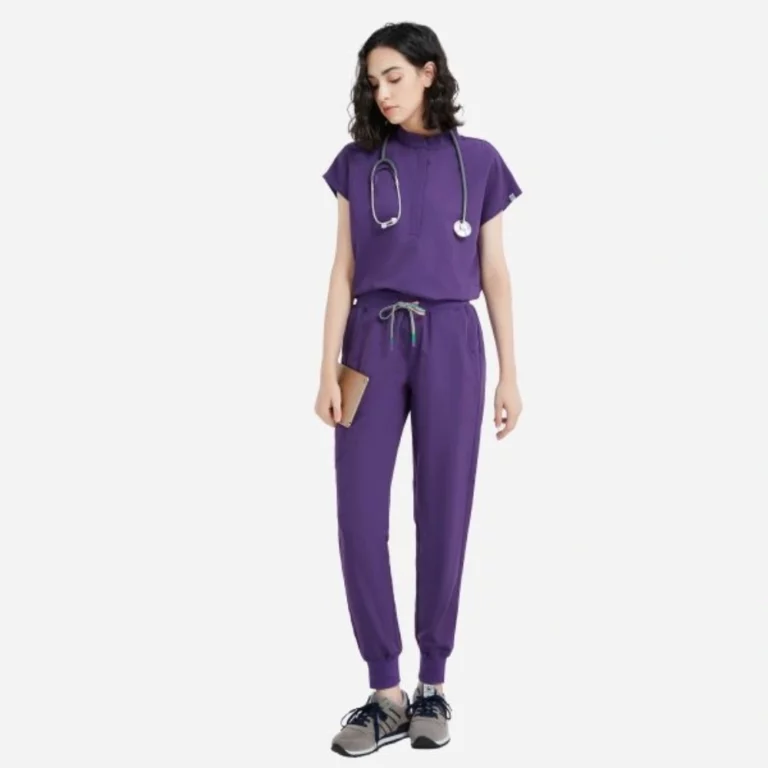
A V-neck or shaped neckline should sit cleanly without opening too low during movement. Shoulders should allow forward reach without pulling the back panel. Sleeve openings should be comfortable but not oversized. For women-focused lines, Women Scrub Tops Printed can give buyers a useful reference for printed scrub tops that need color, style, and practical coverage in one product conversation.

Length and pocket placement affect daily use
Scrub tops that are too short may ride up when staff bend or lift supplies. Tops that are too long can look heavy when paired with jogger pants or slim scrub pants. Pocket placement should also be tested with real items such as phones, pens, tape, scissors, and ID cards. A pocket that looks neat when empty may pull the top out of shape when loaded.
How Do Fabric Choices Change Scrub Tops Performance?
A good pattern cannot save the wrong fabric. Scrub tops need enough structure to look professional, enough softness for long shifts, and enough recovery to avoid bagging at stress points. Buyers should review fabric composition, GSM, stretch direction, washing rules, colorfastness, shrinkage tolerance, and whether the supplier can keep fabric lots consistent for repeat orders.
Stretch should recover after repeated movement
Stretch is useful only when the garment returns to shape. If the front panel, sleeve, or pocket area stretches out during one shift, the uniform starts to look tired before the day ends. For clinic teams or distributor catalogs, EVA Stylish Scrubs Set gives buyers a cleaner scrub tops reference point when they need upper-body comfort, coordinated color options, and wholesale supply planning.
Printed scrub tops need stable color planning
Printed scrub tops can help pediatric departments, dental clinics, veterinary teams, and retail uniform stores build a friendlier product range. The risk is repeatability. A print that sells well must be available again in compatible fabric, color tone, and sizing. Buyers should ask whether print placement, color matching, and reorder planning are controlled before they promote a printed line.
When Are Printed Scrub Tops Better Than Plain Tops?
Plain colors are easier to standardize, but printed scrub tops can solve different business needs. A clinic may want a softer visual identity. A pediatric team may want uniforms that feel less intimidating. A uniform retailer may need seasonal prints that bring customers back without changing the full scrub set. The key is to treat prints as part of a merchandising plan, not just a decorative choice.
Prints should support the wearer and the buyer
A print that is too busy can look unprofessional in clinical settings. A print that is too pale may fade into the background online or in store displays. Buyers should compare scale, color contrast, pocket alignment, and whether the same design works across sizes. This is where a scrub tops supplier should help buyers connect style decisions with practical ordering limits.
Supplier control matters more than one attractive sample
A strong sample is only the first step. Buyers also need size charts, fabric records, color references, logo options, carton planning, and reorder communication. Printed Scrub Tops Supplier is a relevant product page when buyers want printed scrub tops that can support wholesale discussion instead of one-time retail selection.

How Should Buyers Compare a Scrub Tops Supplier?
A supplier should be judged by more than price per piece. Buyers should ask whether the same company can support fabric sourcing, sampling, size adjustment, color planning, bulk production, packaging, and after-sales communication. If the supplier only offers a narrow catalog, the buyer may struggle when staff request another color, another size run, or a related item such as jackets or scrub pants.
Product range protects the full uniform program
A hospital or distributor rarely buys only one top forever. The order may expand into scrub pants, scrub sets, jackets, lab coats, or accessories. The scrub tops category helps buyers compare available styles before they narrow the project to one model. This is useful when a buyer wants medical uniforms that can grow from a starter order into a larger healthcare uniforms program.
MOQ and reorder planning should be clear early
Before approving a sample, buyers should confirm available colors, size range, logo options, packaging method, production schedule, and minimum order quantity by model. A low first order may help a retailer test demand, but a hospital program needs confidence that future scrub tops will still match the original color and fabric. Clear reorder planning reduces mismatched uniforms and protects the buyer’s brand image.
What Should Buyers Remember Before Ordering?
A practical scrub tops order starts with staff use, not only catalog appearance. Buyers should check movement comfort, neckline coverage, sleeve shape, pocket function, fabric recovery, washing rules, print repeatability, and color continuity. Then they should compare whether the supplier can support the wider medical uniforms program over time.
When the target market, preferred fabric, print direction, size mix, and order schedule are ready, contact Fuyi Group for a model-specific sourcing discussion. That gives the team enough detail to move from general healthcare uniforms planning to a scrub tops order that can be sampled, quoted, produced, and reordered with fewer surprises.
Conclusion
Scrub tops may look simple, but they influence comfort, staff confidence, patient-facing appearance, and reorder stability. Buyers need more than a nice sample. They need fabric that recovers, patterns that move with the body, pockets that work in real shifts, colors that can be repeated, and a supplier who understands bulk medical uniforms. By treating scrub tops as a planned sourcing category, hospitals, distributors, and private-label buyers can reduce returns, protect visual consistency, and build a more reliable healthcare uniforms program.
FAQs
Q1: What should buyers check first when sourcing scrub tops?
A1: Start with neckline coverage, shoulder movement, fabric recovery, pocket placement, size range, and color continuity.
Q2: Are printed scrub tops suitable for professional healthcare uniforms?
A2: Yes. Printed scrub tops work well when the print scale, fabric quality, color repeatability, and department use are planned carefully.
Q3: Why choose one supplier for scrub tops and related uniforms?
A3: One connected supplier can support fabric, sizing, color planning, packaging, and reorder needs across the full uniform program.