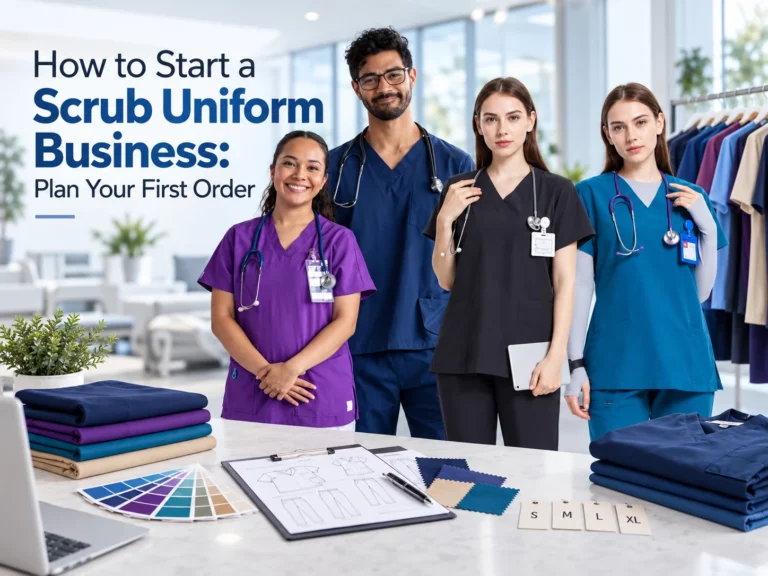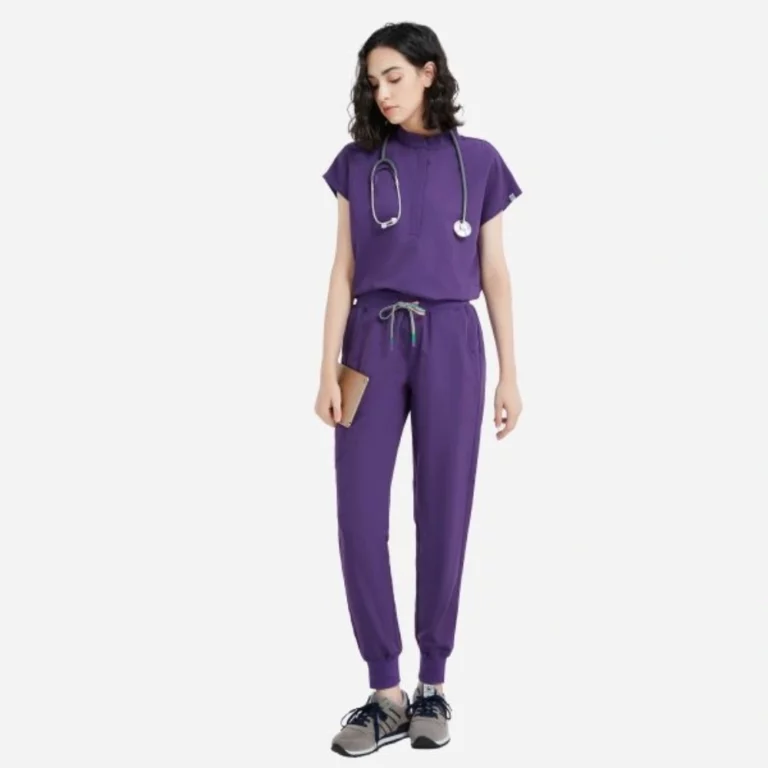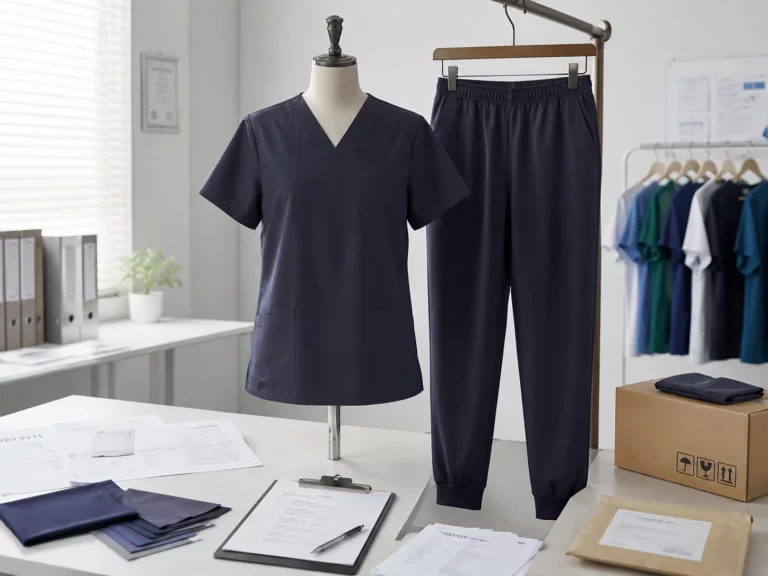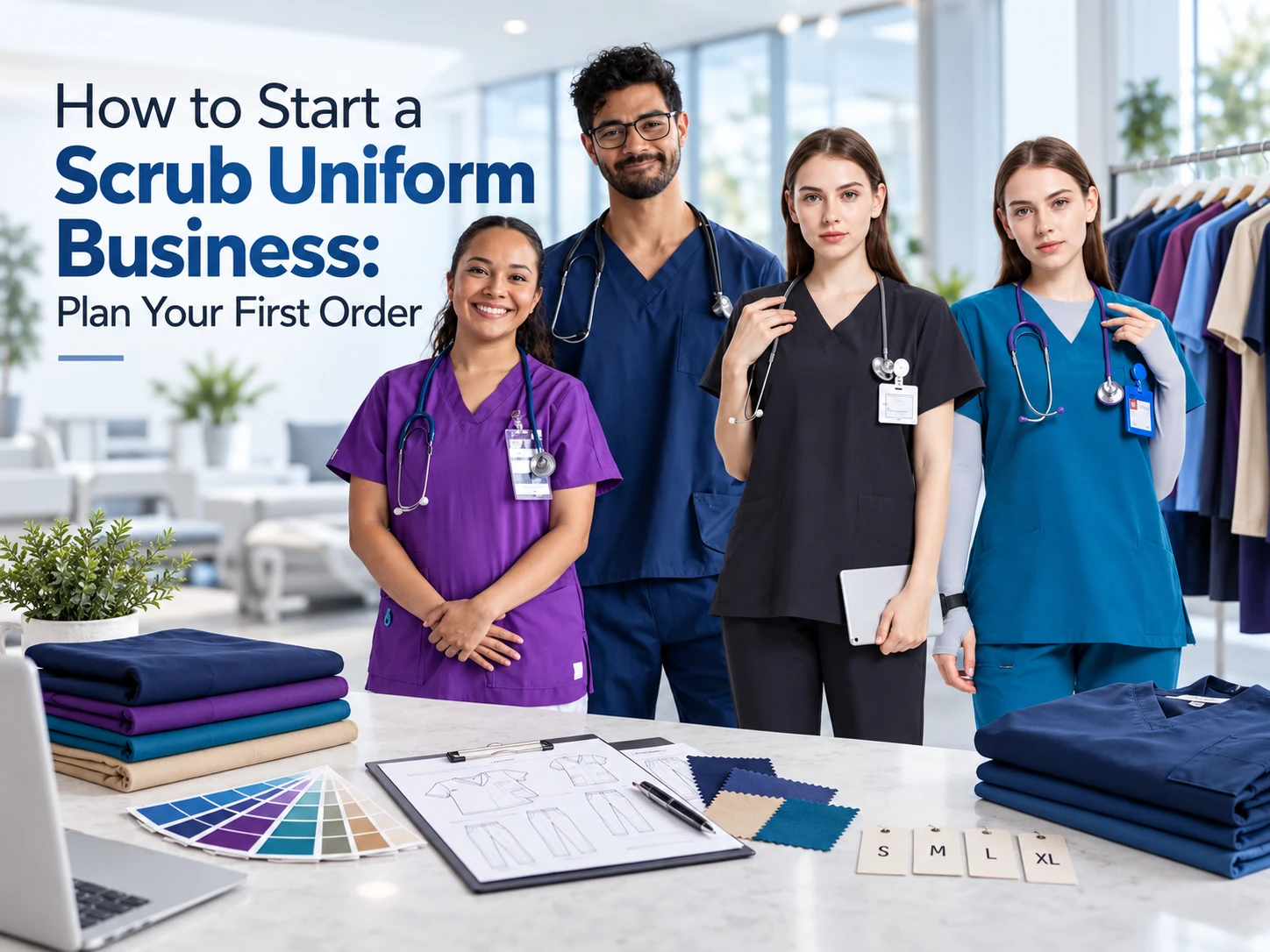
A practical first step in how to start a scrub uniform business is to turn the idea into a product specification a manufacturer can sample, quote, inspect, and reproduce. A new medical scrubs business is easier to control when the first order is treated as a product-development project rather than a simple purchase.
Before bulk production, define the wearer, garment, fabric, branding approval, quality checks, inventory exposure, and reorder rules. That gives you a practical answer to how to start a scrub business without drifting into generic company-registration advice.
What Should You Decide Before Contacting a Scrub Manufacturer?

A manufacturer can work much more accurately when you arrive with a narrow first-product plan. “I want to sell scrubs” leaves too many variables open. A useful first brief should make the product, wearer, quantity, and acceptance criteria visible before sampling starts.
Who Is the First Buyer and What Will They Actually Wear?
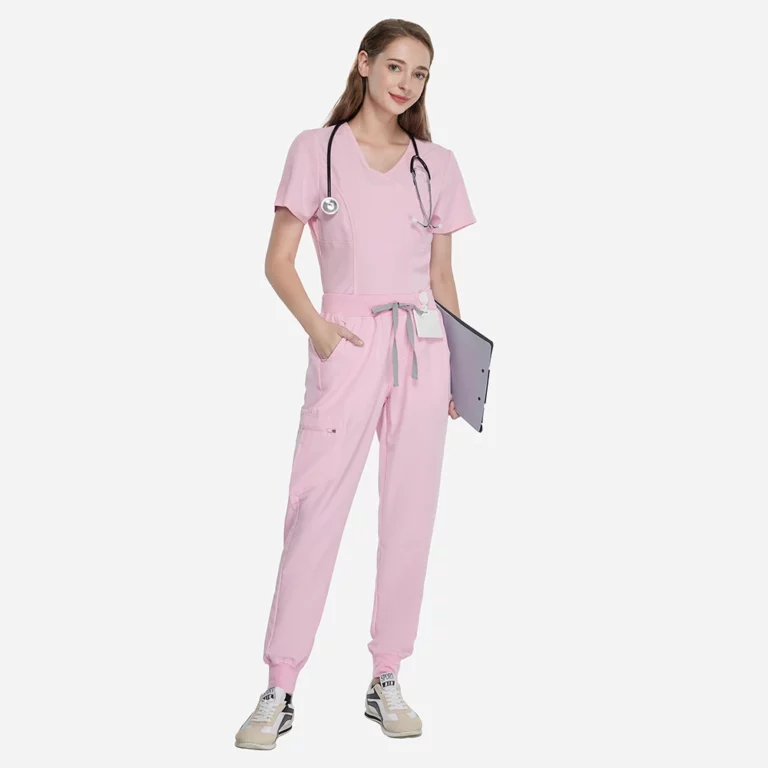
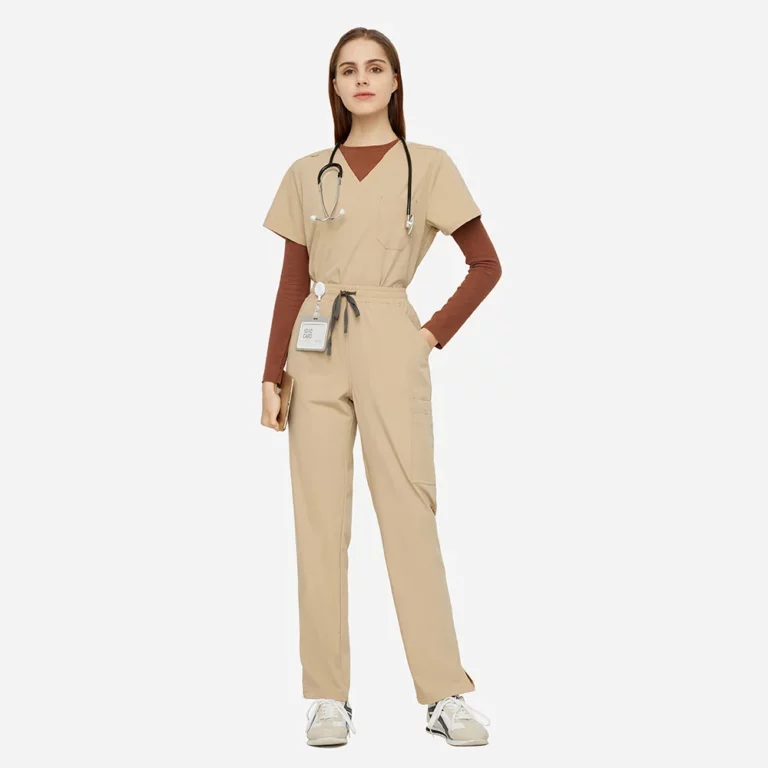
Start with one buyer group instead of trying to serve every healthcare role at once. A clinic team, hospital department, dental practice, care facility, uniform distributor, and private-label retailer may all buy scrubs, but they do not necessarily need the same fit, pocket layout, fabric feel, color range, or care performance.
Ask what the wearer does during a normal shift. Frequent bending can make stretch and recovery more important; heavy laundering can raise the importance of colorfastness, dimensional stability, and easy care. A fashion-led private-label customer may put more weight on drape, hand feel, color, and silhouette.
A narrow buyer definition also limits first-order complexity. Build the initial assortment around a clear use case, then expand after sales and reorder data exist.
What Belongs in a Manufacturer-Ready Product Brief?
Your brief should remove avoidable interpretation. At minimum, record:
- garment type and intended wearer;
- target fit and size range;
- pocket layout and functional details;
- target colors;
- fabric composition, weight, stretch, hand feel, and care requirements;
- logo method, size, position, and colors;
- planned quantity by style, color, and size;
- packaging or labeling requirements;
- quality and testing requirements;
- sample deadline, bulk delivery window, and reorder expectations.
This is your control document, not factory paperwork. When quote, sample, bulk order, and reorder all refer to the same specification, changes are easier to identify. Material and garment decisions can also be resolved within one scrub program when fabric and garment production sit under one supplier.
For a deeper look at how first-sample choices affect later consistency, see this first-sample-to-repeat-order guide.
How Should a New Scrub Business Choose Fabric?

Fabric is one of the earliest decisions that can change both product experience and purchasing economics. Two scrub sets may look similar in a photograph but behave very differently when the fabric weight, fiber blend, stretch, surface finish, and care requirements change.
Which Fabric Decisions Affect Comfort, Care, and Price?
Do not choose fabric from a label such as “polyester blend” or “stretch fabric.” Compare weight, stretch and recovery, softness, drape, breathability, wrinkle resistance, wash requirements, color stability, and required finishes.
Available medical-uniform fabric options include a 170 GSM construction of 94% polyester/6% spandex and a 200 GSM construction of 72% polyester/21% rayon/7% spandex. The 170 GSM option is designed around moderate stretch, breathability, drape, and easy care, while the 200 GSM option adds rayon and four-way stretch for a softer, fuller hand. They are not universal answers; they show why buyers should compare the actual construction instead of asking only for “a stretchy scrub fabric.”
If fabric weight is still unclear, the comparison of 170 GSM vs 200 GSM medical scrubs can help you frame the trade-offs before sampling.
Why Should You Lock Fabric Before Finalizing the Sample?
Approve the sample on the intended production material whenever possible. Changing fabric after fit approval can change drape, stretch, pocket behavior, seam appearance, embroidery stability, and fit feel.
Record the fabric construction, color, measurements, trims, and care expectations tied to the sample. Fabric samples can be provided free of charge; medical fabrics are labeled by applicable department so buyers can feel the material or send it for testing before the garment sample is finalized.
If you need a special finish or performance requirement, state the test method or acceptance expectation before production. A vague request for “antibacterial,” “water-repellent,” or “industrial wash” performance is not as useful as a product-specific requirement that can be matched to a suitable fabric and test scope.
What Should the First Scrub Sample Prove?
A useful first sample should answer more than “Do I like the look?” It should prove that the design can work for the wearer, that the details are placed correctly, and that the factory has a clear reference for bulk production.
How Should You Test Fit, Pockets, Movement, and Construction?
Test the sample in realistic movements: sit, reach, bend, and load the pockets. Review sleeve and trouser length, rise, waistband behavior, pocket access, neckline position, seam comfort, and movement.
Then inspect seam alignment, topstitching, pocket symmetry, fastener placement, labels, reinforcement, and measurements. For projects using in-stock fabrics, Fuyi Group can support sample requests within 7 days; actual timing still depends on the project and material conditions.
Treat the approved sample as a physical reference, not just a sales photo. Record every approved revision so the bulk order is compared with the correct version.
When Do Custom Logo Scrubs Need a Second Approval?
Custom logo scrubs should be approved on the real garment or an equivalent production panel. A digital mockup cannot fully show stitch density, fabric stretch, pocket position, logo scale, and garment construction together.
Verify artwork version, dimensions, colors, placement, orientation, and seam/pocket clearance. For names, departments, or multiple logo variants, define a simple file and approval system before bulk production.
How Should You Plan Cost, MOQ, and the First Order?
Your first order is where product decisions become inventory and cash-flow exposure. The safest approach is to compare quotes against one locked specification and decide how much learning you want to buy before scaling.
Why Is the Average Cost of Scrubs Not a Safe Purchasing Budget?
The phrase average cost of scrubs sounds useful, but a single average number is a poor basis for a private-label purchasing budget. The cost of your program can move when you change fabric, garment complexity, color requirements, embroidery or printing, testing, packaging, quantity, freight method, delivery urgency, or the size/color assortment.
Instead of relying on a single average cost of scrubs, build a like-for-like cost sheet. Separate garment specification from branding and testing, then add packaging, logistics, duties where applicable, and sample-development costs. This makes factory quotes comparable and shows which change moved the price.
Consider replacement economics as well as first-order unit price. Fuyi Group’s guide to durable medical uniforms and replacement costs is useful when defining what “cost-effective” should mean for your customer.
How Can a Test Order Reduce Inventory Risk?
Your first order does not need to prove the maximum scale of the business. It needs to prove the product, demand pattern, supplier process, and reorder logic.
When in-stock fabrics are used, Fuyi Group can support small batches of 2,000 pieces per style within 30 days. This fast-response route is tied to available fabric and the applicable project conditions; it is not a universal MOQ or lead-time promise.
For a startup, ask what quantity is practical for the chosen fabric, colors, sizes, and customization, then decide whether that quantity matches your ability to sell and replenish inventory.
Use the first run to learn which sizes and colors move, which details create questions, and whether the specification works in real use. Scale the next order from those observations.
What Controls Should You Set Before Bulk Production?
Bulk production should start with an agreed reference and an agreed inspection plan. If “good quality” is the only written standard, both buyer and manufacturer are forced to interpret the result after the garments already exist.
Which QC Checkpoints Should Be Written Into the Order?
Define what will be checked at each stage. Fuyi Group’s garment quality process includes pre-production review, incoming-material inspection, in-process inspection, and finished-product inspection, supported by QC and QA monitoring. A scrub order can map its own acceptance points to that sequence.
Confirm fabric and color before cutting; measurements, construction, and logo position during production; then appearance, workmanship, labeling, packing, and agreed performance checks before shipment. Keep the approved sample and measurement specification as the reference.
For its medical-uniform custom-order program, Fuyi Group uses a production window of up to 45 days together with production-progress tracking, fabric spot checks, and finished-product quality inspection. That timeline should stay tied to the applicable medical-uniform program and should be reconfirmed for the actual fabric, color, customization, and order size. Buyers with more formal procurement requirements can also use this hospital scrub tender checklist to structure testing and delivery controls.
How Do You Protect Repeat-Order Consistency?
The first shipment should create the records for the second. Keep the approved fabric, composition and weight, color, measurement chart, logo file and placement, trims, labels, packaging, QC criteria, and approved sample together.
Long-term fabric inventory of nearly 2 million meters covers more than 10 fabric types, with roughly 10–30 colors available within each type. That stock supports faster replenishment and a more stable material base for repeat programs, though a repeat order should still reconfirm the current fabric and color reference.
Before asking for a final quote, send the manufacturer one compact packet containing your target market, scrub category, fabric and performance needs, colors, size range, logo scope, sample requirements, planned quantity, QC criteria, delivery window, and reorder plan. The clearer this packet is, the fewer commercial decisions are left to interpretation after production begins.
Conclusion
Learning how to start a scrub uniform business becomes more practical when you treat the first order as a controlled development cycle. Define the buyer and garment first, lock the fabric, approve the real sample and branding, build the budget from the actual specification, and write the QC and delivery controls before bulk production.
A practical answer to how to start a scrub business is to leave the first order with a repeatable record: the approved material, measurements, colors, branding, quality criteria, packing, and delivery assumptions that worked. When preparing a private-label or distribution program, use those details to brief Fuyi Group on the exact product and first-order conditions you want to validate before scaling.
FAQs
Q1: How much inventory should a new scrub business order first?
A1: There is no universal quantity. Start from your sales window, size/color mix, supplier constraints, and inventory risk. Ask for the practical quantity for your exact fabric and customization, then decide whether a test order gives you enough information before scaling.
Q2: Should a new medical scrubs business start with custom designs or existing styles?
A2: Existing styles can reduce development time when you mainly need to validate fabric, color, fit, branding, and demand. Custom design makes more sense when a feature or silhouette is central to your positioning. Either way, approve the production specification and sample before bulk ordering.
Q3: What should be approved before ordering custom logo scrubs in bulk?
A3: Approve the garment and production fabric first, then confirm the final artwork, logo size, placement, colors, application method, and any name or department variations on a physical sample or equivalent production panel. Keep those settings with the measurement and QC records so the same branding can be reproduced on later orders.