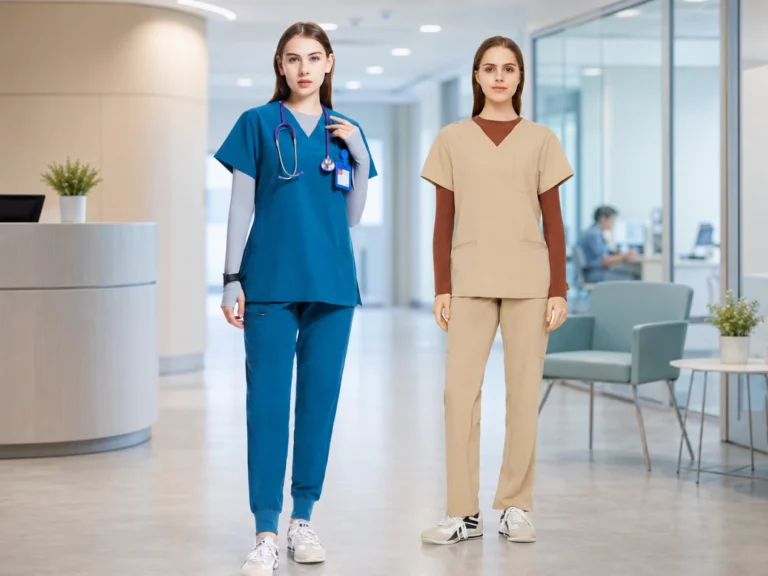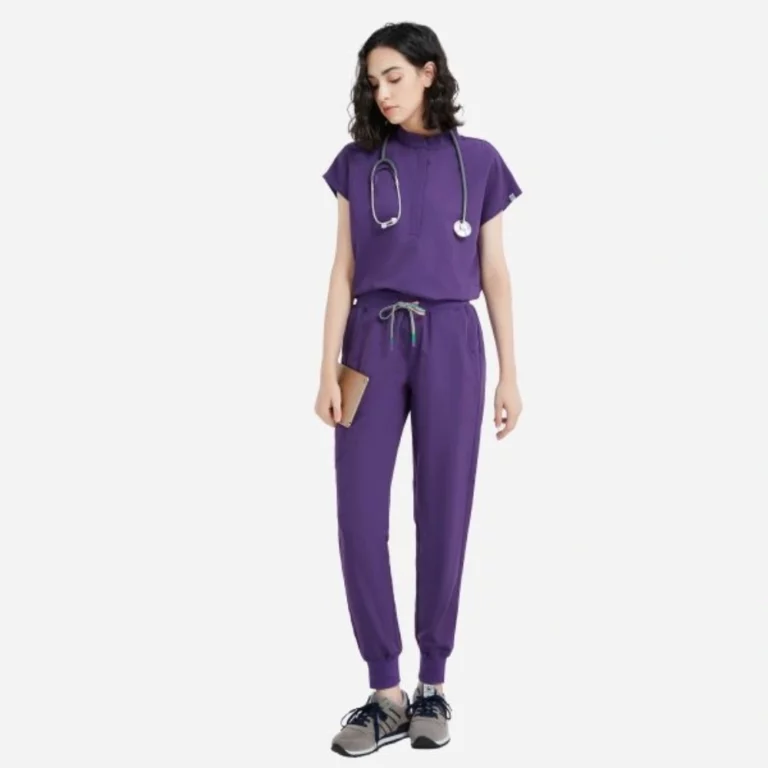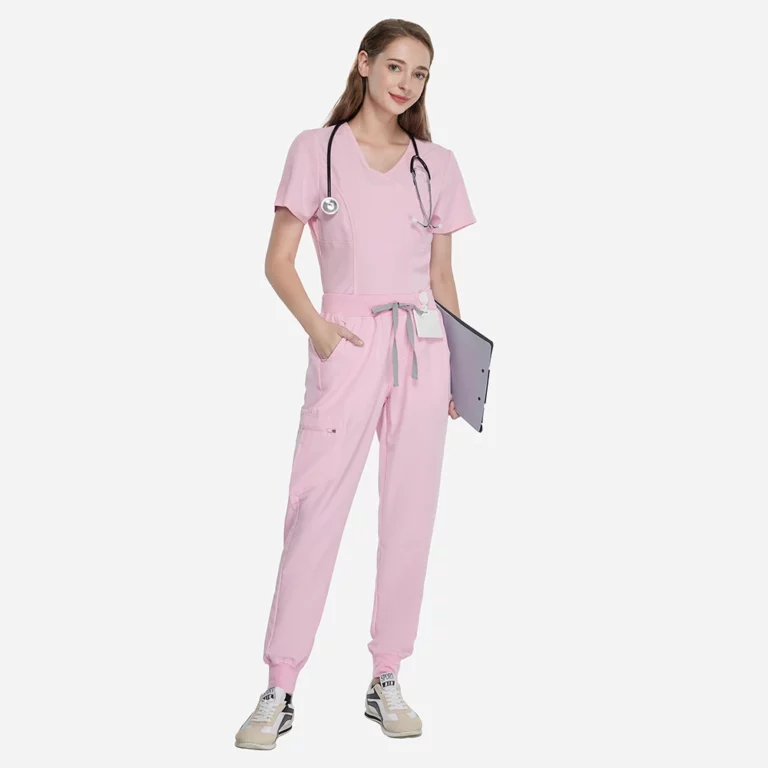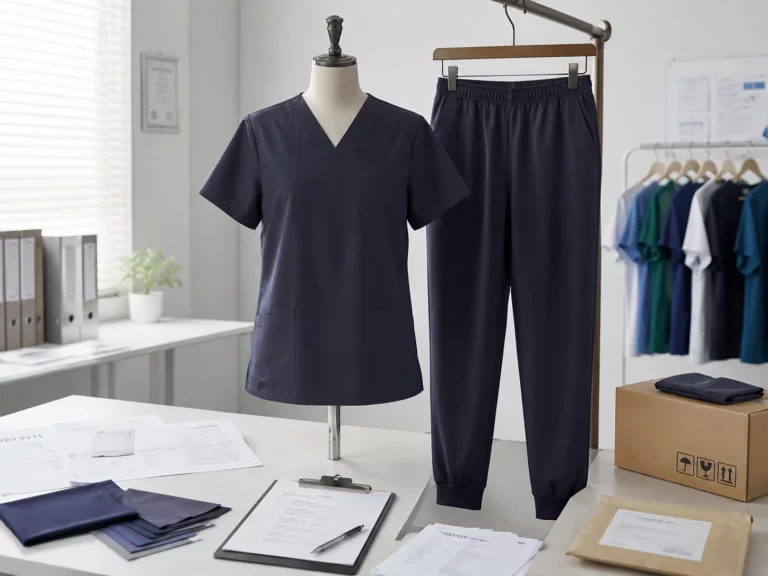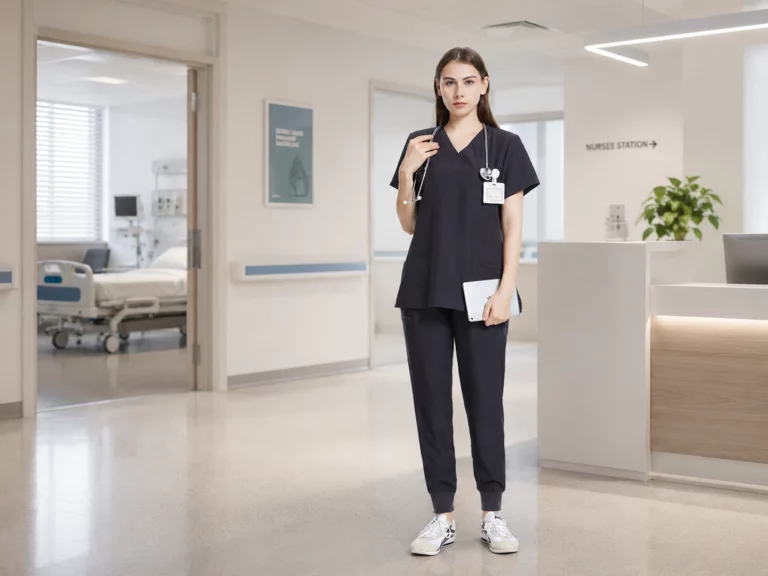
Custom scrubs often look convincing in a first sample and still cause trouble when a clinic places a repeat order. The problem is rarely the logo alone. It usually sits in an unresolved fabric weight, a size grade that was checked only once, a pocket that is hard to reach, a shade that changes between batches, or a production note that never made it into the next order. A reliable program treats these details as part of the product, not as last-minute corrections.
A clear brief starts with the work itself. A general ward, an outpatient clinic, a rehabilitation department, and a community care team may all need scrubs, but they can place different demands on movement, storage, cleaning, and visual identity. That is why the specifications for custom medical uniforms are stronger when the daily use case is written down before the pattern is changed.
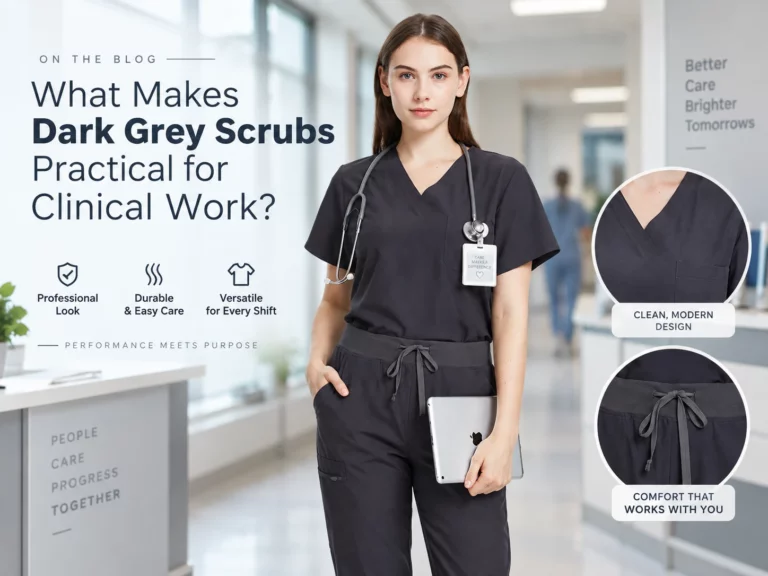
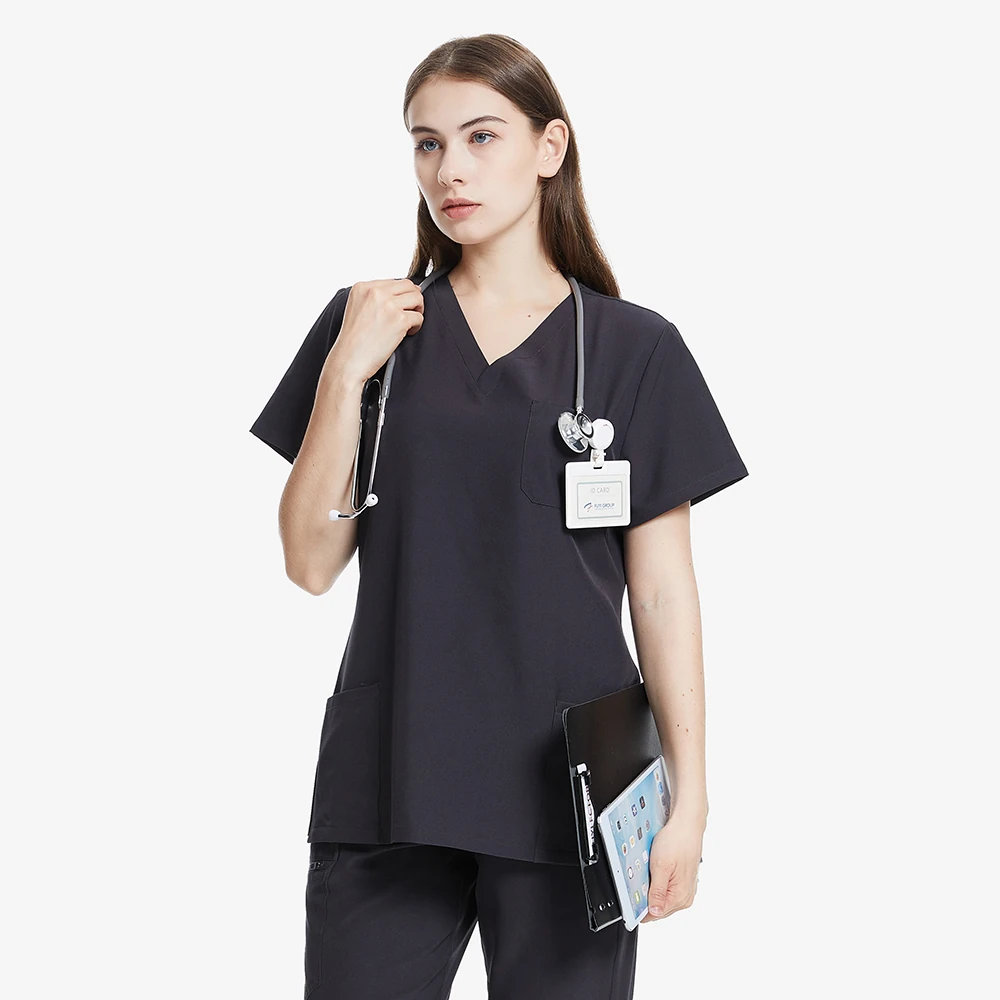
Fuyi gives that decision a concrete reference through its Valiant dark grey scrubs. The Valiant Dark Grey Scrubs 309 TS is documented as a 94% polyester and 6% spandex set at 170 GSM, with a V-neck top, chest pocket, two front patch pockets, side hem slits, jogger-style pants, drawstring waist, and five pockets in total. Fuyi Group also supports OEM and ODM medical uniform work, with in-house design and production, fabric development, sample testing, and production follow-up. That combination lets a clinic compare a visible garment with the process behind a repeat order.
The Specification Decisions Behind Reliable Custom Scrubs
For custom medical uniforms, start with the people who will wear the garments and the work they perform. A uniform for a busy outpatient clinic may need a different balance of storage, movement, and appearance from one used in a ward or rehabilitation department. The brief becomes more useful when it names the work setting, expected shift movement, care routine, size range, and the details that must remain unchanged in later orders.
From a visual preference to a measurable garment brief
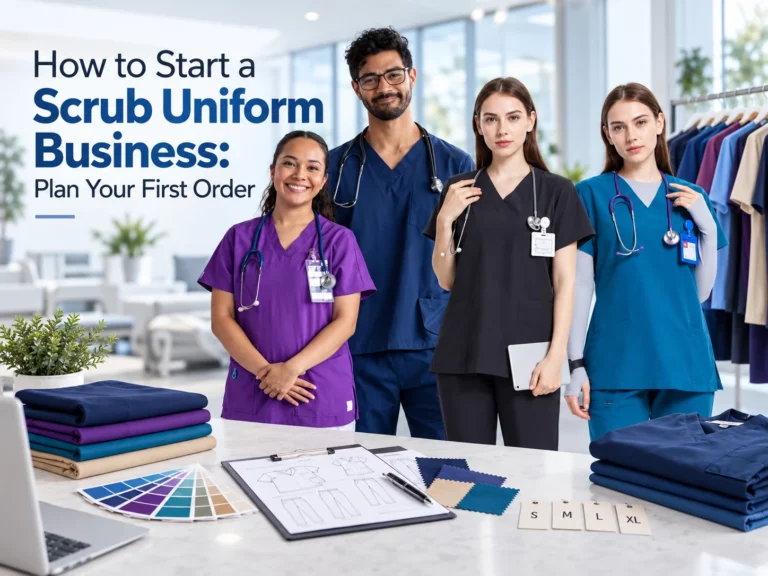
Words such as soft, modern, professional, or comfortable are useful starting points, but they do not give a factory enough to reproduce a garment. A stronger brief adds fabric composition and weight, neckline shape, pocket count and position, closure type, hem allowance, size measurements, color references, logo placement, label requirements, and packing details. Each item gives the sample reviewer something concrete to approve or change.
The cost of leaving small details open
A pocket placed a few centimeters too low can be awkward during a shift. A neckline that looks neat on a flat sample may feel restrictive when the wearer bends or reaches. A size chart that covers only one fit model can leave the rest of the team with inconsistent comfort. These are small design decisions with a direct effect on returns, alterations, and the perceived value of the whole uniform program.
Fabric and Color Choices That Hold Up in Daily Care
Fabric affects movement, comfort, cleaning, appearance, and the way the garment feels after repeated use. Fuyi’s medical scrubs collection gives buyers a product range to compare, while the confirmed material references make the comparison more specific. The right choice depends on the work setting rather than on GSM alone.
What a 170 GSM poly-stretch fabric can offer
The 170 GSM poly-stretch reference used for the Valiant set combines 94% polyester with 6% spandex. The documented fabric features include four-way stretch, breathability, wrinkle recovery, easy care, quick drying, moisture management, and splash resistance. That mix suits a daily uniform brief where freedom of movement and straightforward maintenance matter as much as a clean appearance.
When a heavier four-way stretch option makes sense
A 200 GSM poly-rayon four-way stretch option uses 72% polyester, 21% rayon, and 7% spandex. Its documented features include a soft hand feel, good drape, stretch, wrinkle resistance, moisture management, industrial wash suitability, and a splash resistant surface treatment. It can fit a brief that places more emphasis on a softer touch and a more substantial garment feel, provided the final choice is checked against the actual care routine.
Color control belongs in the purchase decision
Color is part of uniform control, not only a branding preference. A clinic can define a shade reference, compare it with the approval sample, and record whether the same reference applies across tops, pants, and later replenishment. When a supplier can support color comparison and testing, the team has a clearer way to identify a mismatch before bulk cutting rather than after delivery.
Fit, Pockets, and Movement Need a Sample-Based Check
The Valiant Dark Grey Scrubs 309 TS provides a practical benchmark for reviewing a custom scrub design. The documented set combines a V-neck top, chest pocket, two front patch pockets, side hem slits, a drawstring waist, jogger-style pants, five pockets in total, and sizes from XS through 2XL. These details give a clinic a concrete reference for judging function instead of relying on color or silhouette alone.
Check the parts staff use during a shift
Pocket access, pocket depth, hem clearance, neckline comfort, closure placement, and waistband adjustment all deserve a physical review. The point is not to add every possible feature. It is to confirm that the features already chosen work when staff move, bend, carry small items, and switch between tasks. A simple pocket layout can be more useful than a crowded front if the uniform is worn continuously.
Review size grading beyond one fit model
A first sample in one size cannot prove that the whole size range works. Check the size chart, key garment measurements, rise, sleeve opening, hem opening, and the way the fabric behaves at the largest and smallest planned sizes. If a clinic has a mixed team, the review should include representative body shapes instead of treating one model as the full fit standard.
Keep the product reference connected to the custom brief
A standard product can shorten the discussion because its neckline, pocket layout, fabric reference, and size range are visible. The final custom specification still needs to follow the clinic’s requirements. The Valiant construction can be used as a starting point when custom medical scrubs are being developed, without assuming that every team needs the same color, pocket arrangement, or grading.
Color, Testing, and Production Control Protect Repeat Orders
For custom medical scrubs, the supplier relationship matters as much as the sample itself. A capable medical uniform supplier turns the brief into sample checks, fabric verification, production records, and finished garment inspection. Fuyi’s production capabilities give the purchasing team a place to review the wider manufacturing context before a repeat order depends on it.
Small-sample testing before bulk production
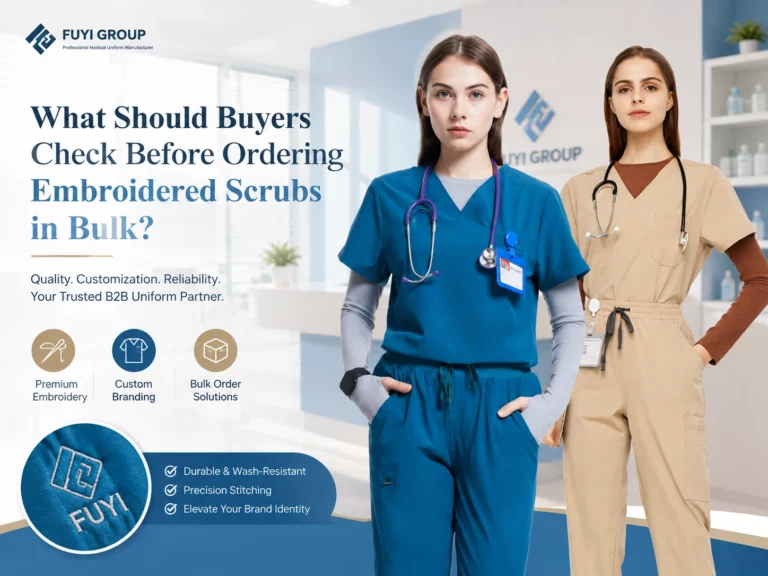
Fuyi’s medical uniform solution includes small-sample testing before mass production, fabric spot checks, and checks for properties such as composition, color fastness, antibacterial performance, and water repellency when those requirements belong to the project. A medical uniform supplier makes those checks useful only when they match the garment’s intended setting and the specification written into the purchase brief.
Keep production updates tied to the approved specification
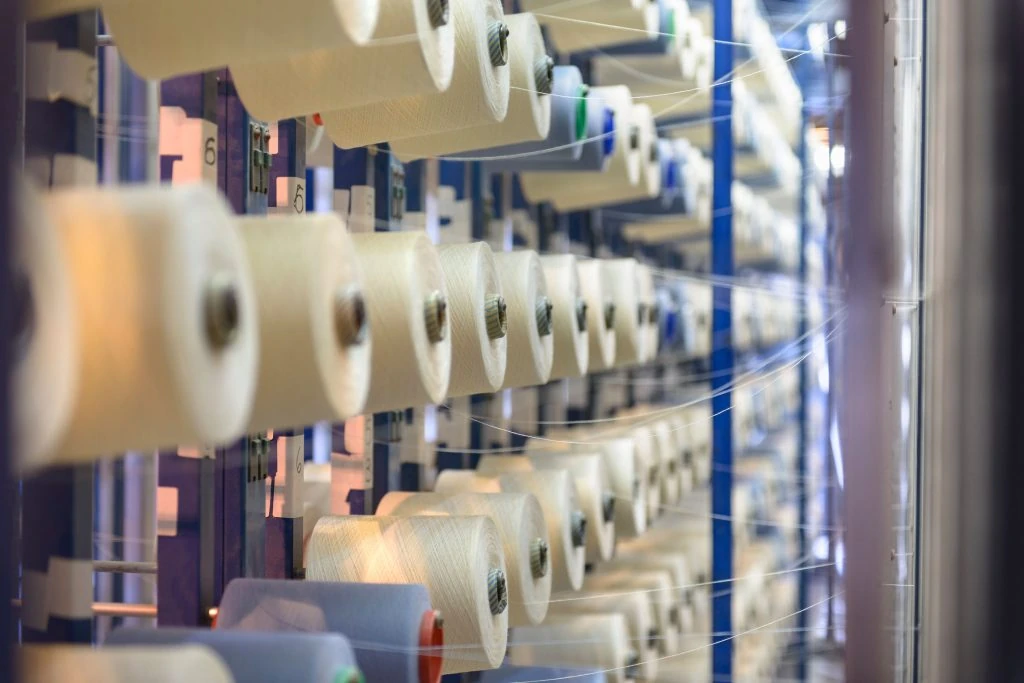
Fuyi Group’s OEM and ODM service model includes dedicated production follow-up across fabric cutting, sewing, inspection, and logistics. For a clinic or distributor, that matters because a progress update is more useful when it can be checked against the approved fabric, color, size range, labeling, and packing details. It also gives the team a clearer route for handling bulk custom work uniforms and future replenishment.
Use evidence that matches the intended healthcare setting
Keep the approved sample, fabric composition, color reference, size specification, test report, label artwork, and packing instruction together. For the Valiant listing, the stated commercial terms separate standard and customized orders: 50 sets are listed for available colors and sizes, while logo, packing, or graphic customization is listed at a 200-set minimum order. These figures are useful only when they sit beside the technical brief, because a low minimum order does not replace clear approval of fabric, fit, color, and function.
Conclusion
Custom scrubs hold up from first sample to repeat order when the garment brief is specific, the fabric choice fits the work, the sample is reviewed across sizes and functions, and production control protects the approved details. A product reference such as the Valiant Dark Grey Scrubs 309 TS makes the discussion concrete, while Fuyi Group provides a route from specification to repeatable supply. Clinics, distributors, and uniform brands can discuss your uniform program with the fabric, fit, color, quantity, and customization details that need to stay consistent.
FAQs
Q1: Does a custom uniform only need a logo?
A1: No. A dependable custom program also covers fabric, fit, color, pockets, closures, testing, labeling, packing, and repeat-order consistency.
Q2: What fabric and features are listed for the Valiant Dark Grey Scrubs 309 TS?
A2: The listed reference uses 94% polyester and 6% spandex at 170 GSM. It includes a V-neck top, chest and front patch pockets, side hem slits, a drawstring waist, jogger-style pants, and five pockets in total.
Q3: Can a supplier test samples before a bulk custom scrub order?
A3: Yes. Fuyi’s medical uniform solution includes small-sample testing before mass production, with production and quality checks matched to the buyer’s requirements.