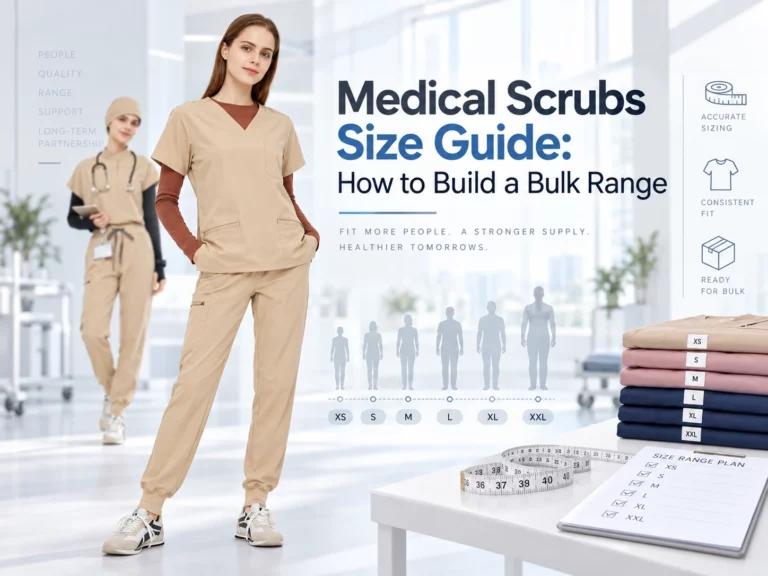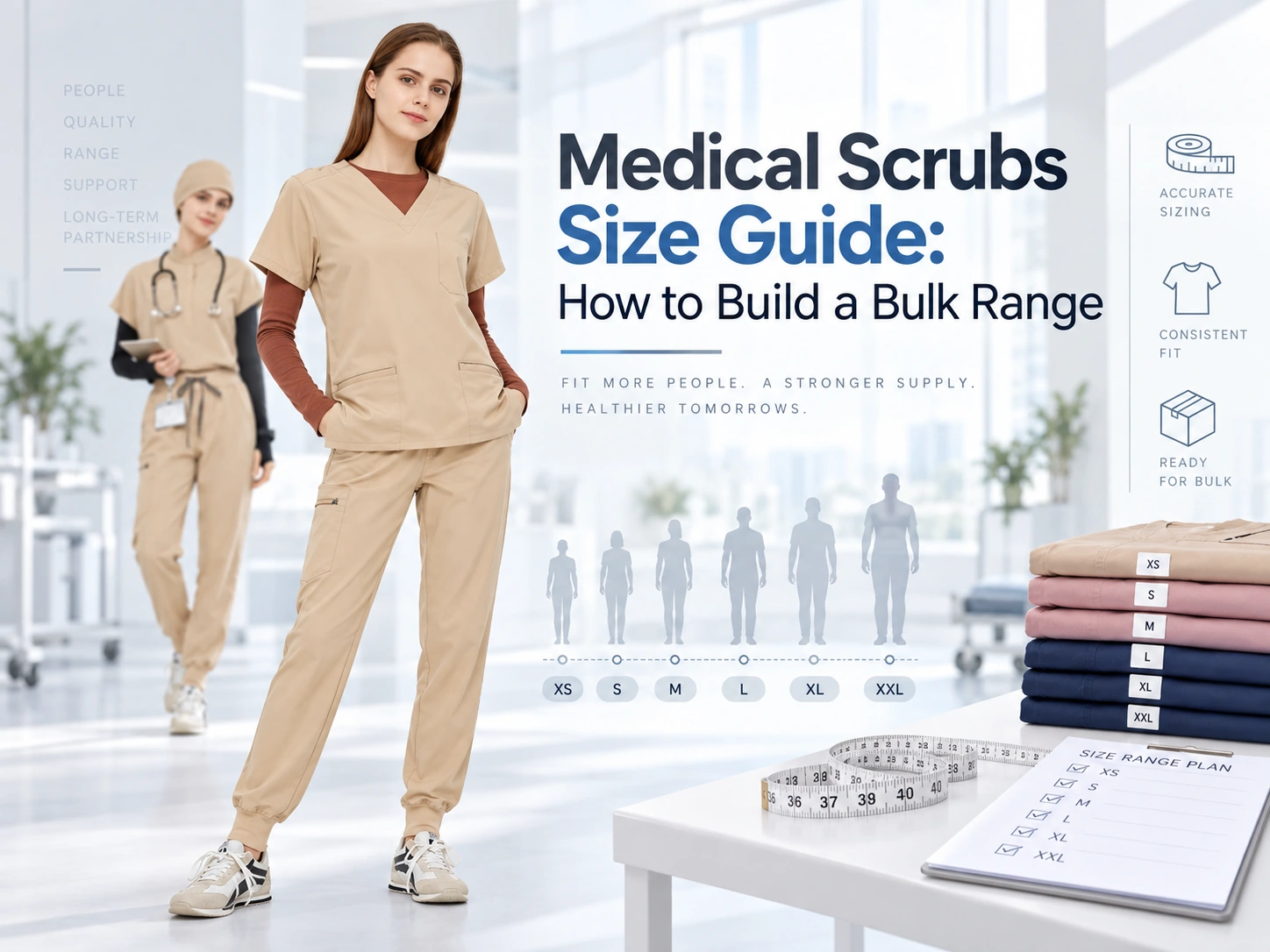
A medical scrubs size guide is usually written for one person choosing S, M, or L. A hospital or distributor has a different job: build a size range that fits a mixed workforce, can be sampled, and can be reordered without changing the fit people have approved. The useful unit is not a single chart. It is a chain: body measurement, garment measurement, pattern block, sample wearer, production size, and repeat-order reference.
Letters cannot carry that chain alone. The same M can have different chest, waist, hip, inseam, and sleeve measurements across women’s, men’s, and unisex styles. Fabric stretch and garment cut also change how those measurements feel in motion. Fuyi Group separates women’s, men’s, unisex, petite, tall, oversize, classic, and slim-fit paths for this reason: fit is a product decision, not a label.
Why One Size Chart Cannot Define a Bulk Range
Body Measurements and Garment Measurements Answer Different Questions
Body measurements describe the wearer. Garment measurements describe the finished scrub measured on a flat surface or on a form. A supplier might define size M for a 38–40 inch chest while the garment’s chest measurement is larger to allow movement. If the buyer compares a body chart with a garment chart, the sample can look correct on paper and still fail on the ward.
Before comparing labels, align the same measurement points: chest or bust, natural waist, hip or seat, inseam, and any garment measurements that change with stretch. Record how each measurement is taken, which sample size it came from, and whether the value changes after laundering. Body measurements define who the size is for; garment measurements and tolerances define what the supplier must produce.
The Same Letter Can Behave Differently Across Fit Blocks
Women’s, men’s, and unisex scrubs may use different pattern blocks. Even when two garments carry the same letter, shoulder slope, rise, sleeve, leg opening, and waist placement can differ. A unisex top may fit a broad shoulder but leave too much room through the waist; a women’s style may fit the torso but restrict the arm when reaching. These differences are design choices, not automatic defects.
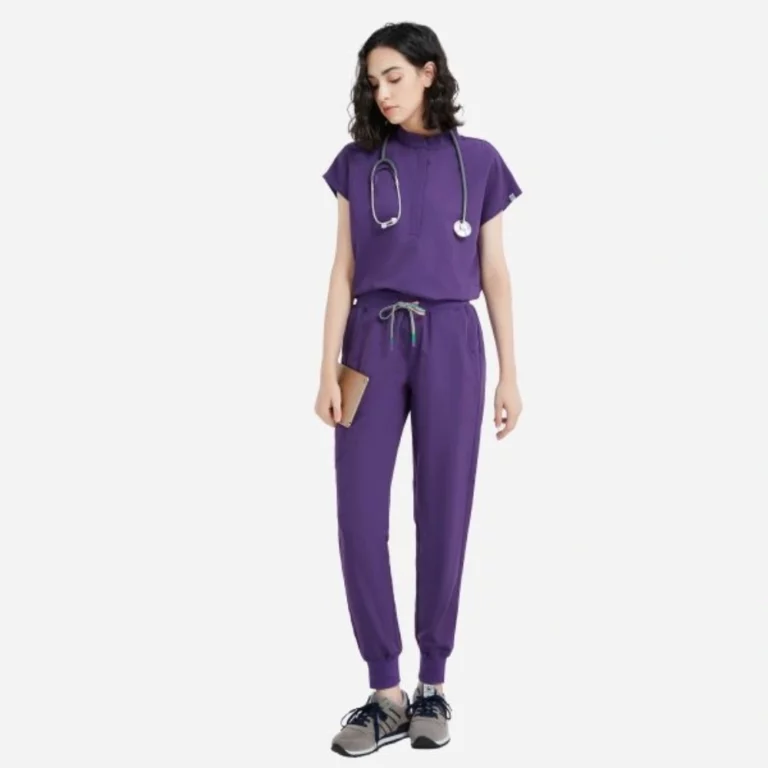
Fabric adds another variable. A poly rayon four-way stretch scrub and a non-stretch poly cotton scrub can share a size label but behave differently when the wearer bends, sits, or sends the garment through laundry. The fit test should therefore use the exact style and fabric, not a generic chart. The medical scrubs collection shows the product paths, but the approved size record still has to identify the exact item.
How to Build a Representative Fitting Sample
Select Sample Wearers Before Setting the Final Size List
The sample should represent the real work and body range, not only the people easiest to fit. If the program serves night shift, surgery, physiotherapy, and administration, include those movement patterns or explain why a category is excluded. Add petite, tall, and larger-size wearers from the start; leaving them until after the core range is approved usually forces a second grading or pattern decision.
Keep the measurement process consistent. Measure the same body points in the same posture and clothing condition, and do not round down to a familiar clothing size. Separate personal measurements from the procurement record; the buyer needs the fit decision, the size tested, and the agreed correction, not unnecessary personal data.
Test Movement and Coverage, Not Only Circumference
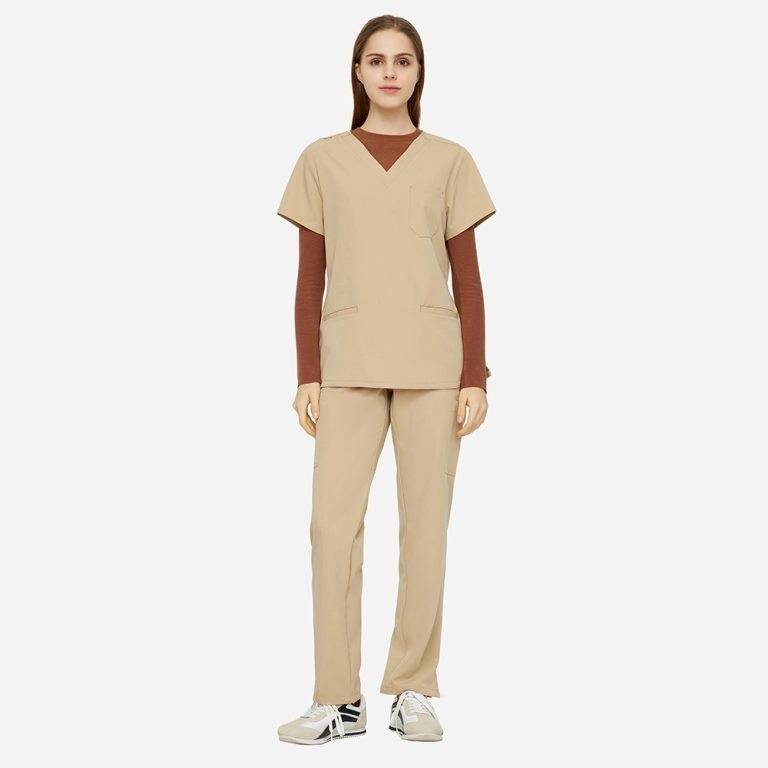
A wearer can pass a static measurement check and still fail the garment. The fitting should include reaching overhead, crossing the arms, bending, sitting, squatting, walking, and carrying the items normally kept in pockets. Record where the garment pulls, gaps, twists, rides up, or restricts. Check whether a loaded pocket changes the waist or shoulder position.
Wash the sample using the intended care method and repeat the critical checks. A size that fits before washing but changes length, colour, or recovery after washing is not ready for approval. The sample report should identify the style, fabric, size, fit block, measurement change, and wearer feedback. Fuyi Group’s OEM and ODM uniform development can support style and sample work; the buying team still needs to set the acceptance criteria.
How to Turn Fitting Results Into a Reorderable Size Range
Set a Core Size Curve From the Actual Staff Population
Once the sample set is understood, the buyer can plan quantities. Start with the number of wearers in each size and fit block, then add an allowance for turnover, damage, and new hires. Do not build the curve from a supplier’s standard S-to-XL assortment or assume that the midpoint will fit most people. The approved range should say which sizes are core stock, which are made to order, and which are accepted only after a fit sample.
If individual measurements are unavailable, run a pilot by role and body range, then refine the curve from the first order. The control is to avoid ordering every size in equal quantity merely because the chart lists it. Quantity should follow the population and the wear pattern.
Treat Petite, Tall, and Unisex Options as Deliberate Alternatives
Petite scrubs need their own proportion check, not only a shortened hem. Tall scrubs may need a different rise as well as a longer inseam. A unisex scrubs block may reduce SKU count, but it is not a universal replacement for women’s and men’s pattern blocks. The procurement team should decide which paths are genuinely needed and record the selection rule.
Plus size scrubs belong in the core range when the workforce needs them, not as a special exception after the first order. Colour and branding can also narrow the practical range. A style may offer several colours, but not every size-colour combination may be sensible for the first order. Check the current product record and keep the chosen size-colour matrix with the approved sample. The goal is a clear order rule, not a longer list of choices.
Freeze the Approved Size Reference for Repeat Orders
Repeat orders are where a size range either stays stable or drifts. Keep the approved measurement sheet, fit sample, fabric and style reference, size labels, and revision date together. When a new production lot arrives, compare the fit-critical points with that record. If the supplier changes a pattern block, fabric, or grading rule, treat the change as a new approval instead of assuming the old size label still applies.
The size guide should therefore be a living procurement control. It should say where each size came from, what body range it represents, and which sample the supplier must match. That is more useful than a chart that only suggests which letter looks closest.
Conclusion
The practical rule is to build the range from evidence, not from a chart. Align body and garment measurements, test the actual pattern blocks in motion, plan quantities around the real population, and freeze the approved reference for reorders. Before asking for grading, the buying team should approve the fit record and core size curve, then issue those as one controlled specification. That makes the first bulk order a continuation of the sample decision, not a fresh interpretation of it.
FAQs
Q1: Can one unisex range replace women’s and men’s sizes?
A1: Not automatically. A unisex block can reduce SKU complexity, but it may not fit every body shape or role. Test the actual unisex pattern against the intended population before removing other fit blocks.
Q2: How many wearers should be in a fitting sample?
A2: There is no universal number. Cover the main body ranges, height ranges, fit blocks, and movement patterns in the program. Add larger-size and petite/tall wearers early rather than treating them as exceptions.
Q3: What should be frozen for repeat orders?
A3: Keep the approved measurements, fit sample, exact style and fabric, grading rules, colour, and revision date. Compare each reorder with that record before production.