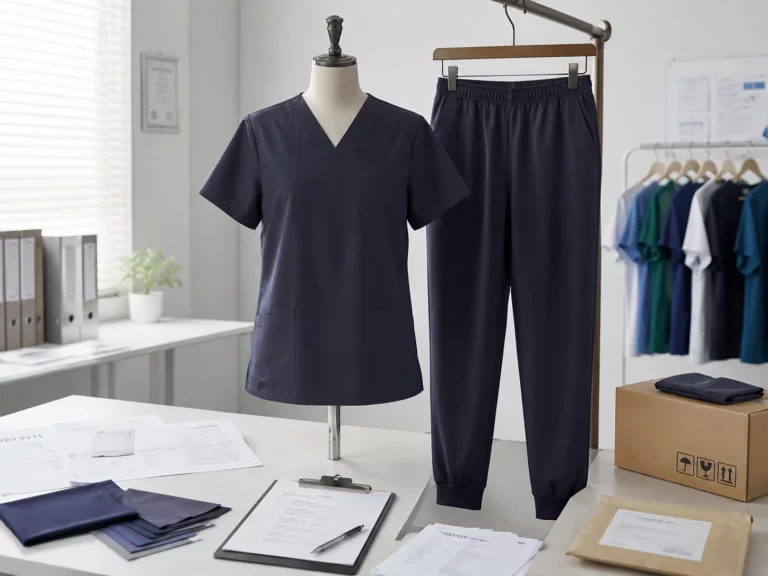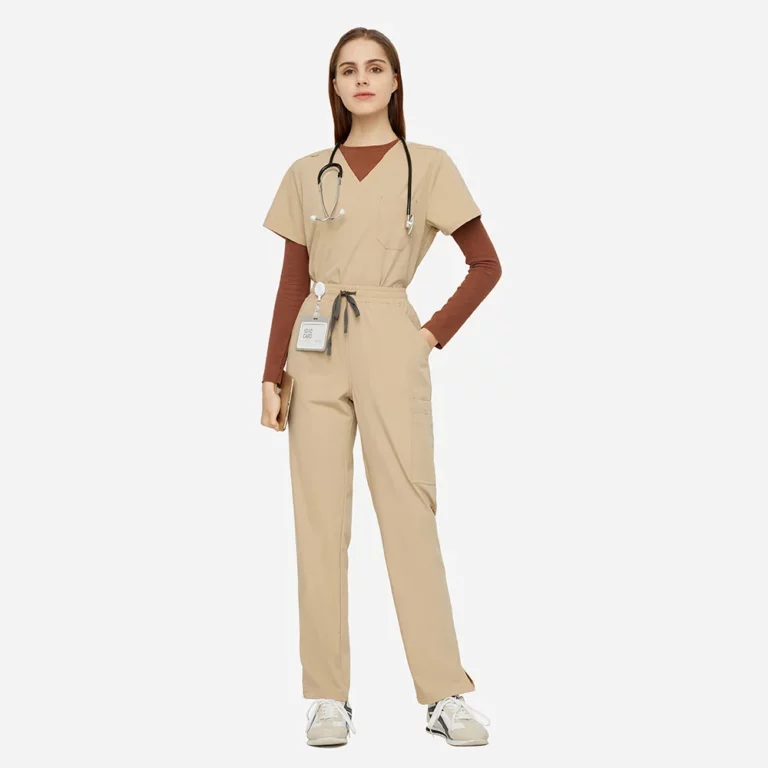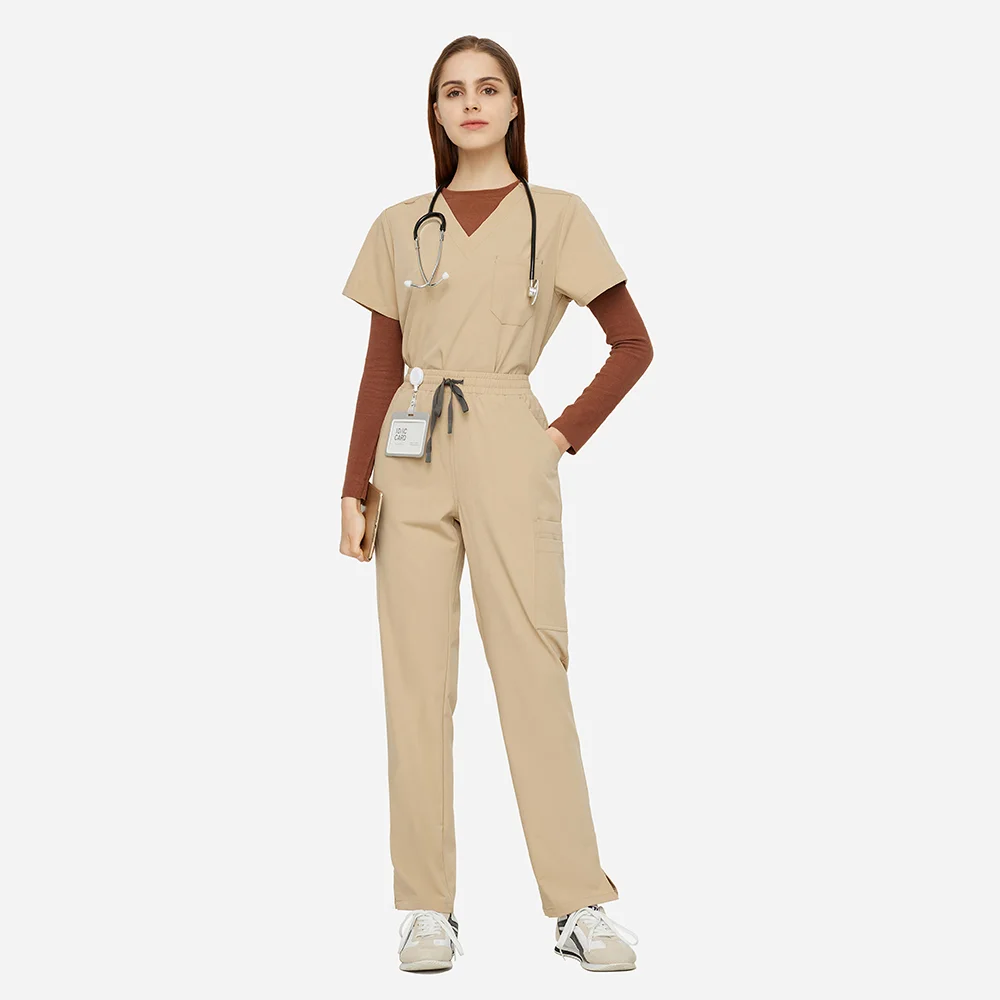
A uniform can look sharp in a product photo and still irritate staff after eight hours. That gap is why the one piece scrubs jumpsuit is getting a second look from clinics, dental teams, beauty clinics, and outpatient centers. It promises a cleaner line, fewer loose layers, and less waistband shifting when staff bend, sit, chart, and move between rooms.
The tradeoff is just as real. A one-piece garment asks more from fit, closure design, fabric recovery, and department policy than a separate top and pant. Classic scrub sets still win in many high-acuity or mixed-size teams because staff can change sizes, swap tops, add layers, or replace only one worn item. The better question is not whether one format is more modern. It is where each format makes a shift easier.
Why the One-Piece Shape Is Back in the Conversation
A good scrub jumpsuit fixes a small problem that becomes annoying during a long day: the top riding up, the waistband folding, or the whole outfit looking less tidy by the afternoon. When the top and pant are connected, the silhouette stays cleaner. There is no hem to tuck back in after lifting supply boxes or reaching over an exam table.
That is why jumpsuit scrubs have moved beyond a fashion idea. In lower-acuity settings, reception-clinic crossover roles, dental chairs, skin clinics, and mobile health teams often need uniforms that look neat in front of patients but still handle movement. A single piece can also simplify color control across a team. Navy, black, teal, or custom seasonal colors look more consistent when the garment is designed as one unit rather than matched from separate stock.
Still, the style works only when the details are built for healthcare. Fashion jumpsuits and clinical uniforms are not the same product. Medical teams need pocket access, wash stability, stretch recovery, and a closure that does not make breaks awkward. The design has to serve the shift, not just the mirror.
Where a Jumpsuit Helps, and Where Separate Sets Still Win
The one-piece format is strongest when a team wants a polished look with fewer uniform parts. It reduces the chance of mismatched shades, exposed undershirts, or uneven top lengths. For brand-led clinics, med spas, dental offices, and outpatient departments, that neatness can matter. Patients notice uniforms before they notice fabric specifications.
Separate sets still have practical advantages. If one staff member needs a small top and medium pants, separates solve the problem without forcing a compromise. If a department runs hot in summer and cold in winter, staff can adjust layers more easily. If pants wear faster than tops, purchasing can replace only the worn part instead of retiring the full uniform.
The decision also depends on risk. Emergency departments, operating rooms, and high-contact wards may prefer separates because quick changes, gowns, and department dress codes can be stricter. A jumpsuit can work in clinical spaces, but the workplace must accept the shape and staff must be comfortable wearing it through real tasks, not only during fittings.
Why Zip Front Scrubs Are Easier to Live With
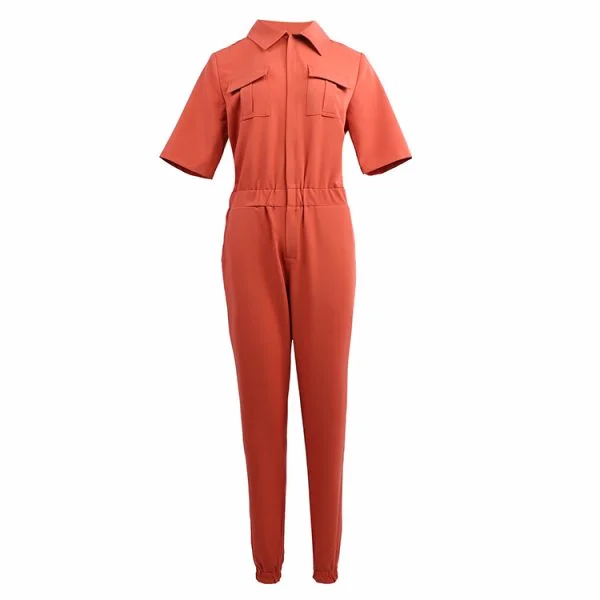
Closure design decides whether a one-piece uniform feels clever or frustrating. Zip front scrubs are usually easier to manage because the wearer can step in, close the garment quickly, and handle breaks without a full struggle. Pull-over designs may look clean on a hanger, but they ask too much during a busy day.
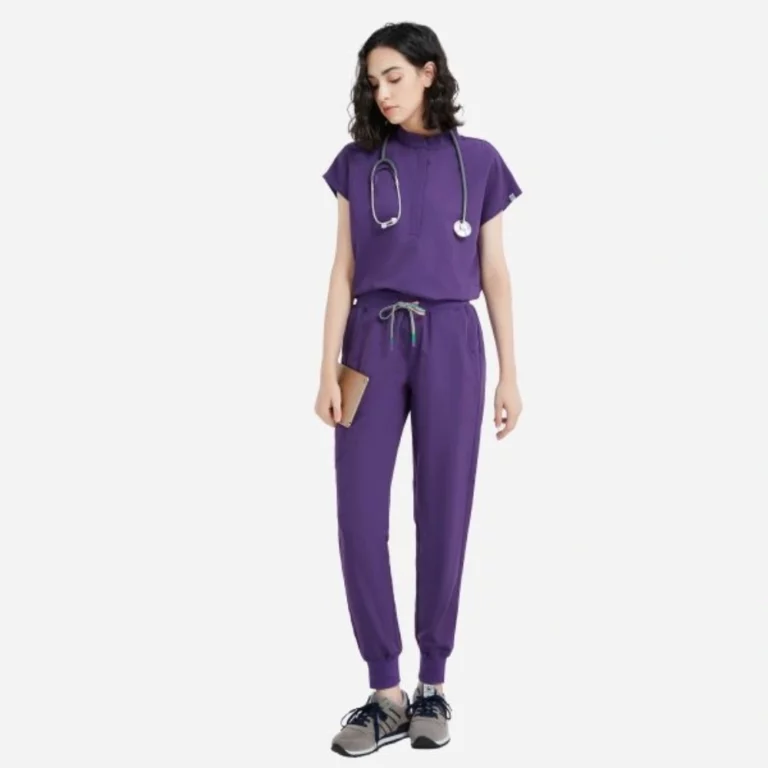
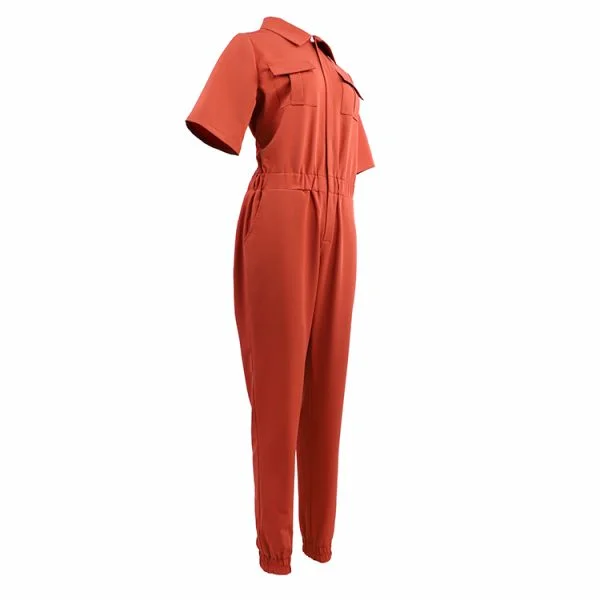
Fuyi Group’s jumpsuit product uses a front zipper closure, elastic waistband, chest pockets, and side pockets. The fabric listed on the product page is 72% polyester, 21% rayon, and 7% spandex, a blend that suits soft hand feel, stretch, and easy care. Clinics comparing samples can review the jumpsuit product page beside their existing tops and pants before choosing a full rollout.
For a buyer, front-zip design also makes sample feedback clearer. Staff can comment on zipper length, zipper guard comfort, waist placement, pocket reach, and torso pull after a trial shift. Those comments are more useful than a generic note that the jumpsuit is comfortable or not comfortable.
Fit and Fabric Details That Decide the First Trial
Fit is less forgiving in a connected garment. The scrub jumpsuit should be checked across shoulder width, torso length, waist position, hip ease, crotch depth, inseam, and sleeve opening. A small change in torso length can affect bending comfort more than the same change would in separates. That is why trial sizes should include petite, regular, and larger body types when the order is meant for a whole team.
Jumpsuit scrubs also need pocket planning. A top and pant together may offer six to nine storage points, while one garment must place tools without pulling the fabric out of shape. Chest pockets help with pens and cards. Side pockets work for gloves, notepads, and small tools. A leg pocket can be useful, but only if it does not swing or bulge when walking.
Fabric should be tested the same way staff use it. For medical uniforms, Fuyi Group works with poly rayon stretch fabrics, poly stretch fabrics, TS and TRS options, and medical fabric testing for color fastness, antibacterial performance, water repellency, and wash stability. A buyer comparing a one-piece option with separate uniforms can also review the broader medical scrubs collection to keep fabric, color, and reorder planning aligned across the program.
How Clinics Can Sample, Customize, and Reorder Without Guesswork
A medical scrub jumpsuit should not be ordered across a full clinic from a size chart alone. A sensible path starts with a small size run, one or two working shifts of staff feedback, and a review of wash results. The sample should be judged after movement, sitting, reaching, and laundering. If logo placement is needed, it should be checked on the body, because a logo that looks centered flat may sit too high or too low after the zipper and waist are closed.
This is where supplier capability matters. Fuyi Group supports OEM and ODM medical uniforms, logo, packing, and graphic customization, and sample lead time on the product page is listed at 10 to 15 days. The same page lists a 200-set MOQ for the jumpsuit product and custom logo, packing, and graphic options. For clinics, wholesalers, or brand owners, custom scrubs with logo can be managed without treating every reorder as a new project.
The strongest uniform programs keep the format flexible. A clinic may use jumpsuits for front-desk clinical staff and outpatient roles, while keeping separates for departments that need easier size mixing or quick garment replacement. When custom scrubs with logo are part of the order, sample approval should include logo size, placement, color contrast, and wash appearance, not only garment fit.
Before bulk approval, ask the supplier for size grading, fabric test information, logo method, color tolerance, packaging, reorder lead time, and the policy for replacing defective pieces. Fuyi Group can receive details for custom scrubs with logo through a custom uniform request. The goal is simple: let staff test the garment as workwear, then let purchasing confirm whether the style can repeat cleanly at volume.
FAQs
Q1: Is a one-piece scrub uniform practical for nurses?
A1: It can be practical in outpatient clinics, dental practices, med spas, and lower-acuity roles where staff want a neat uniform and do not need frequent full changes. The best designs use stretch fabric, useful pockets, and a front opening. High-acuity departments should test the style against dress codes and real movement before ordering.
Q2: Are zip front scrubs better than pull-over jumpsuits?
A2: For most healthcare work, front-zip styles are easier to wear because they simplify dressing, breaks, and quick adjustments. Pull-over jumpsuits may work for light-duty settings, but they are less convenient during long clinical shifts.
Q3: Should a clinic choose jumpsuit scrubs or separate sets?
A3: The one-piece style is useful when appearance, color consistency, and no-tuck comfort are priorities. Separates are safer when staff need mixed top and pant sizes, more temperature control, or easier replacement of worn pieces. Many teams use both formats by role.