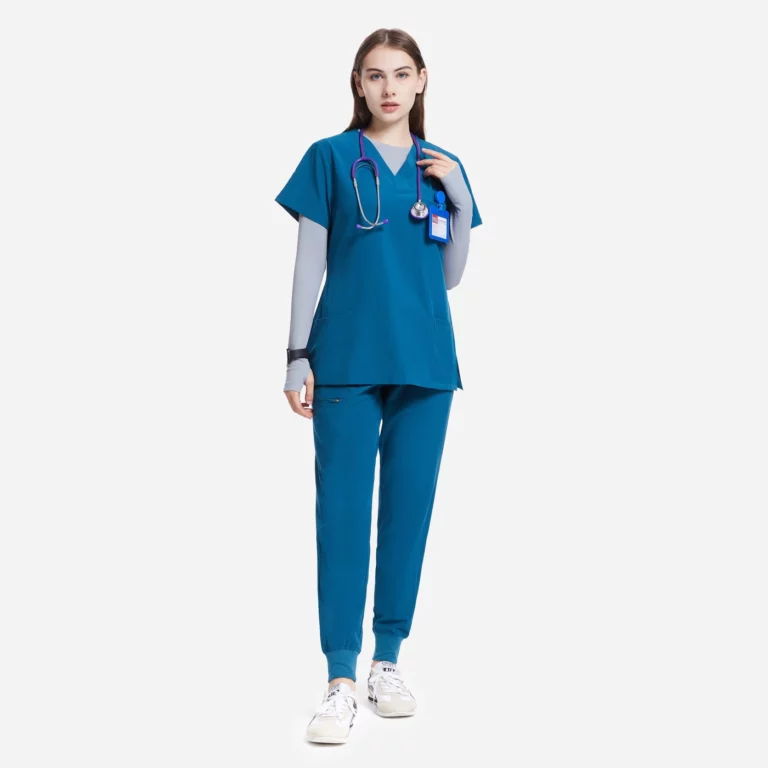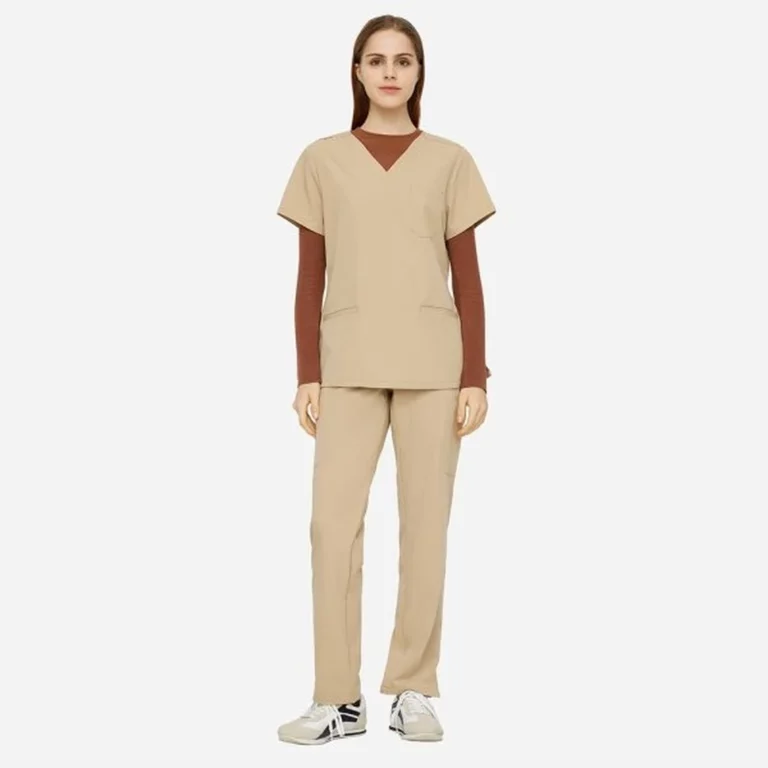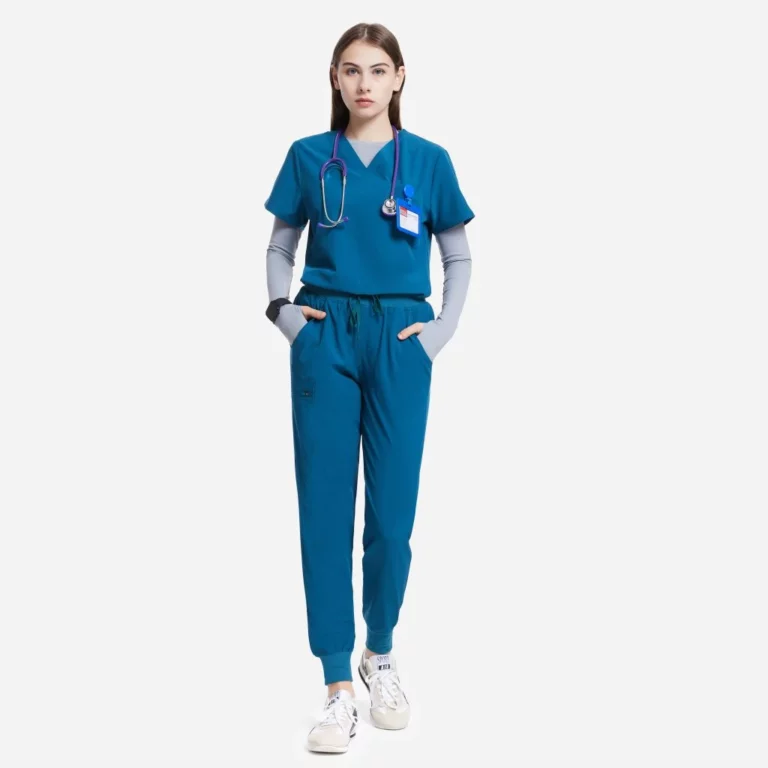
A true hospital uniform program is rarely just a simple, one-time apparel purchase. Nurses, busy technicians, fast-moving physicians, and essential support teams constantly demand high-quality garments. These outfits need to look perfectly consistent even after relentless, repeated washing. They must move comfortably throughout grueling, long shifts. Most importantly, they must be easily replenished later on without any jarring, visible change in color shade or physical fit.
The practical reason for this strict process is quite straightforward. Clear bulk scrub fabric requirements absolutely should be written down before a purchasing buyer ever begins to compare supplier quotations. You must write the sourcing brief carefully. It needs to tightly connect the fiber content, GSM, stretch capacity, recovery speed, color fastness, applied finish, overall garment construction, and expected washing conditions. Furthermore, it must clearly identify the exact version that will be repeated next season.
What should a hospital uniform program define before choosing fabric?
Always begin your planning with the reality of the workday, not simply looking at a woven fabric label. First, properly identify the specific roles of the people wearing the garment. Figure out the physical movement required for their daily tasks. Check the expected industrial washing temperature and the overall laundering frequency. Determine the target service life of the garment. Finally, set a firm appearance standard that must be met after heavy laundering.
Different teams have vastly different needs. For example, a fast-paced surgical team may highly value intense stretch and rapid fabric recovery. Conversely, a front reception group may strongly prioritize elegant drape and strict color stability. A facility maintenance department, on the other hand, might desperately need a much harder-wearing, abrasion-resistant finish. Making these practical decisions early on effectively turns vague bulk scrub fabric requirements into highly measurable, tough questions for any potential medical scrub supplier.
Which fabric fields belong in the sourcing brief?
You must explicitly list several key technical details. Include precise fiber percentages, the target GSM, the fabric width, and the specific stretch direction. You also need to state the recovery expectation, the tactile hand feel, breathability metrics, wrinkle behavior, the acceptable pilling target, and the locked color standard. Do not forget to mention any special chemical finish, such as advanced water repellency.
In addition to the fabric, clearly state the physical garment style. Will it feature a classic V-neck or a modern stand collar? Document the exact pocket count and their precise physical position. Choose between trendy jogger bottoms or traditional straight-leg trousers. Finally, lock in the complete size range. Without explicitly defining those crucial fields, two different suppliers can easily quote “comfortable stretch scrubs.” Yet, those two garments will feel, fit, and perform very differently on the ward.
How should washing be described?
Whenever it is physically possible, always use the hospital’s actual, real-world laundering process for testing. Clearly state the exact detergent type being used. Document the water temperature, the aggressive drying method, and whether harsh ironing or mechanical pressing is involved. Most importantly, state the exact number of wash cycles used for the initial evaluation.
You must formally request test results for dimensional change and shade fading. Also, ask for data on seam puckering appearance and stretch recovery after that severe washing. A fabric that feels incredibly soft and excellent on day one is useless if it twists horribly at the side seam after repeated wash cycles. That flaw makes it a terrible fit for any professional hospital uniform program, even if the initial quote price is highly attractive.
How do poly rayon scrubs and poly stretch scrubs compare?
These two totally different fabric directions can easily serve distinctly different program priorities. Poly rayon scrubs usually offer an incredibly soft hand feel, fluid drape, and a generally more tailored, professional appearance. On the flip side, poly stretch scrubs can successfully provide a much lighter, easier-care option. They typically feature moderate mechanical stretch and very clean, snappy recovery. When comparing them, always look at the actual fiber composition and the true GSM. Never simply rely on the vague marketing word “premium” printed on a sales quotation.
When does a 200 GSM poly rayon fabric make sense?
A standard poly rayon 4-way stretch construction usually utilizes 72% polyester, 21% rayon, and 7% spandex, weighing in at a solid 200 GSM. It brilliantly combines true four-way stretch, a highly soft hand, excellent breathability, strong anti-wrinkle behavior, and a gently sanded surface texture. Furthermore, a custom water-repellent treatment can be easily added when officially specified.
That specific combination may perfectly suit medical teams that deeply desire a soft, substantial fabric alongside incredibly easy movement. Always remember to confirm the final color shade and the snap-back recovery after heavy washing. You must also check whether the requested chemical finish unexpectedly changes the nice hand feel or alters the mandatory care instructions.
When is a 170 GSM poly stretch fabric useful?
A typical poly stretch construction generally uses 94% polyester and 6% spandex, sitting at a lighter 170 GSM. It reliably offers moderate stretch, a highly breathable drape, and very easy care. It also provides a water-repellent option by special request. This notably lower GSM can perfectly suit a much lighter uniform intended for hot, warm wards or highly active, sweating roles.
However, it is not automatically the universally better choice. Critical factors like body coverage, fabric opacity, local climate, winter layering, and the hospital’s harsh wash process still ultimately decide the best fit. A short, real-world wear trial followed immediately by the actual hospital wash cycle is vital. It always tells you significantly more than a generic comfort adjective written in a sales quotation.
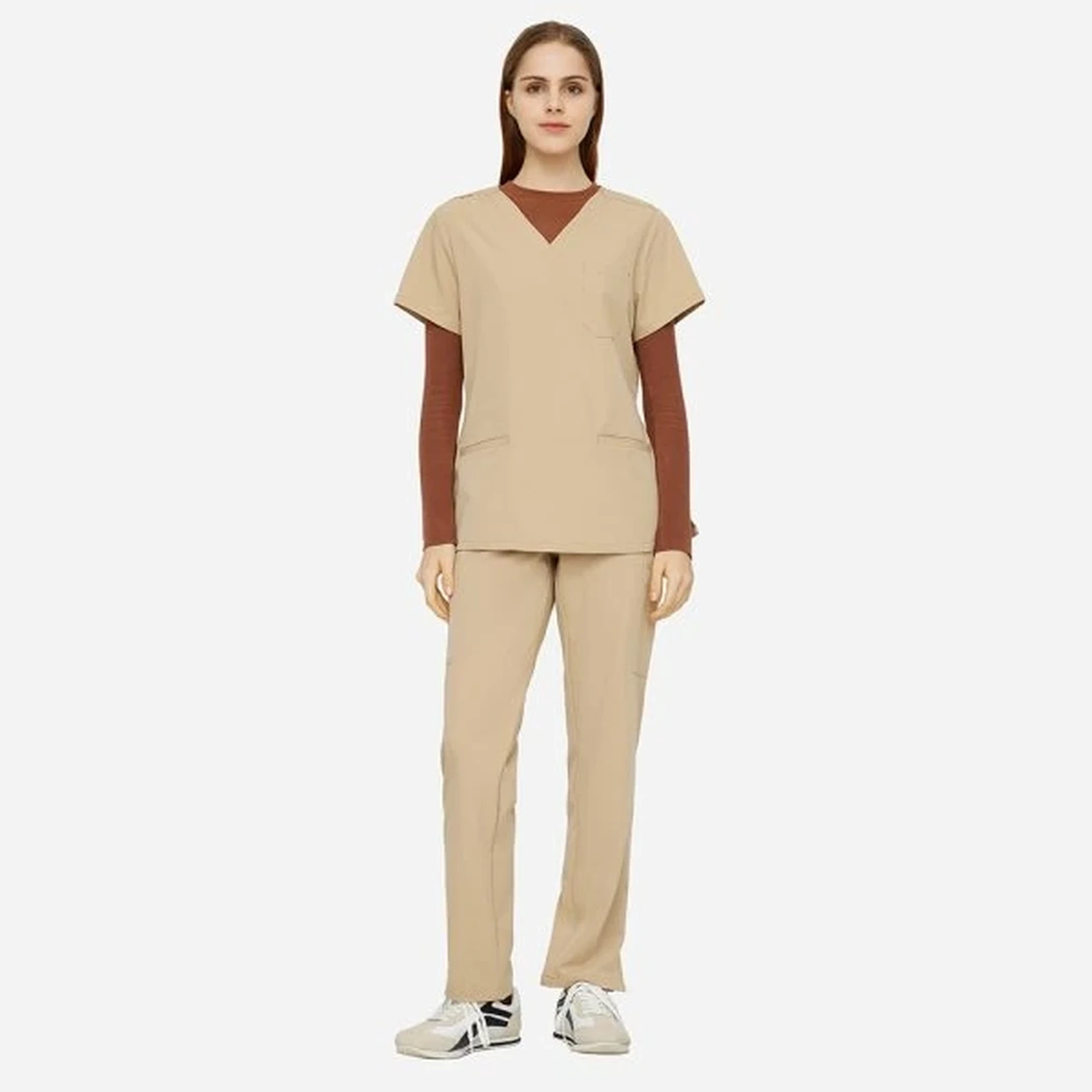
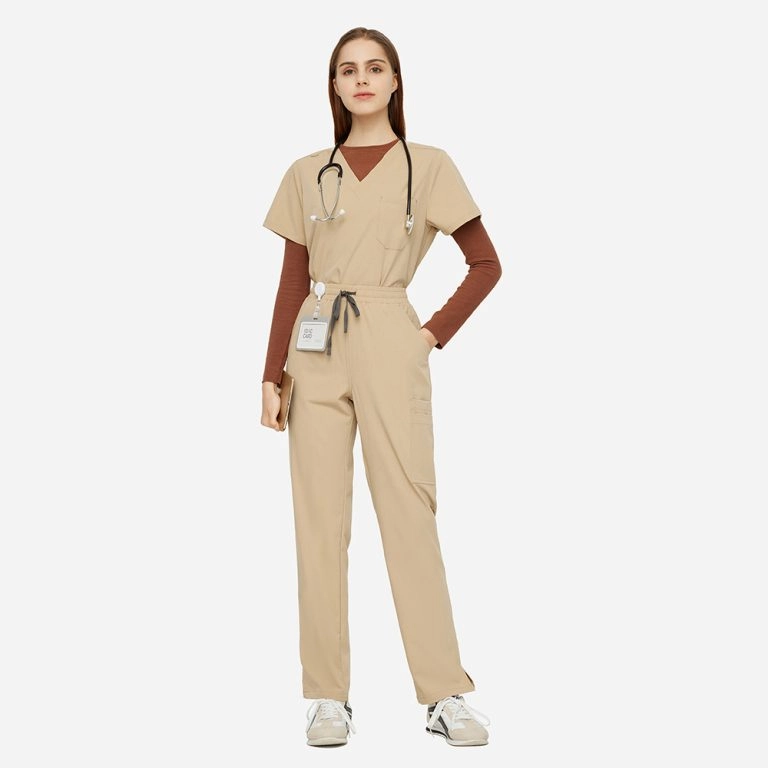
Always compare the fully approved, sewn scrub garments just as carefully as the small fabric swatches. This is especially true when the exact same hospital uniform program serves multiple, wildly different roles. Keep the fiber composition and GSM intimately connected to the actual wear, harsh washing, color matching, and future replenishment decisions.
How should buyers approve fit, color, and garment details?
A tiny fabric swatch is honestly only a very basic first screen. You should only formally approve the fabric after it is properly sewn into the actual, intended garment. Carefully review the V-neck and stand-collar versions. Check the pocket opening width, the pocket depth, the side vents, and the complex waistband construction. Evaluate the jogger or straight-leg shape closely. Also, check the physical movement allowed at the critical shoulder and hip joints.
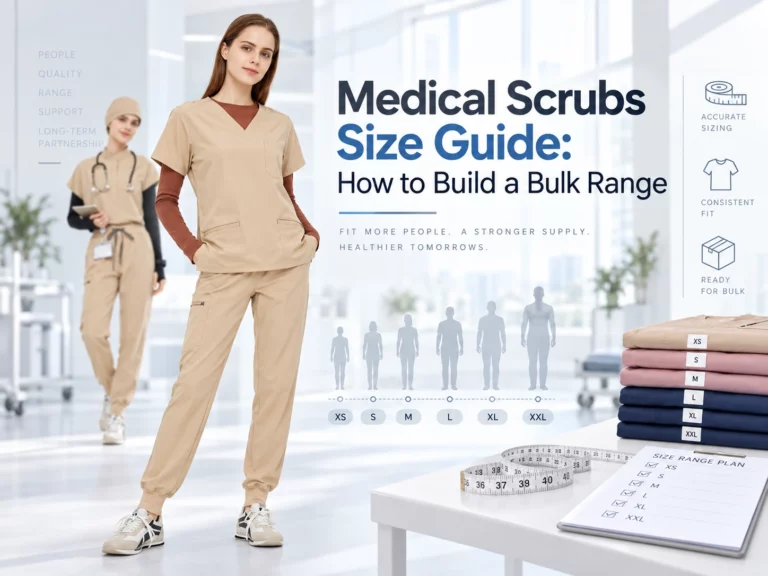
Always confirm the precise size chart and the pattern grading across the common XS-2XL range. Keep in mind that selected lab coats may need to extend out to 3XL. Using real fit models or a highly controlled employee try-on group can reveal a lot. It exposes awkward pulling, chest gaping, or restricted reaching that a flat, tiny fabric swatch simply cannot show you.
What color controls prevent a mixed uniform look?
You must choose a physical, locked shade standard or a fully approved lab dip. Then, carefully record the acceptable color tolerance and the specific lighting environment used for the evaluation. Always keep the top and bottom garments from the exact same color family securely attached to the exact same approval record.
Ask the factory exactly how different fabric dye lots are identified. Also, ask whether future replacement orders can be reliably matched to the original, locked standard. For any serious medical scrub supplier, this crucial color information belongs permanently inside the official production file. It should never live only inside a buyer’s messy email thread.
What evidence should a medical scrub supplier provide before bulk release?
You must formally request the final fabric composition and the certified GSM report. Ask for the dimensional-change test result, comprehensive colorfastness information, and the pilling or abrasion result where relevant. Most importantly, demand a fully sewn physical sample that perfectly matches the final, approved pattern.
Clearly clarify exactly which chemical finish is included. This is especially critical if advanced water repellency is requested. Have the supplier strictly confirm the final packaging style, the carton labeling rules, the exact size mix, and all major inspection points. You also need to know exactly how a nonconforming, failing lot is handled on the factory floor. Future replenishment is always vastly easier when the very first order leaves behind a complete, highly searchable technical specification.
How does production capacity affect continuity?
Founded back in 1966, the Grupa Fuyi brings six impressive decades of deep fabric experience to complex, repeat uniform programs. The massive China fabric operation can steadily produce about 3 million meters every single month. Additionally, three large Myanmar factories employ roughly 2,500 skilled people. These facilities support an annual garment sewing capacity of about 5 million pieces. Impressively, the group exports to approximately 80 different countries worldwide.
Those massive figures absolutely matter when a large program needs rapid, reliable replenishment. However, raw production capacity still has to be carefully weighed against other vital factors. You must consider strict shade control, the management of approved fabric lots, and clear daily communication. You also must evaluate their proven ability to flawlessly preserve the exact same pattern and finish over many years.
For specific product references, take time to review the Grupa Fuyi medical uniform products and their extensive medical scrubs collection. Closely compare the poly rayon 4-way stretch series directly with the poly stretch series. Once you decide, send the fully approved sourcing brief directly through the official Fuyi Group contact channel.
Często zadawane pytania
Q1: Are poly rayon scrubs always inherently more comfortable than poly stretch scrubs? A1: No, not always. True comfort heavily depends on the specific medical role, the local climate, the garment fit, the harsh washing routine, and simple personal preference. Poly rayon can definitely feel soft and substantial. Meanwhile, poly stretch can feel delightfully lighter and much easier to care for. Always compare fully sewn samples after rigorous laundering to know for sure.
Q2: Why exactly should GSM be written directly into bulk scrub fabric requirements? A2: GSM directly affects body coverage, tactile hand feel, overall garment weight, opacity, and exactly how a garment behaves across different seasons. Recording it firmly prevents a sneaky supplier from quietly substituting a much lighter or heavier fabric while still using the exact same product name.
Q3: What exactly should a hospital approve right before placing the first bulk order? A3: They must formally approve the final fabric composition, the GSM, the locked shade standard, and the applied finish. They also need to approve the size chart, the pattern, the pocket and collar details, and the wash test results. Finally, they must approve the packaging plan and the physical, revision-controlled sample that the production line must blindly repeat.