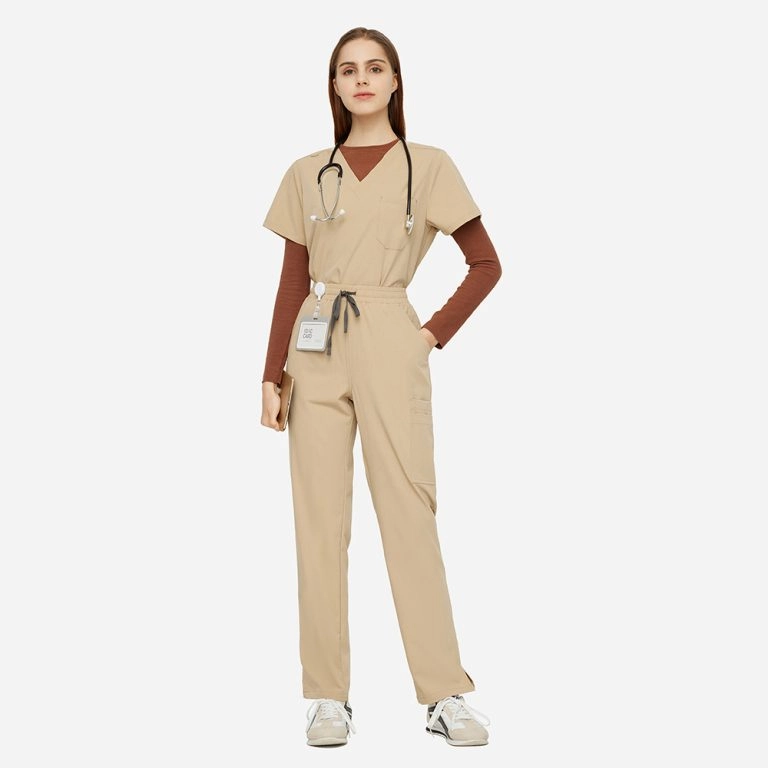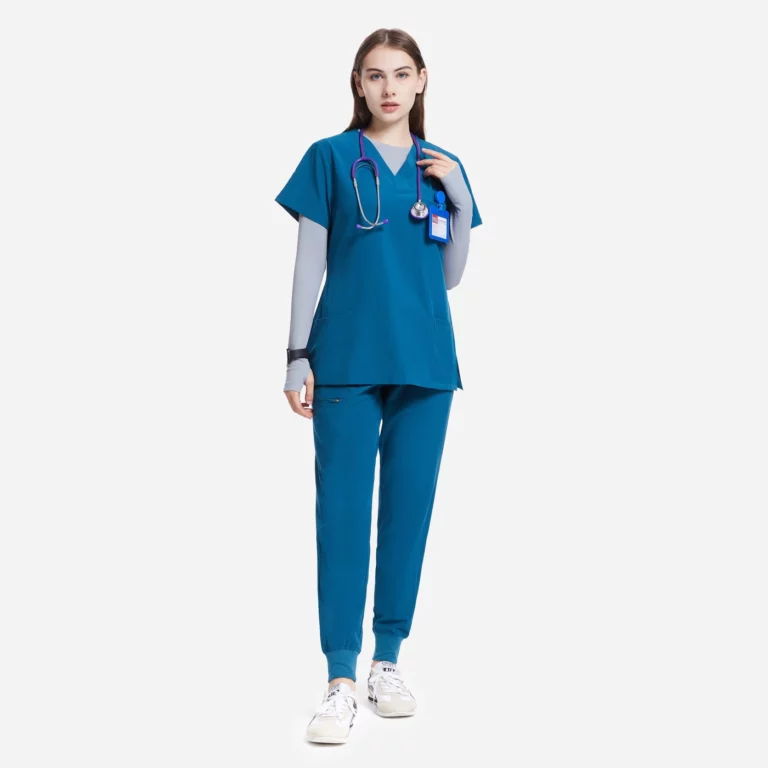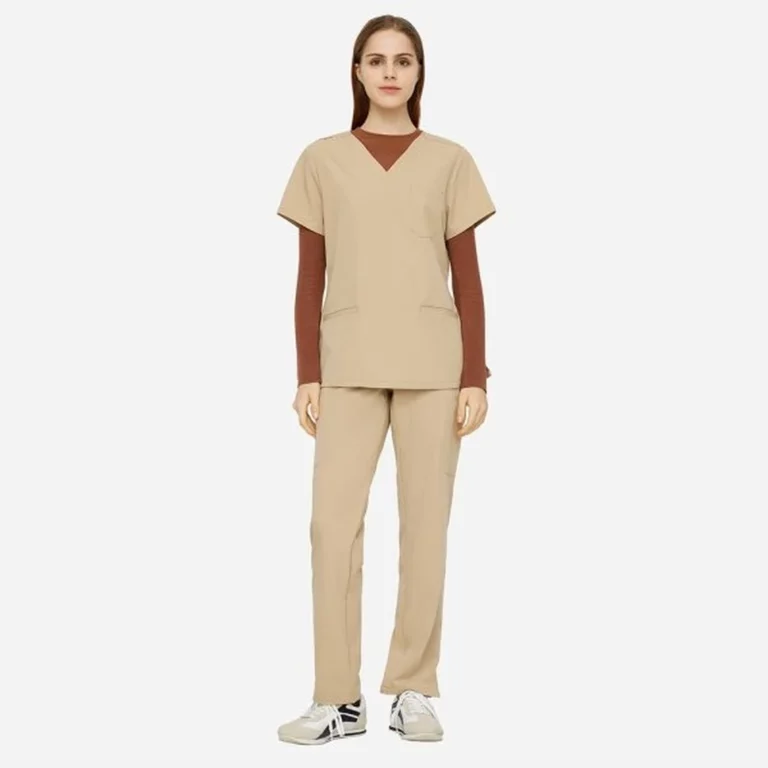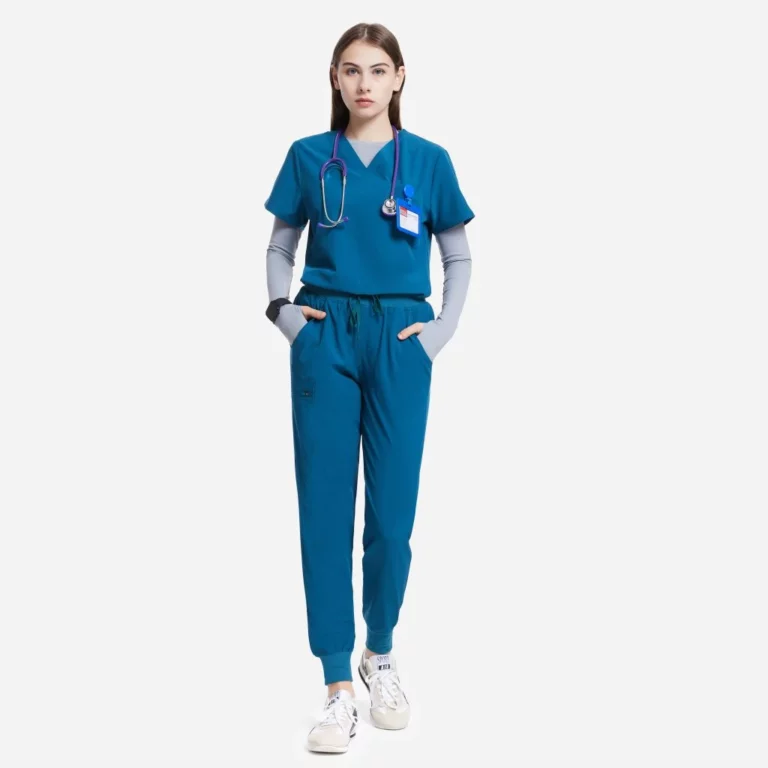
Ordering one piece scrubs in bulk is not just a colour-and-size-sheet exercise. A connected garment asks awkward questions a two-piece never does: how does the wearer sit for eight hours, how fast can she get out of it in a staff corridor, what does the laundry department do to it after fifty washes. We weave these questions into every jumpsuit conversation, mostly because our own buyers kept asking them.
Our scrub jumpsuit pages publish fabric, closure and pocket details. But what is on a listing does not always match what is quoted for a container, so before money moves, you want the boring things in writing — the real minimum order, the actual MOQ unit, the way sizes are allowed to be mixed. That is what this guide is about. What to ask, and why.
Start from a real listing, not a mood board
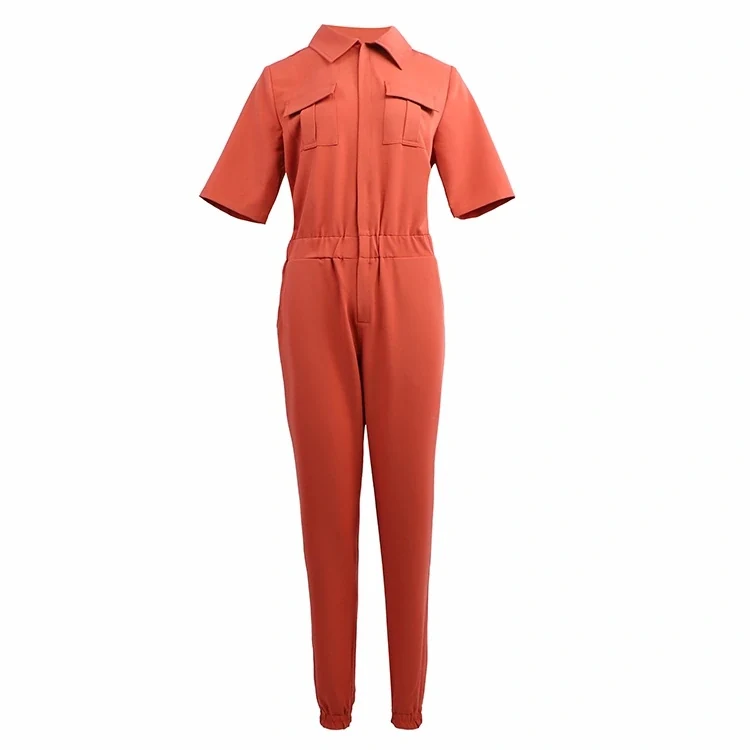
Take the Tuta intera da infermiera/infermiere — style TRST22SCT064F, and please use that code in your enquiry instead of attaching a photograph and hoping. Published fabric is 72% polyester, 21% rayon, 7% spandex. Front zipper, elastic waistband, more pockets than you would believe. Care line says 40°C machine wash, no bleach, tumble and iron low. All of it verifiable, all of it a starting point rather than a promise.
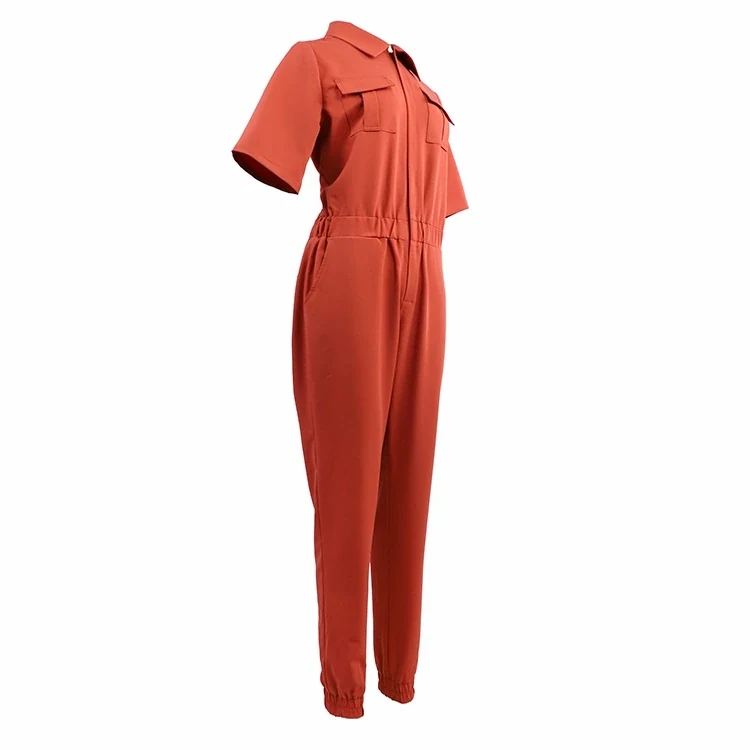
So quote against the style code. Ask for the current measurement sheet, ask which colours and sizes actually exist today (not three years ago when the photos were shot), and ask us to confirm in writing that whatever sample we ship is built from the same fabric and construction as the bulk run. It sounds paranoid. It costs one email.
There is a second jumpsuit in the range, TRST23SCT001F. Fabric wording on the two pages looks similar. Similar is not identical — silhouettes differ, so do the closures. Compare measurements before you pick a reference style, then name one approved version in your documents, revisions included. Buyers who keep two references alive tend to get one of them shipped by accident.
Existing style versus new development — different conversation
If you want a style we already make, the only open question is which listed options the current price covers. A new pattern, a different cloth, a bespoke colour — that is development, and development has its own clock and its own money. Our OEM and ODM services exist exactly for this split. Say early which side of the line you are on, otherwise the quotation answers a question nobody asked.
MOQ and sample timing are order terms, not marketing copy
Both jumpsuit listings state 200 sets and sample dispatch in 10–15 days. Fine. Treat those as the opening position, then check the small print: does the 200 apply per style, per colour, or to the whole order? Can sizes be mixed, or is 200 really 200 of one size (nobody wants that, but ask anyway)? And — this one bites people — with a single connected garment, what does the word “set” even count? One piece, priced per piece, called a set. Get the unit defined before you divide a price by it.
Service text elsewhere on the site may quote different minimums or delivery promises. Do not stitch sentences from three pages into a contract in your head. One written confirmation naming the style, the customization, the quantity unit and the applicable minimum is worth more than a screenshot collage.
Same trap with timing: dispatch is not arrival. When does the 10–15 days start — from artwork sign-off or from payment? Does logo approval come before the clock or during it? DHL or a freight forwarder with a customs queue? A sample that leaves the factory on time can still spend a week in transit plus two days at your border. Put your own fitting-and-approval week into the schedule on top.
Ask what actually moves the minimum
Logo, packaging, graphics — the jumpsuit pages name these, and each may carry its own minimum. A newly dyed colour can drag in a fabric-level requirement that swallows your tidy little trial order. So price every change separately, schedule every change separately. If the number on the table is too small for the development you want, the honest answer is usually to pick an existing option that still fits the brief — and launch on time.
Approve the garment before you argue about bulk prices
A scrubs jumpsuit fits as one long piece, which is the charm and the curse. More room through the torso from sizing up? Congratulations, the waist, hip and leg changed too. So fit-test the approved sample the way a nurse uses it: sit, reach, bend. Note any pull at the shoulder or the crotch, any waistband digging in after lunch, any awkwardness at the zipper with cold hands.
Then the undervalued test: changing. Ask trial wearers to get in and out of the garment in the environment they actually change in — a six-person staff room, a bench, no time. Is the lower half manageable without dragging on the floor? Can the top half be handled at all? A styled standing photo cannot answer any of this. Your colleague in a staff room can.
Run the sample through the laundry you actually have. The listing says 40°C; do not quietly assume the hospital boiler at 71°C will be kind to it. If the customer mandates a hotter wash or a harsher chemistry, settle that with us before the fabric is approved, not after. And to be blunt — these are uniforms. Any protective-performance claim needs its own evidence, from a real test, on the real garment.
Across the wider range we work with both poly-rayon stretch and polyester stretch, which frames development talk nicely. It does not mean every cloth comes in every jumpsuit. Ask us to name the offered fabric precisely and send whatever evidence your care and performance requirements need.
Build a quote that can graduate into a purchase order
A good brief is almost boring: style code, total quantity, size breakdown, approved colour reference, destination. For custom scrubs, add logo artwork, placement, rough dimensions, packing needs. Then one clear sentence saying whether you want an existing style with branding or a garment developed from scratch. Suppliers quote the brief they receive; a vague brief earns a vague number.
On the receiving end, ask every quotation to break out garment cost, sample or development charges, customization, packing and freight. Compare on the same delivery basis or do not compare at all — a low unit price with no shipping term, no destination, no packing spec is not a landed cost, it is a rumour.
Our production side runs quality management from materials through finished garments and accepts third-party inspection. Nice words until they become an order-specific agreement: which measurements, checked how, against which approved reference sample, with what happens to defects. A shared acceptance sheet beats a quality slogan every single time.
For timing, unbundle the stages — material prep, sample approval, production, inspection, transport — and confirm which ones sit idle until some approval or payment lands. Then keep the final sample, the spec revision and the signed artwork in one place. Production will ask. Replenishment, eighteen months later, will ask again.
One more thing worth volunteering: who the goods are for. A distributor restocking an established clinic has size-mix evidence; a brand launching its first connected scrub garment has a hunch and a website. Both are fine. Telling us which one you are changes the assortment conversation from fantasy numbers to something workable.
Conclusione
Buy one piece scrubs against a named style and a signed-off sample. Get the published minimum confirmed in writing, with the unit defined. Test the connected fit and the changing ritual before the price war starts. Quote the same specification everywhere. Do those four things and what comes out the other end is an order the factory can actually manufacture and you can actually inspect.
When you are ready: send the style code, quantity, size mix, colour, logo needs and destination, and have us confirm the applicable MOQ, sample arrangement and schedule for that exact combination — before the purchase order, not during it.
FAQ
Q1: What is the MOQ for FUYI one piece scrubs?
A1: 200 sets, as printed on both jumpsuit product pages. But confirm the applicable minimum for your style and customization, what “set” counts, and whether your colour and size mix is permitted. Those three answers change the real number.
Q2: Can we order custom scrubs with our own logo?
A2: Yes — logo, packing and graphic customization are listed on the jumpsuit pages. Send artwork and placement and we will come back with the process, an approval sample, the charge, and whether your quantity clears the minimum for the method chosen.
Q3: Can a listed scrub jumpsuit survive hospital laundry temperatures?
A3: The two referenced listings say machine wash at 40°C. If your laundry runs hotter or harsher, send us the actual process — temperature, chemistry, cycle — and we will assess it against the fabric. Reading a blend percentage and guessing at laundry survival is how uniforms end up as rags.
For an order-specific MOQ, sample arrangement or quotation, share the style code, quantity, size mix, colour, artwork and destination through FUYI'S contact form.