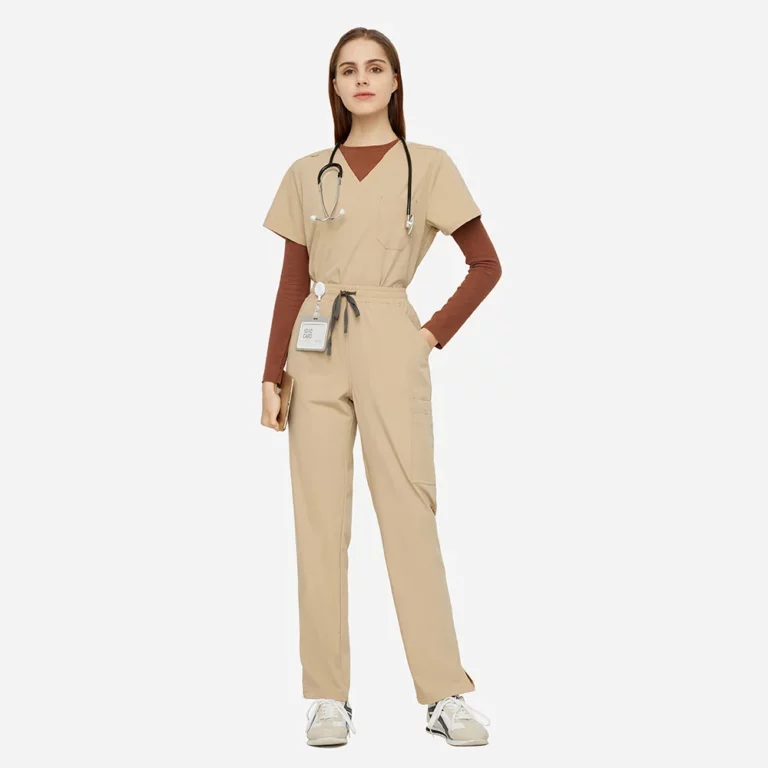
Walk into any big hospital these days—whether it is in London, New York, or Sydney—and you will spot a clear change in appearance. The times when plain white coats stood as the main sign of medical power are gone, and the period of loose, light green surgical outfits is dying out quickly. Instead, you see a lot of dark, serious navy blue. But take a closer look at the shape. The baggy, boxy trousers that trailed on the floor are disappearing. In their place, medical professionals are sporting athletic-inspired, tapered fits with cuffed ankles. The “athleisure” revolution has finally breached the operating room doors. This article explores why navy blue scrubs have become the unofficial uniform of modern healthcare, blending the psychology of color with the undeniable demand for athletic performance in a 12-hour work environment.
The Psychology & Practicality of the Navy Blue Wave
It is no accident that navy blue has dethroned other colors to become the dominant shade in healthcare settings globally. While color codes vary by department, this specific hue sits at the perfect intersection of patient psychology and the gritty reality of medical work. It projects authority without the intimidation of black, and cleanliness without the high-maintenance panic of white. However, the reasons go far deeper than just “looking good.” There is a functional and psychological reliance on this color that keeps hospitals running smoothly.
Trust, Calm, and the Modern “Doctor” Look
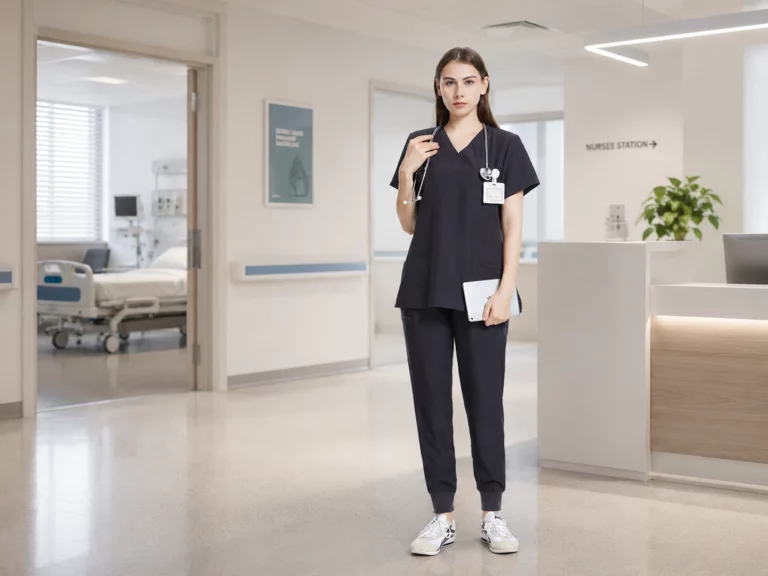
Color feelings play a big part in caring for patients. Hospitals can be tense places, full of worry for those sick and their loved ones. Strong reds or sharp yellows can spark awareness or fear, which is the worst thing in a healing space. Navy blue, however, is widely linked with steadiness, smarts, and belief. It is the shade of police, pilots, and now, main caregivers. When a nurse enters in fresh navy blue scrubs, it quietly tells skill and peace to a patient. It suggests, “I am an expert, and I handle this.” This change has let nurses and techs gain the same amount of honor usually saved for doctors in white coats, bringing the care group together under one solid, expert flag.
Hiding the Mess: The Realities of a 12-Hour Shift
Let’s be straight about the work. Health care is dirty. Between taking blood, swapping IVs, and handling sudden spills, a health worker’s outfit faces a battlefield each shift. Softer shades like sky blue or pale green do not forgive; one drop of coffee or dye can spoil a pair of scrubs before the early checks are done. Navy blue gives a real helpful edge: it covers small splatters and marks very well. For a nurse on a double shift, not fretting about seeming messy midway through the day brings huge mind ease. It lets the attention stay fully on the patient, instead of glancing at a mirror for spots.
From Boxy to Athletic: The Rise of Scrub Joggers
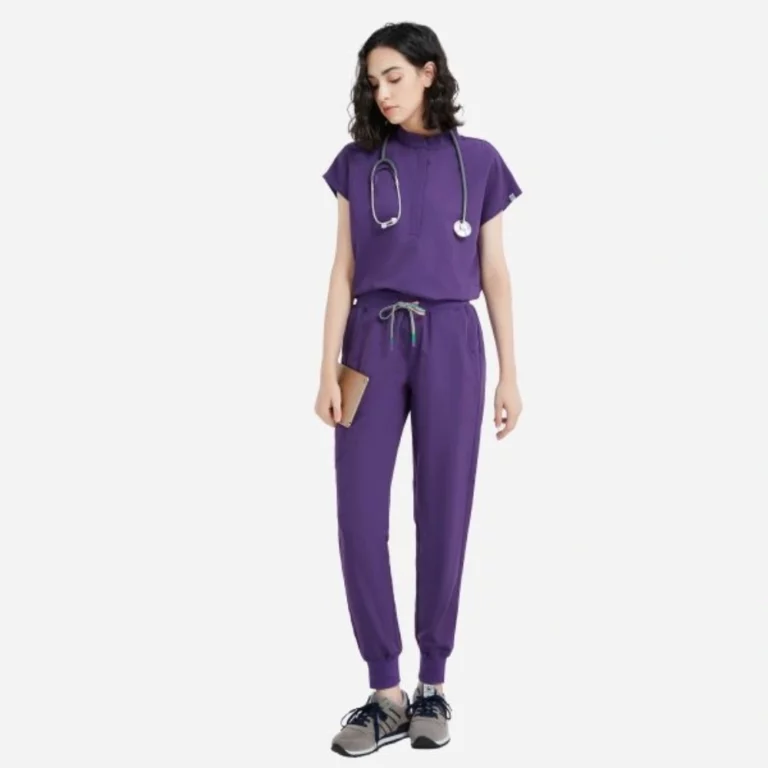
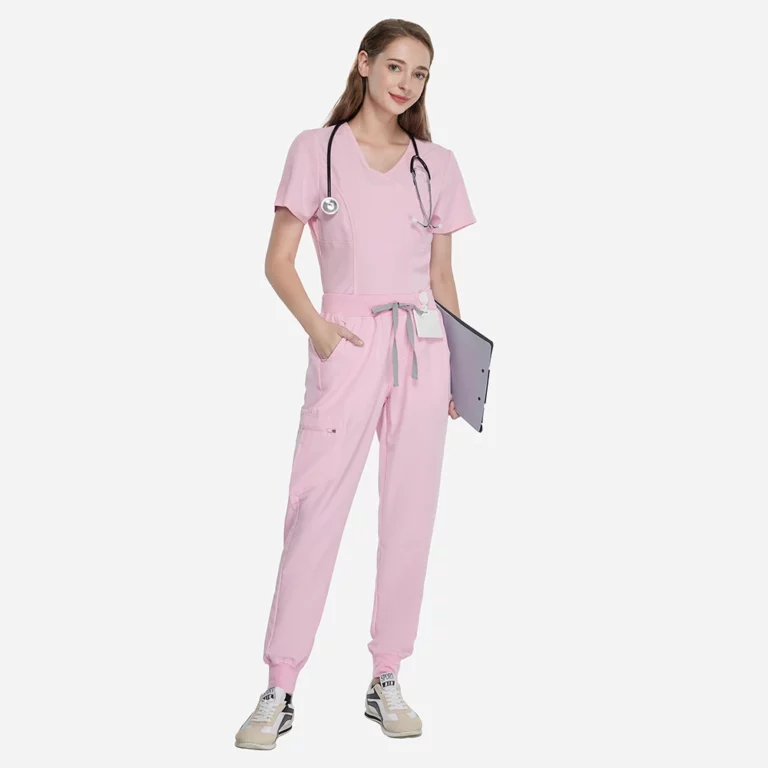
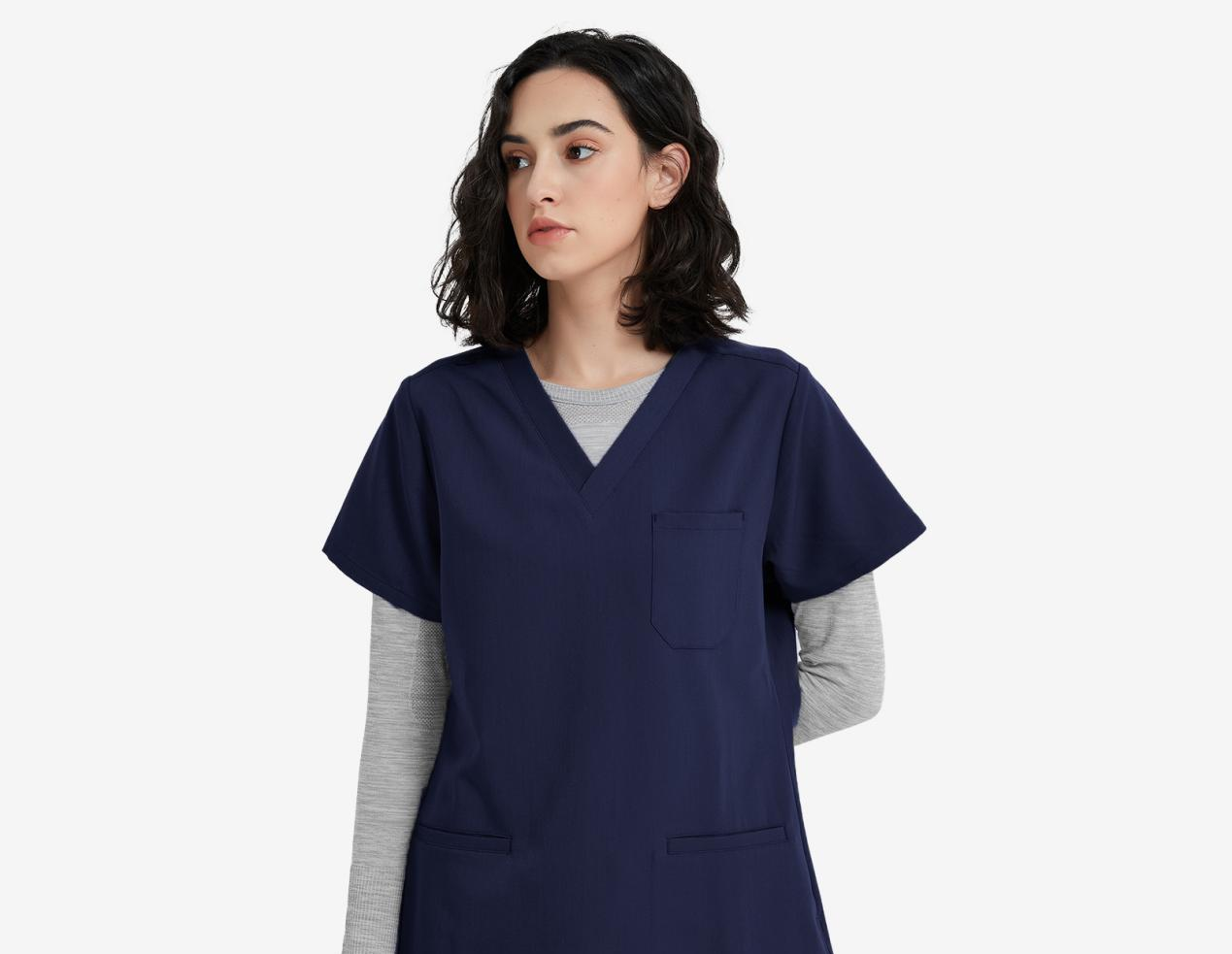
The transition to navy blue scrub joggers represents more than just a fashion trend; it is a response to the physical demands of the job. For decades, standard issue scrubs were essentially “one-shape-fits-none.” They were wide-legged, prone to dragging on the floor, and offered zero shape retention. Today’s medical staff are active. They lift patients, run to codes, and squat to check monitors. They need gear that moves like high-end sportswear, not sleepwear.
Why the “Baggy Sack” Look is Dead
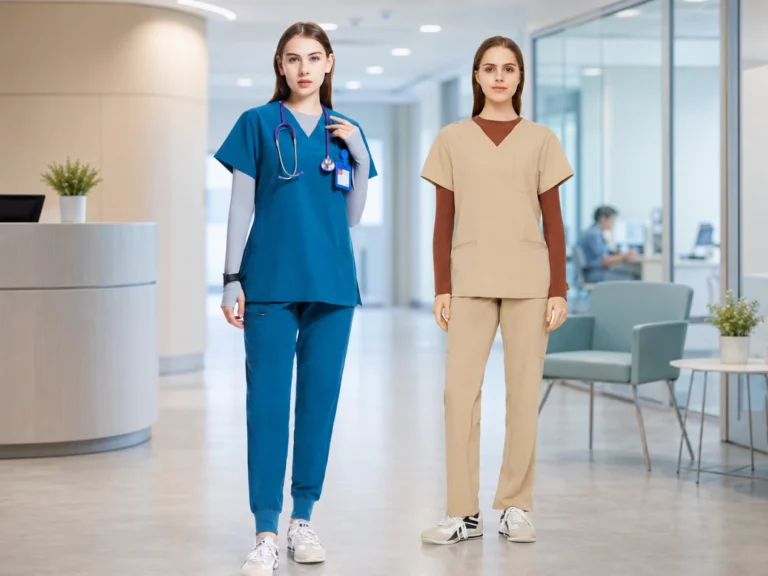
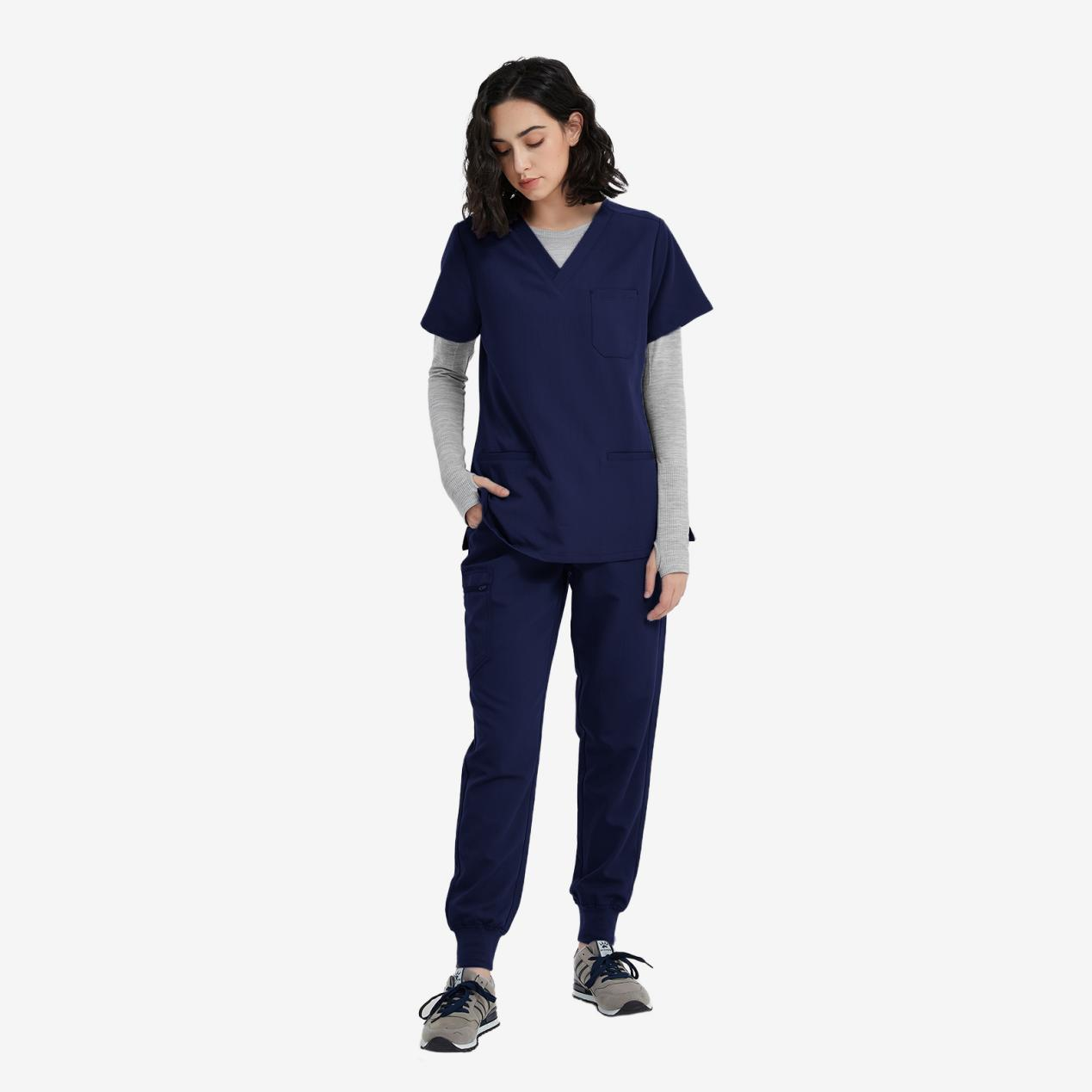
The old straight-leg scrub pant had a key problem: it blocked the way. Extra cloth at the ankle poses a fall risk, especially when hurrying through packed ER paths or stepping over wires in an ICU. Plus, the loose style just does not match the current worker’s wish to appear neat. Here comes the jogger. By narrowing the leg and putting a knit band at the ankle, the cloth remains near the body and stays clear. This outline is neater, tidier, and clearly more youthful. It connects the space between seeming an expert at work and feeling at ease enough to do tasks after a shift without sensing like you wear sleep clothes outside.
Functionality Meets Fitness
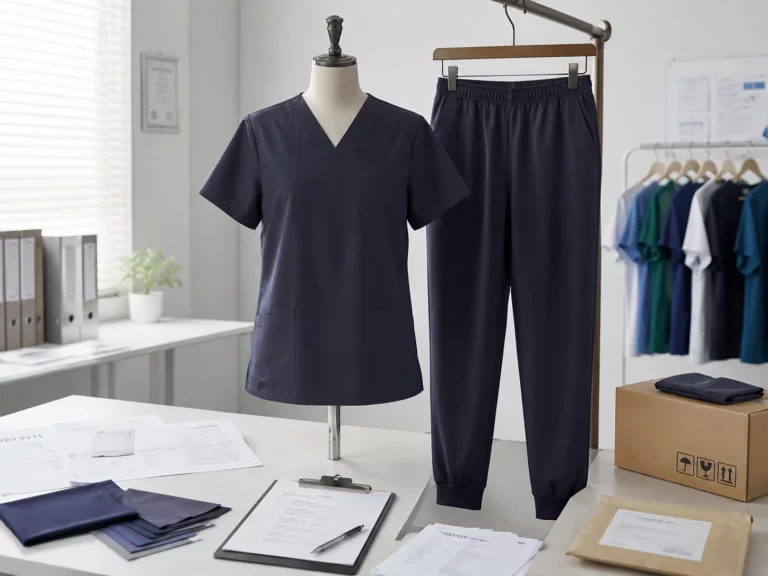
Modern designs, like the Fuyi Group’s Navy Blue Scrubs Jogger Pants, are built with the understanding that nurses are essentially industrial athletes. The features found in these joggers mirror what you find in high-performance running gear. We are seeing waistbands with adjustable drawstrings that actually stay in place during movement, rather than the old tie-tapes that would loosen constantly. Ribbed stitching provides flexibility without losing shape. Most importantly, the pocket game has changed. We aren’t just talking about one back pocket anymore. We are seeing cargo-style pockets on the thighs, hidden zipper pockets for valuables, and specific slots for pens and shears. It is the fusion of utility and athletic fit that makes the jogger style indispensable.
Fade Factor: Why Quality Matters More Than Ever
Nothing screams “unprofessional” louder than a medical team wearing mismatched shades of faded blue. You have seen it: the veteran nurse whose scrubs have turned a weird purplish-grey after too many hot washes, standing next to a rookie in crisp navy. This “purple haze” effect is the enemy of a uniform look. As navy blue scrubs dominate, the demand for fabric that holds its color against brutal industrial laundering is skyrocketing.
The Dreaded “Purple Haze” Effect
Navy blue is a famously hard shade to hold. Low-cost cotton or poor mixes lose color quickly when hit with the high heat and strong soaps in hospital clean systems. After only ten cleans, a bad-quality scrub pair drops that deep, strong tone and begins to seem old and worn. This shows badly on the hospital’s picture. Patients see these points. A washed-out outfit hints at age, wear, and maybe a lack of cleanness, even if the item is clean. This is why finding fade-resistant navy scrubs has turned into a main goal for buyers who think about long-term name view.
Fabric Science: How to Keep Blue, Blue
The solution to fading lies in the chemistry of the fabric. It is not enough to just dye the cloth; the dye must lock into the fiber. Manufacturers who specialize in high-end medical apparel, like Fuyi Group, utilize advanced reactive dyeing processes on Poly-Rayon blends. The goal is high colorfastness. For instance, industry benchmarks now look for fabrics that can withstand 50+ industrial wash cycles while maintaining a colorfastness level of 3-4. This ensures that the nurse who bought her uniform in January still looks sharp in December. It is about value for money—buying one high-quality set that stays navy is cheaper than replacing a cheap set three times a year because it turned purple.
Beyond Color: Technical Features That Define Modern Scrubs
While the color draws you in, the technology keeps you wearing them. The fabric used in hospital wards today is lightyears ahead of the stiff cotton sheets of the past. It is about protection and mobility. If you are going to wear navy blue scrub joggers for 12 hours straight, the material needs to actively work for you, repelling fluids and stretching with your every move.
Stain-Resistant Nursing Scrubs: It’s Not Just Color
While navy blue covers marks by sight, current tech tries to stop them in the body. The latest type of medical clothes often has a water-push finish. This means when a splash happens—be it water, coffee, or body fluids—it does not sink into the thread right away. Instead, it forms drops and falls off, or can be wiped off easily. This tech changes a normal outfit into stain-resistant nursing scrubs. It is a shield that stands between the health worker and the bad pollutants they meet each day. For an active expert, this part is not just extra; it is a clean need.
The 4-Way Stretch Revolution
Ease is personal, but movement is not. “4-way stretch” is a word taken from the yoga and sport clothes field, and it has settled in hospitals. Old clothes only bent in one way (often across), or not at all. Poly-Rayon mixes with Spandex (like the 72% Polyester, 21% Rayon, 7% Spandex blend in top lines) let the item bend up and across. This is key when a nurse leans over a bed, reaches for a tall shelf, or does CPR. The cloth shifts with the body, stopping that tight pull across the back or legs. It also means the scrubs hang better, fighting creases even after sitting at a care spot for hours.
Find the Right Partner: Sourcing for Excellence
For hospital leaders and uniform sellers, the task is not just picking a shade; it is choosing a provider who can give this level of good work steadily. With the market full of choices, spotting a steady navy blue scrubs manufacturer is vital to making sure your staff appears expert and feels at ease shift after shift.
What to Look for in a Manufacturer
When selecting a partner for medical uniforms, capacity and consistency are king. You need a manufacturer who controls the entire supply chain—from the spinning of the yarn to the final stitch on the jogger cuff. Look for suppliers with a global footprint and a proven track record, such as those exporting to over 80 countries with millions of units in annual capacity. Key indicators of a top-tier manufacturer include:
- Vertical Integration: Do they weave their own fabric? This is the only way to guarantee that the navy blue of Batch A matches Batch B perfectly, eliminating the “mismatched team” look.
- Testing Transparency: Can they provide lab reports showing colorfastness after 50 washes? Do they have data on pilling resistance and seam strength?
- Flexible Production: Can they handle the high volume of a hospital-wide rollout while maintaining the boutique quality of fashionable jogger cuts?
A manufacturer that offers risk-free trials or transparent quality inspections (like SGS) demonstrates confidence in their product. In a market where “cheap” often means “disposable,” partnering with a manufacturer rooted in decades of textile experience ensures that your investment in navy blue uniforms pays off in longevity and staff satisfaction.
Conclusion
The dominance of navy blue scrub joggers in hospital wards is not a fleeting fashion moment; it is the new standard of professional healthcare attire. It represents a shift towards uniforms that respect the wearer’s need for dignity, style, and athletic performance. From the psychological authority of the deep blue hue to the technical brilliance of 4-way stretch and fluid-repellent fabrics, these scrubs are tools that help medical staff perform at their best.
For healthcare institutions looking to upgrade their image, Fuyi Group stands as a beacon of quality and reliability. With a heritage dating back to 1966 and a massive production footprint across China and Myanmar, Fuyi Group is not just a manufacturer; we are a global solution provider. We serve trusted partners in over 80 countries, backed by a robust annual capacity of 5 million units and a commitment to excellence that includes rigorous quality testing. Whether you need the stylish scrubs jogger series or high-performance fade-resistant navy scrubs, Fuyi Group delivers the consistency and durability your team deserves.
FAQs
Q: Why are navy blue scrubs so popular in hospitals?
A: They project professionalism, hide stains effectively, and are scientifically proven to be calming for patients, reducing anxiety.
Q: Are jogger scrubs acceptable for professional medical settings?
A: Yes. Modern joggers offer a tailored, clean silhouette that is safer (no tripping hazards) and more functional than traditional baggy pants.
Q: How do I stop my navy blue scrubs from fading?
A: Choose high-quality fade-resistant navy scrubs made from Poly-Rayon blends and wash them in cold water with mild detergent.