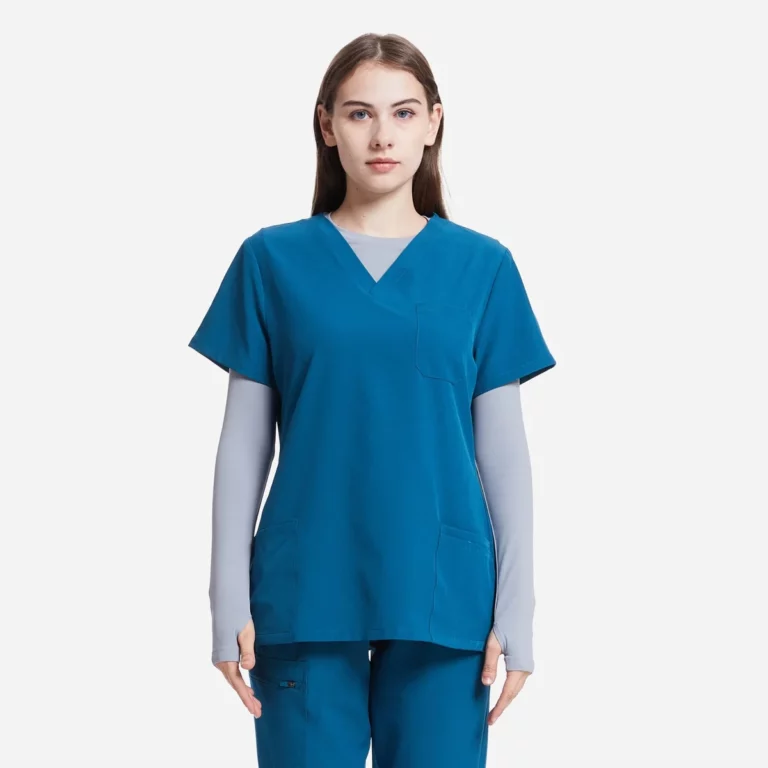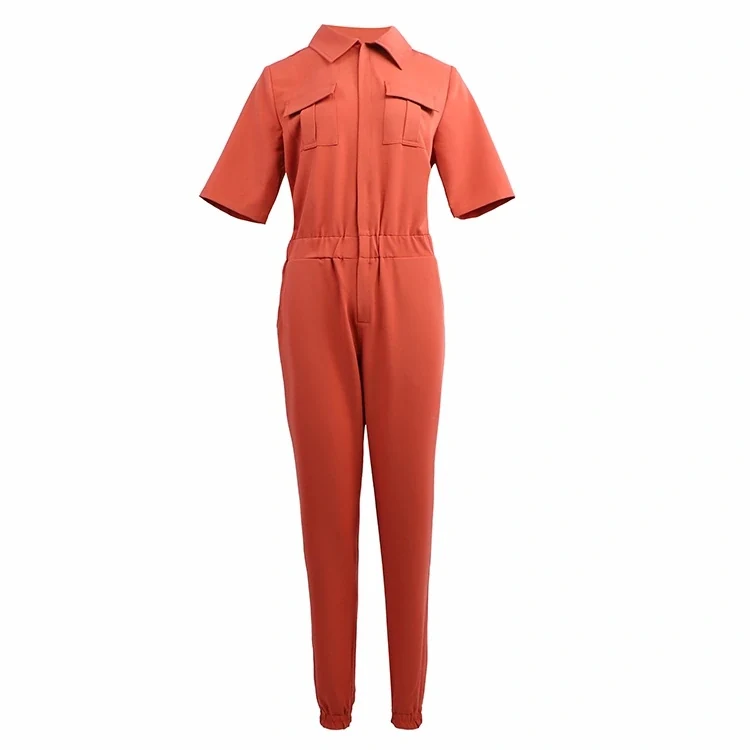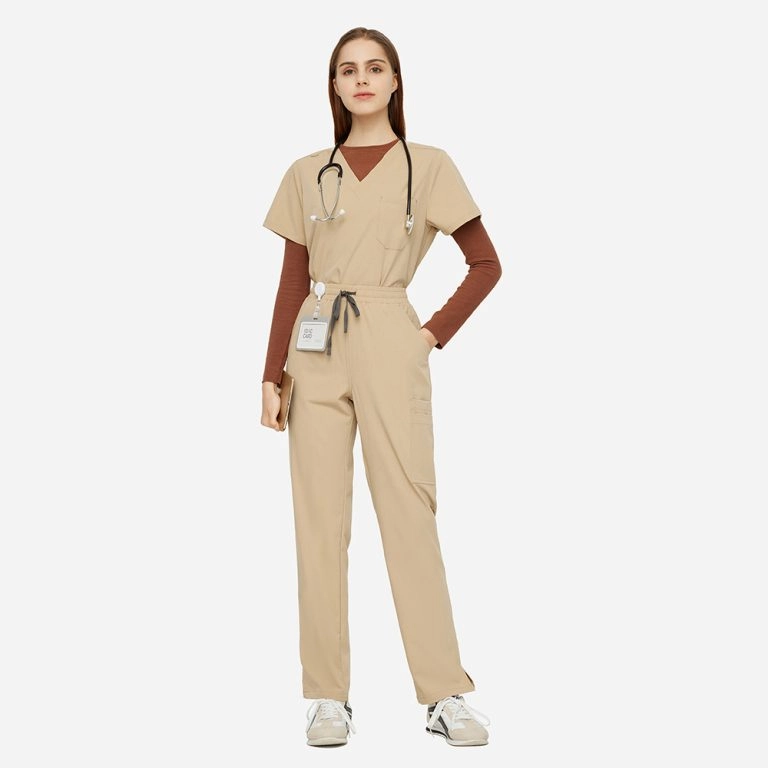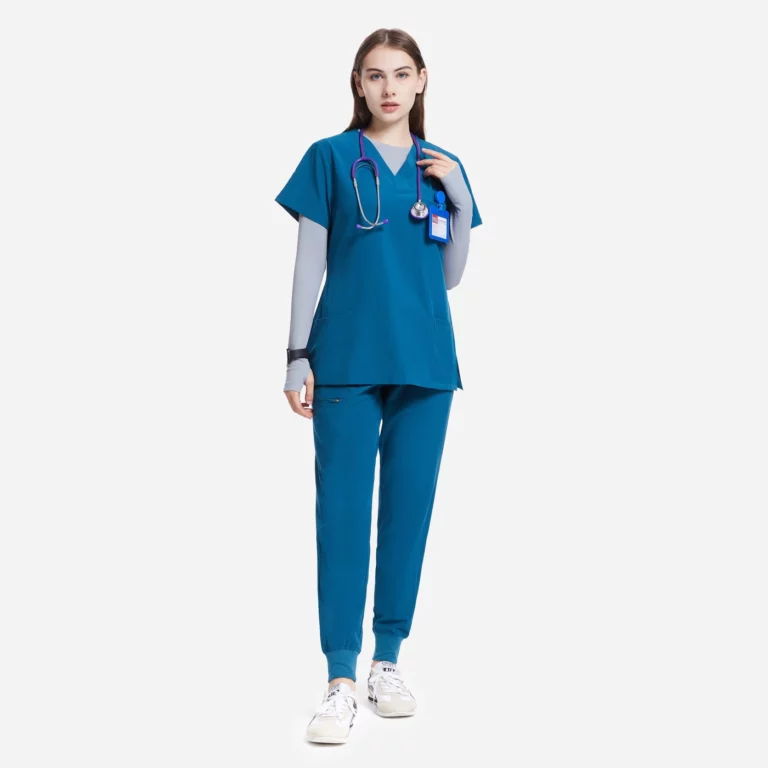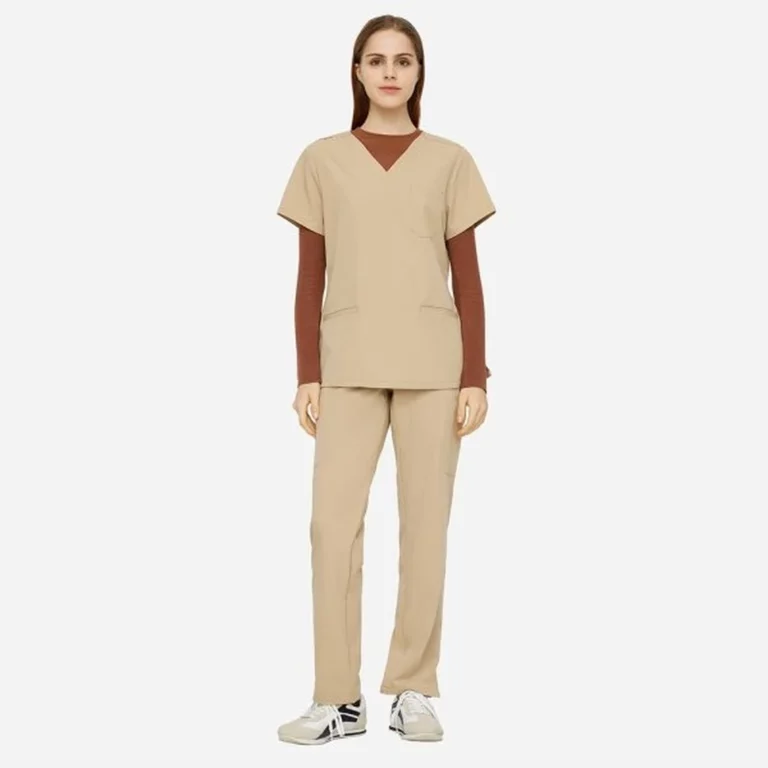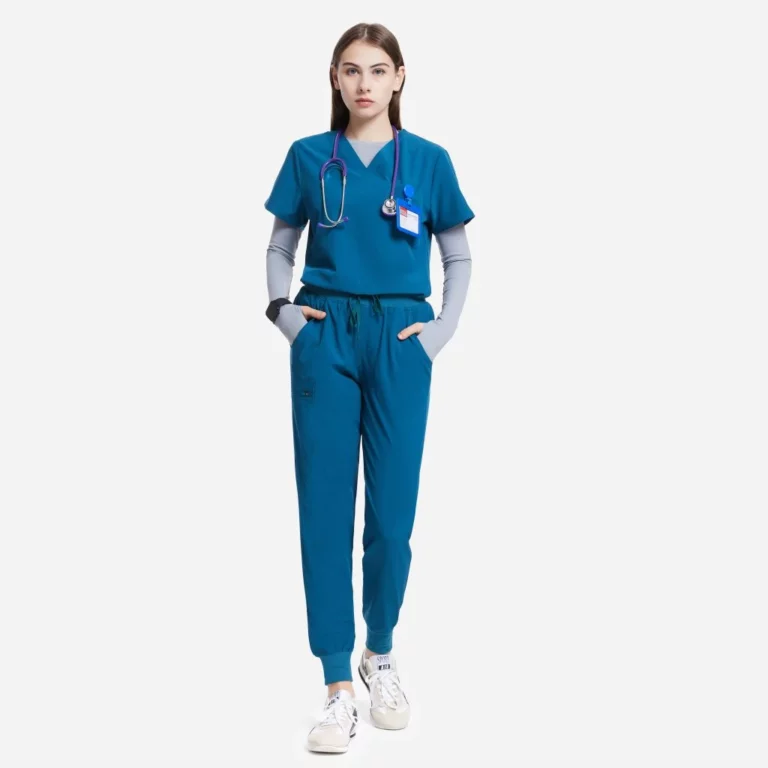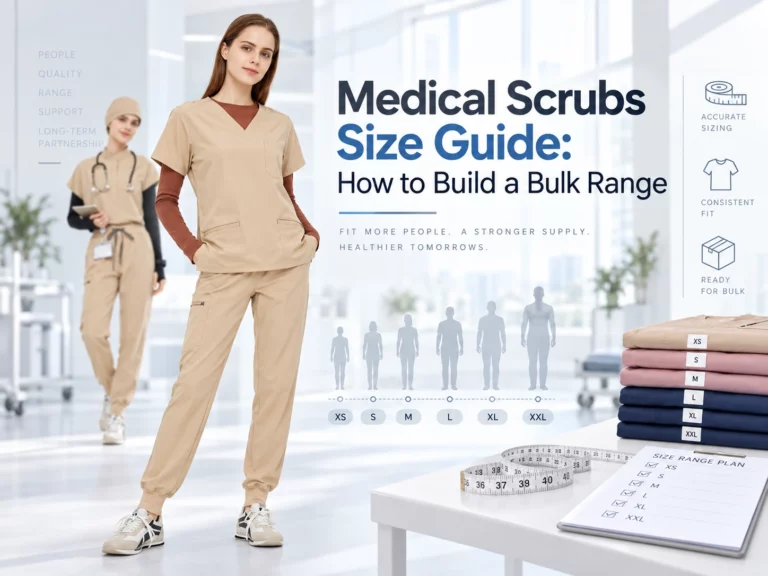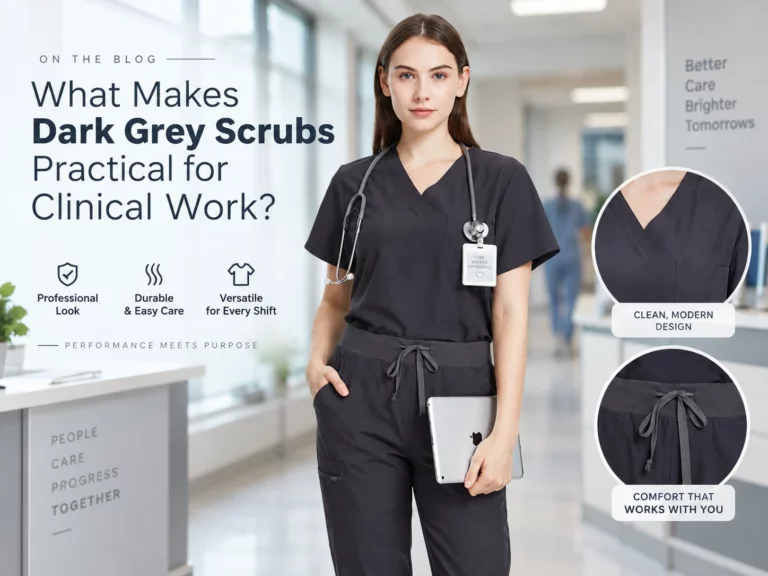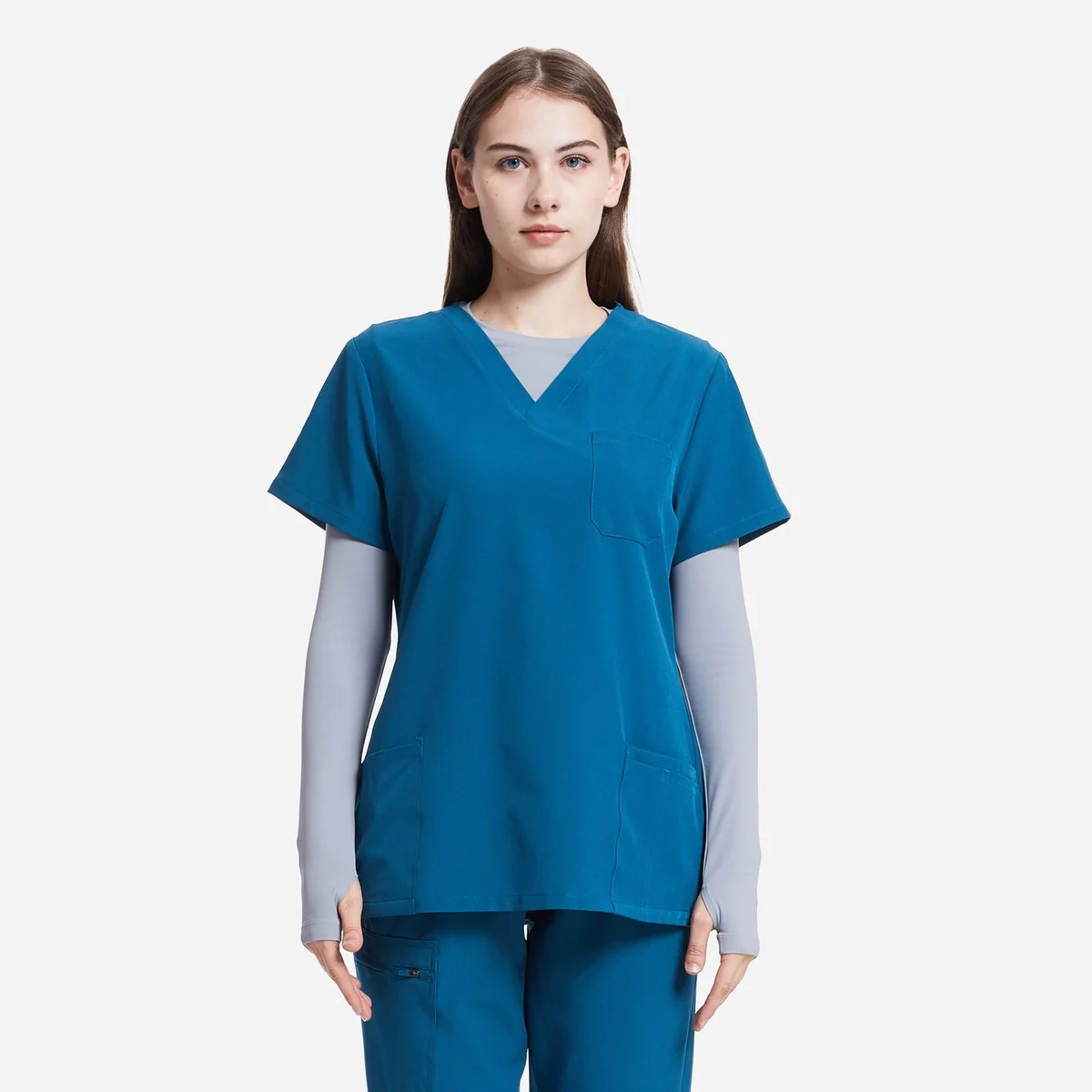
A logo can be approved on a screen and still appear wrong on a finished scrub top. The artwork may sit too close to a pocket seam, thread color can look different beside the garment fabric, or a size label can disappear after the uniform is folded for packing. When a hospital or distributor orders branded scrubs in several colors and sizes, each small difference can become a repeat-order issue.
Before selecting a custom medical scrubs manufacturer, the buyer should define what the brand means on the garment: logo size, position, color, method, label content and packaging reference. Fuyi Group’s manufacturing information describes an integrated textile and garment process, including spinning, weaving, dyeing and garment quality checks. Buyers can use that capability when discussing fabric and color control, while still approving the exact branding on a production sample.
For custom medical scrubs manufacturer, buyers should identify the intended use, the approval evidence and the owner of the decision.
Which branding choices should be written into the order?
Start with the artwork file and its final placement. State whether the logo is embroidered, printed, woven into a label or applied through another approved method. Provide the production-size artwork and locate it from fixed points such as the pocket edge, collar seam or sleeve opening. “Left chest” alone may not be enough when pocket dimensions vary by style.
Approve color and placement on the garment, not a screen
Review the mark against the actual fabric color under neutral lighting. A thread or print color can change in appearance when it sits beside navy, ceil blue or white material. If the order includes several colors, review each combination that creates a meaningful contrast difference. Do not rely on an image sent through a messaging app as the sole color reference.
Check the logo at the scale the wearer and the end customer will see. Confirm that letters remain legible, the mark does not cross a seam and the stitching or print does not interfere with a pocket opening. If a hospital requires multiple department identifiers, use a controlled artwork table so the style, color, size and department code remain linked.
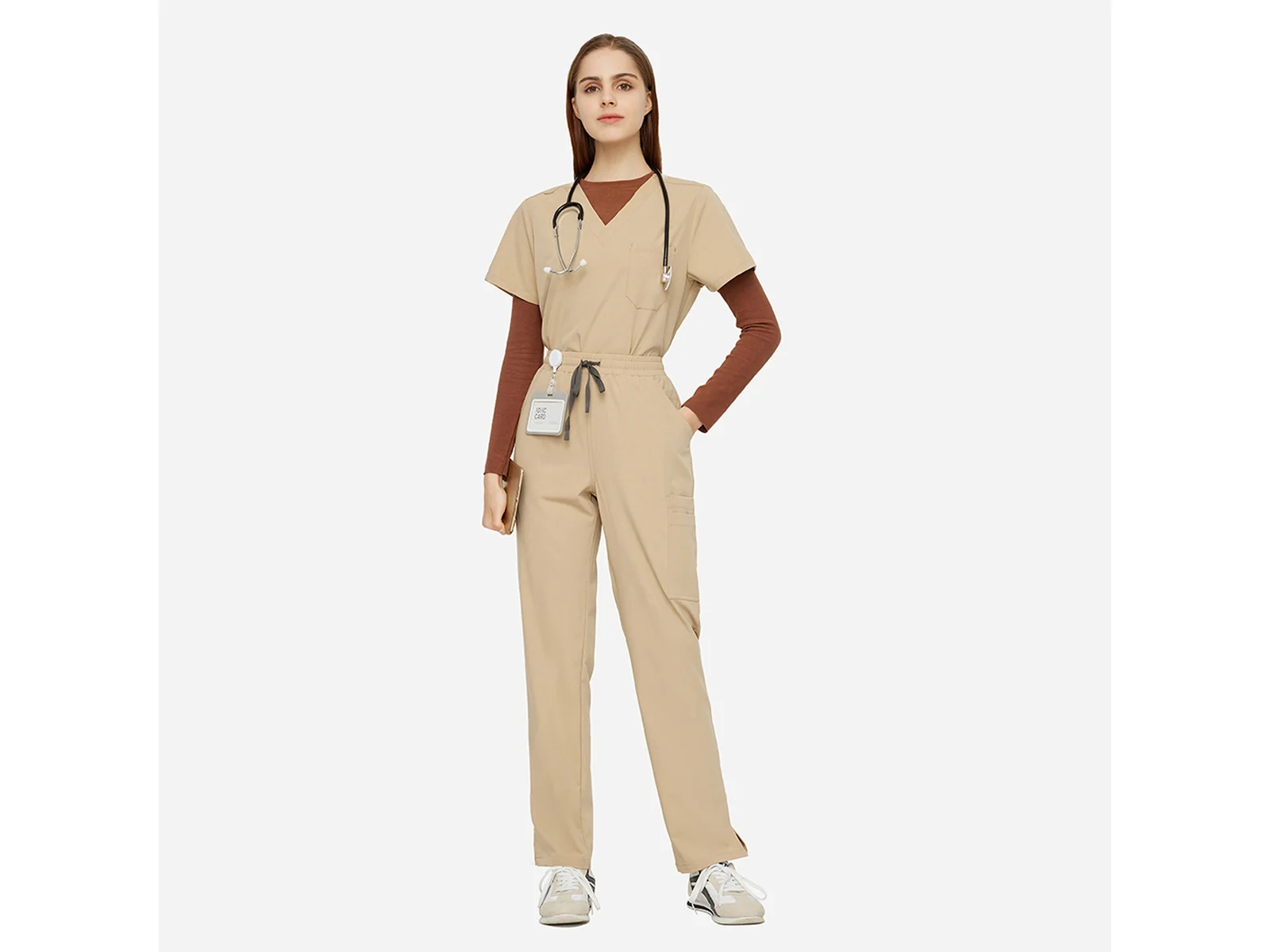
How should labels and size marks be coordinated?
Uniform programs often use several labels: brand, size, care, barcode and sometimes an institution or department identifier. The buyer should specify which labels are required, where they sit and which information appears on each. Confirm the size wording against the size table used in the purchase order; abbreviations that seem obvious internally can confuse a distributor or wearer.
Keep garment identity consistent through packing
If a scrub top and trouser are sold as a set, decide whether each piece needs its own size label and whether the two pieces are packed together. If pieces are ordered separately, make the product code readable on the bag or hangtag. This helps warehouse teams avoid pairing a top and trouser with different sizes when cartons contain several variants.
Artwork revision control matters as much as the image itself. Put the revision date or code on the approval sheet and remove outdated files from the current production folder. When the buyer changes the logo, label wording or placement after sampling, confirm whether the supplier needs a revised sample before bulk release. A written change record protects both sides from comparing production to an obsolete mock-up.
What should a preproduction sample prove?
A sample should use the intended garment style, fabric color, size and branding method. Inspect the mark for placement, scale, legibility, stitch or print consistency, and comfort against the wearer’s skin. Check whether backing material, embroidery density or a label edge creates a rough area inside the garment. The sample should also show the label and packing method that will be used for the order.
Grupo Fuyi’s quality-control process includes checks across fabric and garment stages, and its preproduction sample information calls for reviewing sample colorfastness before bulk production. Buyers should align their approval record with those stages: identify the fabric and color reference, approve the sample, and state which visual or functional features require a production check. Do not interpret a sample review as a substitute for any test or compliance document required by the buyer’s market.
When the garment includes a custom logo, retain one approved sample or a set of clear photographs with measurements. Record any allowed tolerance only after the buyer and supplier have agreed on it. If a logo position is intended to be identical across sizes, say how it is measured; if it scales with the garment, provide the rule. This prevents each size from being judged by a different unstated expectation.
How can a branded scrub program stay consistent across repeat orders?
Use one product specification for each style and color combination. It should connect the garment code, fabric reference, color, size range, artwork revision, label set, pack configuration and approved sample. If Fuyi Group offers a stock-fabric option for the selected program, note the chosen reference and ask how it is identified on repeat orders. A stock-fabric program may simplify planning, but the buyer still needs a current approval reference for the finished garment.
For bulk scrubs orders, share the same files with procurement, design, quality and the supplier. Ask each team to review only the parts it owns, then record the final release in one place. If the order quantity or delivery split changes, confirm whether labels, cartons or artwork need a corresponding update. Do not assume that a change to the shipment plan automatically changes the garment specification.
Uniform buyers can compare Fuyi Group’s scrub garment options, review its fabric and production capabilities, and send a custom order inquiry with the style, artwork, colors and size range. A supplier conversation is more productive when the buyer attaches a real logo file and a marked-up sample photo rather than describing placement from memory.
The most useful approval is easy to repeat. It tells the factory which garment, fabric, branding and package were accepted, and it shows the quality team what to compare when production begins. With those details set before the bulk scrubs order, a logo becomes part of a controlled uniform specification instead of a final-minute decoration instruction.
For a private-label scrub program, send the approved logo file, placement drawing and size run through Fuyi Group’s custom uniform inquiry. The Fuyi Group uniform range can be reviewed alongside the branding and fit requirements before sample approval.
Perguntas frequentes
Q1: Should a scrub logo be approved on a digital mock-up or a sewn sample?
A1: Use the mock-up to review artwork, then approve a physical sample for scale, placement, color interaction and wear comfort.
Q2: Do all scrub colors need a separate branding sample?
A2: Review each color combination where fabric contrast can change the logo’s appearance. The buyer and supplier can define a representative approval plan.
Q3: What should be recorded for a repeat branded scrub order?
A3: Keep the garment and color codes, size table, artwork revision, label details, package configuration and approved sample reference together.